Assessment of Primary Health Care Physicians’ Awareness, Knowledge, and Practice of Familial Hypercholesterolemia in Jazan, Saudi Arabia
Rahmah Bashiri, Mousa Mawkili

TL;DR
This study found that many primary care doctors in Jazan, Saudi Arabia, lack sufficient knowledge about familial hypercholesterolemia, a genetic condition linked to early heart disease.
Contribution
The study provides new insights into the awareness and knowledge gaps of FH among primary care physicians in a specific region of Saudi Arabia.
Findings
Only 22% of physicians knew the prevalence of FH, and 12% understood its cardiovascular risk.
Just 36.6% of physicians demonstrated acceptable FH-related knowledge.
No significant associations were found between knowledge levels and demographic factors.
Abstract
Introduction Familial hypercholesterolemia (FH) is a prevalent genetic disorder that predisposes affected individuals to premature coronary artery disease (CAD). Despite its clinical significance, global studies have revealed major deficits in awareness and knowledge among healthcare providers. This study aimed to assess the awareness, knowledge, and practices regarding FH among family physicians in primary health care centers in the Jazan region, Saudi Arabia. Methods A descriptive cross-sectional study was conducted among family physicians working at primary care centers in Jazan. Participants were recruited through convenience sampling using a validated, self-administered online questionnaire adapted from previous studies. The questionnaire addressed demographics, knowledge, awareness, and clinical practices related to FH. A p-value < 0.05 is considered statistically significant.…
Genes, proteins, chemicals, diseases, species, mutations and cell lines named across the full text — each resolved to its canonical identifier and authoritative record.
Click any figure to enlarge with its caption.
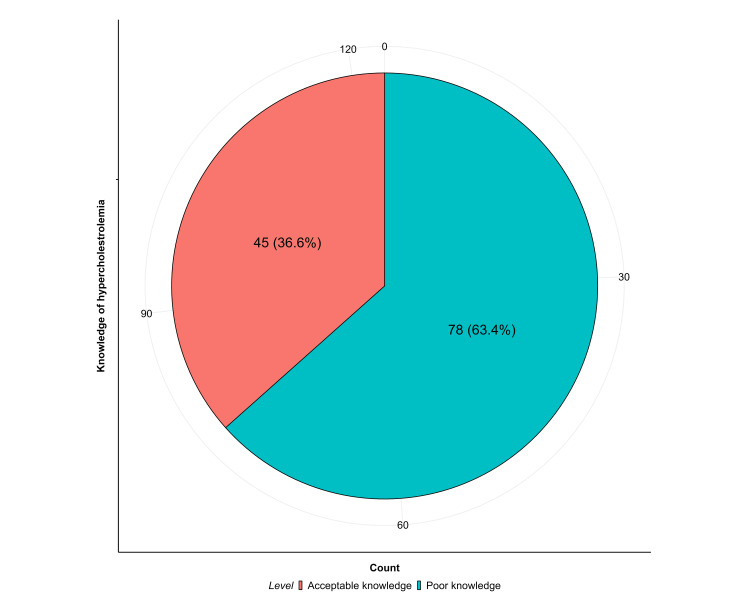 Figure 1
| Characteristic | N = 1231 |
| Age | |
| ≤30 | 54 (44%) |
| 31-45 | 60 (49%) |
| >45 | 9 (7.3%) |
| Gender | |
| Female | 42 (34%) |
| Male | 81 (66%) |
| Nationality | |
| Non-Saudi | 25 (20%) |
| Saudi | 98 (80%) |
| Level of Training | |
| General practitioners | 30 (24%) |
| Resident | 51 (41%) |
| Registrar | 7 (5.7%) |
| Senior registrar | 22 (18%) |
| Consultant | 13 (11%) |
| Health Sector | |
| Central | 21 (17%) |
| Middle | 22 (18%) |
| Northern | 13 (11%) |
| Southern | 28 (23%) |
| Western | 24 (20%) |
| Jabali | 4 (3.3%) |
| Bani Malik | 11 (8.9%) |
| Experience Year | |
| ≤5 | 77 (64%) |
| 6-10 | 24 (20%) |
| 11-14 | 12 (9.9%) |
| ≥16 | 8 (6.6%) |
| Unknown | 2 |
| Characteristic | N = 1231 |
| Correct definition of FH | 102 (83%) |
| Every 1 in 500 person is the prevalence of heterozygous FH in the general population | 27 (22%) |
| There is a 50% likelihood that first-degree relatives of someone who has FH will also have FH themselves | 37 (30%) |
| There is a 20 times greater risk of premature coronary heart disease in untreated FH patients compared to the general population | 15 (12%) |
| 55 years old is the age considered premature for CVD in male patients with a family history of FH | 37 (33%) |
| 65 years old is the age considered premature for CVD in female patients with a family history of FH | 29 (25%) |
| An accurate diagnosis of FH can only be made via genetic testing; the statement is false | 64 (52%) |
| An LDL target of < 2.5 mmol/L for adults with FH | 59 (48%) |
| An LDL target of < 1.8 mmol/L for FH adults with known CHD or diabetes | 89 (72%) |
| Patients with FH should receive statins as first-line treatment | 93 (76%) |
| Statins and ezetimibe combinations are used to treat severe hypercholesterolemia | 69 (56%) |
| Characteristic | N = 1231 |
| Aware of the cascade screening for patients with FH | 78 (63%) |
| Aware of the clinical diagnostic algorithm to diagnose patients with FH | |
| The Dutch Lipid Clinic Network criteria | 50 (41%) |
| The US MedPed Program | 50 (41%) |
| The Simon Broome criteria | 23 (19%) |
| None of them | 53 (43%) |
| Aware of medication to treat FH besides statins | |
| Mipomersen (an antisense oligonucleotide inhibitor) | 19 (15%) |
| PCSK9 inhibitors | 71 (58%) |
| Lomitapide (MTP inhibitor) | 35 (28%) |
| None of them | 35 (28%) |
| Aware of any specialist clinical services for lipid disorders to whom you can refer patients | 81 (66%) |
| Routinely carry out in patients with documented premature coronary artery disease | |
| All of the above | 98 (80%) |
| Examine for arcus cornealis | 7 (5.7%) |
| Examine for tendon xanthomata | 7 (5.7%) |
| None of the above | 2 (1.6%) |
| Screen close relatives for hypercholesterolemia | 4 (3.3%) |
| Take a detailed family history of coronary artery disease | 5 (4.1%) |
| Factors that increase the risk of cardiovascular disease in patients with FH | |
| Elevated lipoprotein A | 63 (51%) |
| Smoking | 87 (71%) |
| Elevated C-reactive protein | 27 (22%) |
| Type 2 diabetes mellitus | 84 (68%) |
| None of the above | 3 (2.4%) |
| Do not know | 9 (7.3%) |
| Factors that help in the detection of FH in your practice | |
| Laboratory comment on lipid profile alerting to a possible FH | 38 (31%) |
| Alert by the clinical software system in your practice | 20 (16%) |
| Direct telephone call from the laboratory | 8 (6.5%) |
| All of the above | 77 (63%) |
| None of the above | 2 (1.6%) |
| Do not know | 10 (8.1%) |
| Characteristic | N = 1231 |
| Ever diagnosed a patient with FH | 36 (29%) |
| Ever followed a patient with FH | 38 (31%) |
| Routinely screen close relatives of patients with FH for FH with lipid profile | |
| No | 21 (17%) |
| Not applicable | 25 (20%) |
| Yes, the patient’s children and other close relatives | 68 (55%) |
| Yes, the patient’s children only | 9 (7.3%) |
| Age to test a young individual for hypercholesterolemia in a family with premature coronary heart disease | |
| 0-6 years | 13 (11%) |
| 7-12 years | 32 (26%) |
| 13-18 years | 41 (33%) |
| Don’t know | 27 (22%) |
| None of the above | 10 (8.1%) |
| Characteristic | Acceptable knowledge, N = 451 | Poor knowledge, N = 781 | Statistic | p-value |
| Age* | 1.267 | 0.5 | ||
| ≤30 | 22 (49%) | 32 (41%) | ||
| 31-45 | 19 (42%) | 41 (53%) | ||
| >45 | 4 (8.9%) | 5 (6.4%) | ||
| Gender# | 0.542 | 0.4 | ||
| Female | 13 (29%) | 29 (37%) | ||
| Male | 32 (71%) | 49 (63%) | ||
| Nationality# | 0.587 | 0.3 | ||
| Non-Saudi | 7 (16%) | 18 (23%) | ||
| Saudi | 38 (84%) | 60 (77%) | ||
| Level of Training* | 3.428 | 0.5 | ||
| Consultant | 7 (16%) | 6 (7.7%) | ||
| General practitioners | 8 (18%) | 22 (28%) | ||
| Registrar | 3 (6.7%) | 4 (5.1%) | ||
| Resident | 20 (44%) | 31 (40%) | ||
| Senior registrar | 7 (16%) | 15 (19%) | ||
| Health Sector* | 9.568 | 0.14 | ||
| Bani Malik | 1 (2.2%) | 10 (13%) | ||
| Central | 6 (13%) | 15 (19%) | ||
| Jabali | 2 (4.4%) | 2 (2.6%) | ||
| Middle | 8 (18%) | 14 (18%) | ||
| Northern | 4 (8.9%) | 9 (12%) | ||
| Southern | 10 (22%) | 18 (23%) | ||
| Western | 14 (31%) | 10 (13%) | ||
| Experience Year* | 0.993 | 0.8 | ||
| ≤5 | 27 (60%) | 50 (66%) | ||
| 6-10 | 11 (24%) | 13 (17%) | ||
| 11-14 | 4 (8.9%) | 8 (11%) | ||
| ≥16 | 3 (6.7%) | 5 (6.6%) |
Peer Reviews
No public reviews on file for this paper yet. If you reviewed it on a platform where reviews are public (OpenReview, ICLR, NeurIPS, ICML), you can paste yours below so the community can read it here.
Videos
No videos yet. Explain this paper in a talk, walkthrough, or lecture? Add one.
Taxonomy
TopicsLipoproteins and Cardiovascular Health · Diabetes, Cardiovascular Risks, and Lipoproteins · Health Systems, Economic Evaluations, Quality of Life
Introduction
Familial hypercholesterolemia (FH) is a common inherited lipid disorder characterized by markedly elevated levels of low-density lipoprotein cholesterol (LDL-C), which accelerates atherosclerotic plaque formation and significantly increases the risk of premature coronary artery disease (CAD) [1,2]. FH follows an autosomal dominant inheritance pattern and is most frequently associated with pathogenic variants in genes such as LDLR, APOB, and PCSK9 [2]. Clinically, FH presents in two forms: heterozygous (HeFH) and homozygous (HoFH), with HeFH accounting for an estimated 70-90% of cases [2,3].
Timely identification and management of FH critically depend on healthcare providers' awareness and knowledge. However, global data indicate that a large proportion of FH cases remain undiagnosed or inadequately treated, primarily due to limited professional awareness [4,5]. This knowledge gap compromises early diagnosis, delays the initiation of therapy, and reduces the effectiveness of cascade screening for affected family members [6,7]. Even when physicians are generally familiar with FH, adherence to clinical guidelines for diagnosis and management is often suboptimal, resulting in inconsistent care and substandard outcomes [5,8,9].
A study among Malaysian primary care physicians (PCPs) demonstrated significantly higher knowledge (53.5 ± 13.9 vs. 35.9 ± 11.79, p < 0.001) and practice (69.2 ± 17.62 vs. 54.4 ± 19.28, p < 0.001) scores among those holding postgraduate qualifications. Similarly, awareness scores were higher in this group (15.4 vs. 7.7, p = 0.030) [7]. Comparable deficits in FH-related knowledge and practice have been documented among physicians in Riyadh, Saudi Arabia [10]; emergency care providers in Melbourne, Australia [11]; and registered practitioners in India [12].
In Riyadh, only 51.6% of family physicians demonstrated an acceptable level of FH knowledge [13]. Likewise, a survey of Saudi medical interns revealed that while understanding of the FH definition (76.5%) and basic lipid profile (52.4%) was relatively adequate, knowledge of inheritance patterns (43.5%), disease prevalence (12.4%), and CAD risk (7.1%) was insufficient [14].
Professional training and continuous medical education have been widely endorsed as key strategies for bridging these gaps, enhancing early detection, and ensuring evidence-based care [5,8]. Improved provider knowledge directly correlates with better patient outcomes, more effective family screening, and a reduced cardiovascular disease burden on public health systems [15,16]. Accordingly, the present study aims to evaluate the levels of awareness, knowledge, and clinical practice regarding FH among primary healthcare physicians in the Jazan region of Saudi Arabia.
Materials and methods
Study design and area
This observational descriptive cross-sectional study was conducted at Primary Healthcare Centers, Jazan Health Cluster, located in the southwestern part of Saudi Arabia along the Red Sea coast. According to the General Authority for Statistics, the region's population was estimated at approximately 1.4 million as of 2022. In Jazan, 552 physicians are employed across 165 primary healthcare centers, distributed among eight sectors under the Ministry of Health.
Study population
The study included all family physicians under 60 years of age working in primary healthcare centers affiliated with the Ministry of Health in Jazan. Physicians from other specialties, healthcare professionals other than family physicians, and those working in health facilities under the armed or security forces were excluded.
Sample size
The sample size was calculated based on a previous study conducted in Riyadh, where 72.4% of participants reported an average or above-average familiarity with FH [13]. Using a 5% margin of error, a 95% confidence interval, a proportion of 72.4%, and a population of 552, the required sample size was 198. Accounting for a 20% non-response rate, the final sample size was adjusted to 238 participants.
Sampling technique and instrument
Data was collected conveniently between December 2024 and April 2025. A self-administered online questionnaire was distributed via Google Forms (Google LLC, Mountain View, California, United States) to sector coordinators, who forwarded it to family physicians in their respective sectors (Appendix 1). To ensure face validity, a panel of experts reviewed the questionnaire. It was adapted from validated instruments used in previous Saudi studies [10,13,14,17], originally developed by Bell et al. [18], with additional questions from Batais et al. [10], based on expert recommendations and international FH guidelines. Approval to use the questionnaire in this study was obtained from Dr. Bell and Dr. Batais. Both provided written permission to adapt and utilize the instrument for research purposes. The questionnaire comprised two sections. The first covered demographics, including gender, qualifications, training status, and years of practice. The second focused on FH-related knowledge, awareness, detection, and clinical practices. All questions were multiple-choice; no open-ended questions were included.
Statistical analysis plan
Data were collected in Excel, cleaned, and analyzed using the IBM SPSS Statistics for Windows, Version 26 (Released 2018; IBM Corp., Armonk, New York, United States). Descriptive statistics were used to assess FH knowledge. Categorical variables were reported as frequencies and percentages, while continuous variables were presented using the median and interquartile range. Each correct answer was coded as one, and each incorrect answer as zero. Knowledge scores were calculated by summing all correct responses. Participants who scored ≥ 50% of correct answers were considered to have an acceptable knowledge level. The internal consistency of the questionnaire was assessed using Cronbach’s alpha, which was found to be 0.603. Fisher’s exact test and Pearson’s chi-squared test were used to determine associations between knowledge and demographic factors. A p-value < 0.05 was considered statistically significant.
Ethical consideration
This study was conducted following Saudi ethical standards and was reviewed by the Research Ethics Committee of Jazan, approval number: 2499. Informed consent was obtained via a checkbox in the Google Form. Participant confidentiality and anonymity were strictly maintained.
Results
A total of 123 healthcare professionals participated, yielding a response rate of 62.1%. Fifty-four (44%) were aged ≤ 30 years, and 60 (49%) were aged 31-45 years. The majority were male (81; 66%), and most were Saudi nationals (98; 80%). Regarding professional rank, 51 (41%) were residents, 30 (24%) were general practitioners, and 22 (18%) were senior registrars. Geographically, most respondents were from the southern (28; 23%) and western (24; 20%) regions. Sixty-four percent (77) had ≤ 5 years of experience, while 24 (20%) had six to 10 years of experience (Table 1).
Of the 123 participants, 102 (83%) correctly identified the definition of FH. Only 27 (22%) knew that the prevalence of HeFH in the general population is one in 500. Thirty-seven (30%) correctly recognized that first-degree relatives of FH patients have a 50% chance of inheriting the condition. Only 15 (12%) acknowledged that untreated FH patients have a 20-fold higher risk of premature coronary heart disease. Regarding the age thresholds for premature cardiovascular disease, 37 (33%) correctly identified 55 years for males, and 29 (25%) identified 65 years for females. Additionally, 64 (52%) knew that the FH diagnosis is not solely based on genetic testing.
As for treatment targets, 59 (48%) identified an LDL-C goal of < 2.5 mmol/L for adults with FH, and 89 (72%) recognized a target of < 1.8 mmol/L for those with CAD or diabetes. A majority (93; 76%) knew that statins are the first-line treatment, and 69 (56%) correctly indicated the use of statins with ezetimibe for severe hypercholesterolemia (Table 2).
Regarding cascade screening, 78 (63%) were aware of its use in FH. Concerning diagnostic criteria, 50 (41%) were familiar with the Dutch Lipid Clinic Network criteria, 50 (41%) with the US MedPed Program, and 23 (19%) with the Simon Broome criteria. However, 53 (43%) were unaware of any of these diagnostic tools. When asked about non-statin treatments, 19 (15%) cited mipomersen, 71 (58%) noted PCSK9 inhibitors, and 35 (28%) mentioned lomitapide. Still, 35 (28%) were unaware of any alternatives. Eighty-one (66%) knew of referral centers for lipid disorders.
When asked about routine assessments in premature CAD patients, 98 (80%) selected all options. However, only seven (5.7%) reported examining for arcus cornealis, and another seven (5.7%) for tendon xanthomata. Few reported screening close relatives (4; 3.3%) or taking a detailed family history (5; 4.1%). Regarding cardiovascular risk factors in FH, 63 (51%) selected lipoprotein (A), 87 (71%) smoking, 27 (22%) C-reactive protein, and 84 (68%) type 2 diabetes. Only three (2.4%) selected “none of the above,” while nine (7.3%) responded “don’t know.”
As for tools aiding FH detection, 38 (31%) mentioned lab comments, 20 (16%) clinical software alerts, and eight (6.5%) telephone alerts from labs. Seventy-seven (63%) selected all of the above; two (1.6%) selected none; and 10 (8.1%) responded “don’t know” (Table 3).
Thirty-six (29%) had diagnosed FH, and 38 (31%) had followed up on FH cases. Most (68; 55%) routinely screened patients’ children and close relatives, while nine (7.3%) screened children only. Forty-one (33%) tested at-risk youth aged 13-18 years, and 32 (26%) tested those aged seven to 12 years (Table 4).
The median knowledge score was five (4,6) and the mean score was 5.11 ± 2.3. Only 45 (36.6%) participants had an acceptable knowledge level, while 78 (63.4%) scored poorly (Figure 1).
Knowledge level of familial hypercholesterolemia among healthcare professionals
Knowledge was highest among participants aged > 45 years (44.4% vs. 31.6% vs. 40.7%; p = 0.5), males (39.5% vs. 30.9%; p = 0.4), and Saudis (38.8% vs. 28%). Consultants had the highest acceptable knowledge rate (53.8%; p = 0.5). Participants from the western region scored better (p = 0.14), and those with six to 10 years of experience outperformed others (p = 0.8). However, no demographic factor showed a statistically significant association with knowledge (Table 5).
Discussion
FH is a genetic disorder characterized by elevated levels of LDL-C in the blood [19]. A study reported that the estimated FH prevalence in the Arabian Gulf region was 0.9% (1:112) [20]. Although no epidemiological studies have yet documented the exact prevalence of FH in Saudi Arabia, estimates suggest that between 63,485 and 158,712 individuals may be affected [21]. The high rate of consanguinity and underreporting of FH mutations in Saudi Arabia [13] further complicate identification and management, placing considerable responsibility on physicians to recognize and address the condition effectively. Accordingly, this study was conducted to evaluate knowledge, awareness, and clinical practices related to FH among primary healthcare physicians in Jazan, Saudi Arabia.
Our study revealed that nearly two-thirds of participants had poor knowledge about FH, along with notable deficiencies in awareness and significant gaps in clinical practice. These findings are concerning, given the critical role primary healthcare physicians play in early detection and management.
The overall knowledge level observed in this study was slightly higher than that reported in a previous study from Jeddah [14], but lower than in a Riyadh-based study [13], indicating regional variations. These discrepancies may reflect differences in training, access to continuing medical education, and exposure to lipid disorders. Despite being conducted in different parts of the same country, the findings highlight the need for a unified, standardized approach to FH education and management nationwide. Further studies are required to identify the root causes of these disparities and to develop targeted interventions for both healthcare providers and the general population.
While participants demonstrated limited knowledge regarding FH prevalence, inheritance, and the age thresholds for premature cardiovascular disease onset, these findings were more favorable than those reported in an Australian study [18]. Encouragingly, over 80% of participants correctly defined FH, slightly below the rate among Malaysian PCPs [7], and approximately three-quarters identified statins as first-line therapy, which is higher than in some earlier Saudi studies [10]. These results suggest that while treatment-related knowledge exists, awareness regarding detection and screening remains inadequate.
No statistically significant associations were found between knowledge levels and demographic variables. Nonetheless, older consultants demonstrated higher knowledge levels, suggesting that clinical experience may enhance familiarity with FH.
Regarding awareness, the study found major gaps, particularly in familiarity with diagnostic criteria and alternative treatment options such as mipomersen. These findings align with previous research from Riyadh, the UK, and the Asia-Pacific region [4,13,22]. Awareness of diagnostic tools and emerging therapies is essential for effective FH management, and efforts to improve this knowledge are urgently needed.
Positively, many physicians demonstrated good awareness of routine assessments for patients with premature CAD. Nearly two-thirds were familiar with cascade screening and aware of referral options to specialized lipid clinics, levels notably higher than in an Indian study [12]. Participants also accurately identified cardiovascular risk factors such as smoking and type 2 diabetes, consistent with prior Saudi research [13].
Approximately one-third of participants reported diagnosing or managing FH cases, suggesting that FH remains under-recognized in primary care. This is consistent with findings from the Riyadh study [13] and points to missed opportunities for early intervention. Encouragingly, over half of respondents reported screening children and first-degree relatives, in line with clinical guidelines recommending lipid testing (with or without genetic testing) for all first-degree relatives [23].
As the first study of its kind in the Jazan region, this research provides valuable baseline data on FH-related knowledge, awareness, and practices among PCPs. This focus is particularly important, as these professionals serve as the initial point of contact for most patients and play a key role in the early detection and management of chronic conditions such as FH.
However, this study has certain limitations. The cross-sectional design and reliance on convenience sampling limit the generalizability of our findings to the broader population of primary healthcare physicians in Saudi Arabia. Additionally, we did not conduct a non-responder bias analysis, which could have provided insights into whether the views of respondents systematically differed from those who chose not to participate. The use of self-reported data may also introduce response bias, as perceived knowledge may not accurately reflect actual knowledge. Finally, the study’s regional scope restricts the applicability of its findings to other parts of Saudi Arabia.
Conclusions
FH represents a significant public health concern in Saudi Arabia, particularly given its genetic basis and the country’s high rate of consanguinity. This study found that nearly two-thirds of primary healthcare physicians in the Jazan region demonstrated poor knowledge of FH, along with considerable deficiencies in awareness and clinical practice. These findings underscore the urgent need for targeted and sustained educational programs for primary care providers, who are crucial to early detection and long-term management.
Incorporating FH-focused content into continuing medical education and developing national guidelines tailored to primary care settings may improve knowledge and reduce regional disparities. Additionally, promoting clinical exposure through structured rotations, case-based learning, and referral systems may enhance early identification and optimize patient outcomes.
The reference list from the paper itself. Each links out to its DOI / PubMed record.
- 1Assessment of primary health care physicians’ awareness, knowledge, and practice of familial hypercholesterolemia in Jazan, Saudi Arabia Cardiol Ther Najam O Ray KK 2538420152576953110.1007/s 40119-015-0037-z PMC 4472649 · doi ↗ · pubmed ↗
- 2Genetic causes of monogenic heterozygous familial hypercholesterolemia: a Hu GE prevalence review Am J Epidemiol Austin MA Hutter CM Zimmern RL Humphries SE 40742016020041532183710.1093/aje/kwh 236 · doi ↗ · pubmed ↗
- 3The genetic basis of familial hypercholesterolemia: inheritance, linkage, and mutations Appl Clin Genet De Castro-Orós I PocovíM Civeira F 5364320102377635210.2147/tacg.s 8285 PMC 3681164 · doi ↗ · pubmed ↗
- 4Significant gaps in awareness of familial hypercholesterolemia among physicians in selected Asia-Pacific countries: a pilot study J Clin Lipidol Pang J Sullivan DR Harada-Shiba M Ding PY Selvey S Ali S Watts GF 4248920152567035910.1016/j.jacl.2014.09.011 · doi ↗ · pubmed ↗
- 5Reducing the clinical and public health burden of familial hypercholesterolemia: a global call to action JAMA Cardiol Wilemon KA Patel J Aguilar-Salinas C 217229520203189543310.1001/jamacardio.2019.5173 · doi ↗ · pubmed ↗
- 6Knowledge of familial hypercholesterolemia among cardiology healthcare providers J Clin Transl Sci Kalia I Liang L Shope R Reilly M Schwartz L 1468202410.1017/cts.2023.519PMC 1013082837125063 · doi ↗ · pubmed ↗
- 7Knowledge, awareness and practice regarding familial hypercholesterolaemia among primary care physicians in Malaysia: The importance of professional training Atherosclerosis Azraii AB Ramli AS Ismail Z 50851627720183027009210.1016/j.atherosclerosis.2018.08.018 · doi ↗ · pubmed ↗
- 8What is familial hypercholesterolemia, and why does it matter?Circulation Khera AV Hegele RA 1760176314120203247920110.1161/CIRCULATIONAHA.120.046961 PMC 7299543 · doi ↗ · pubmed ↗