Ehrlichiosis Manifesting as Septic Shock and Respiratory Failure With Alveolar Hemorrhage in an Immunocompetent Patient
Katherine R Sommers, Ronald G Washburn

TL;DR
A 75-year-old woman developed severe ehrlichiosis with septic shock and lung bleeding after a tick bite, highlighting the need for early diagnosis.
Contribution
This case highlights alveolar hemorrhage as a rare but serious complication of ehrlichiosis in an immunocompetent patient.
Findings
Ehrlichiosis can progress to severe disease with septic shock and alveolar hemorrhage.
Molecular testing confirmed the diagnosis, and treatment with doxycycline led to clinical improvement.
Early recognition and treatment are crucial for better outcomes in ehrlichiosis.
Abstract
Ehrlichiosis is a bacterial infection transmitted through the bite of an infected lone star tick. The disease presents as a flu-like illness that is typically mild and self-limited. However, it can progress to severe disease with multiorgan involvement and numerous complications. We present a case of a 75-year-old immunocompetent female patient who developed septic shock and respiratory failure with alveolar hemorrhage after tick exposure. She was diagnosed with ehrlichiosis based on molecular testing via polymerase chain reaction (PCR) and completed a 10-day course of doxycycline with clinical improvement. Alveolar hemorrhage is a rare but serious complication of ehrlichiosis. This case emphasizes the importance of detailed history taking and the value of pattern recognition to facilitate timely diagnosis and treatment of ehrlichiosis, which is necessary for improved patient outcomes.
Genes, proteins, chemicals, diseases, species, mutations and cell lines named across the full text — each resolved to its canonical identifier and authoritative record.
Click any figure to enlarge with its caption.
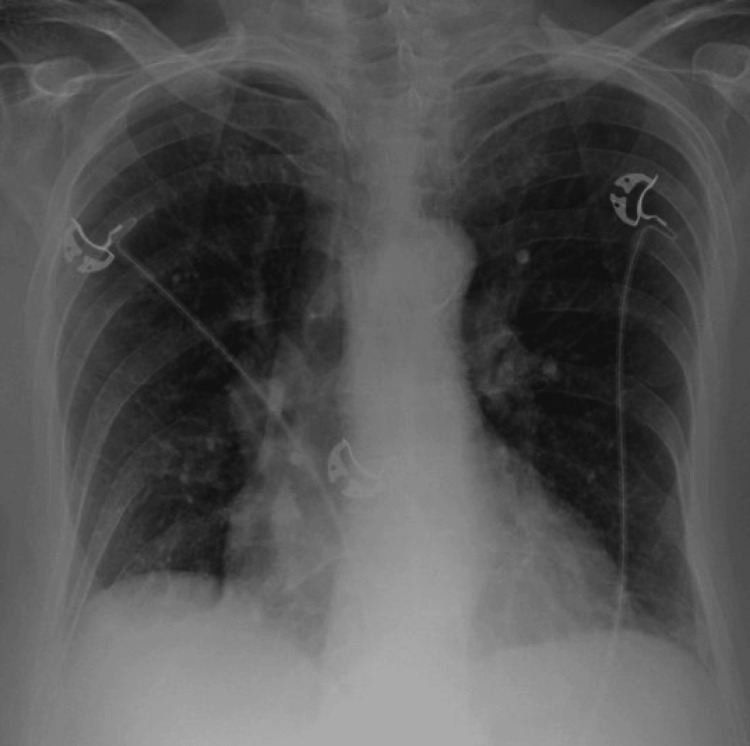 Figure 1
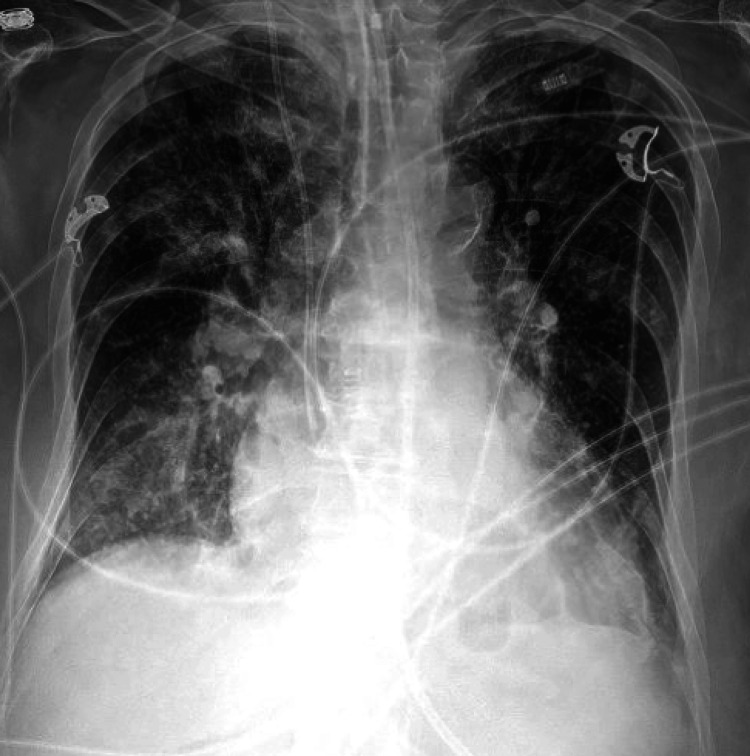 Figure 2
| Laboratory studies | Day 1 | Day 8 | Day 14 | Day of discharge | Normal range | |
| Complete blood count | White blood count | 2.72 | 18.88 | 6.89 | 6.22 | 4.40 - 11.00 10*3/uL |
| Hemoglobin | 13.0 | 8.8 | 8.1 | 7.5 | 12.3 - 15.3 g/dL | |
| Platelet count | 131 | 172 | 387 | 427 | 150 - 450 10*3/uL | |
| Complete metabolic panel | Creatinine | 1.17 | 2.38 | 3.68 | 1.40 | 0.60 - 1.20 mg/dL |
| Aspartate aminotransferase | 133 | 91 | 21 | -- | 13 - 39 U/L | |
| Alanine aminotransferase | 84 | 53 | 21 | -- | 7 - 52 U/L | |
| Alkaline phosphatase | 153 | 216 | 114 | -- | 34 - 104 U/L | |
| Additional testing | Ferritin | 728 | -- | -- | -- | 11 - 307 ng/mL |
| Lactate dehydrogenase | 489 | -- | -- | -- | 140 - 271 U/L | |
| Laboratory studies | Result | |
| Respiratory testing | Respiratory pathogen panel | Negative |
| Serum and urine testing | Blood culture | Negative |
| EBV quantitative PCR | Negative | |
| Cytomegalovirus quantitative PCR | Negative | |
| Parvovirus B19 quantitative PCR | Negative | |
|
| Negative | |
| Blastomycosis serum and urine antigen | Negative | |
| Histoplasma galactomannan urine and serum antigen | Negative | |
| Aspergillus galactomannan antigen | Negative | |
| Cryptococcal antigen | Negative | |
|
| Negative | |
|
| Negative | |
|
| Negative | |
|
| Negative | |
| Lyme disease total antibody IgM/IgG | Negative | |
| Spotted fever group antibodies IgM/IgG | Negative | |
|
| Positive | |
|
| Negative | |
| Bronchoscopy with bronchoalveolar lavage | Cell count | Bloody fluid |
| 111 nucleated cells | ||
| Cell differential | Neutrophil 78% | |
| Lymphocyte 8% | ||
| Monocyte 13% | ||
| Basophil 1% | ||
| Respiratory culture | Negative | |
| Acid-fast smear and culture | Negative | |
| Fungal culture | Negative | |
| Pneumonia panel PCR | Negative | |
| Cytology | No malignant cells | |
| Tissue exam | Few bland cells with neuroendocrine features | |
Peer Reviews
No public reviews on file for this paper yet. If you reviewed it on a platform where reviews are public (OpenReview, ICLR, NeurIPS, ICML), you can paste yours below so the community can read it here.
Videos
No videos yet. Explain this paper in a talk, walkthrough, or lecture? Add one.
Taxonomy
TopicsViral Infections and Vectors · Travel-related health issues · Clostridium difficile and Clostridium perfringens research
Introduction
Ehrlichia chaffeensis is an intracellular Gram-negative bacterium transmitted to humans by infected ticks, primarily the lone star tick, which is endemic to the southeastern and south-central regions of the United States. Ehrlichiosis typically manifests as a flu-like illness with nonspecific symptoms such as fever, headache, and myalgias. Laboratory findings may reveal pancytopenia, elevated liver function tests, and acute kidney injury [1]. Though many cases are self-limited, they can progress to severe infection with multiorgan involvement, including respiratory failure, septic shock, and hepatitis [1]. Clinicians must maintain heightened awareness of ehrlichiosis, especially in endemic regions, to facilitate prompt recognition, timely diagnosis, and treatment to improve patient outcomes and prevent complications.
Case presentation
A 75-year-old female patient residing in North Carolina with a medical history significant for mitral valve prolapse, gastroesophageal reflux disease, and osteopenia presented with two weeks of flu-like symptoms, including lightheadedness, shortness of breath, myalgias, and night sweats. She reported no recent travel or known sick contacts. On presentation, she was hypoxic, requiring supplemental oxygen, and tachycardic. Physical examination revealed no rash.
Initial laboratory evaluation was notable for leukopenia, thrombocytopenia, and elevated liver transaminases (Table 1). Computed tomography (CT) imaging of the chest, abdomen, and head was unremarkable. She was admitted for further workup of hypoxia. Further investigation into the elevated liver enzymes revealed biliary sludge on the right upper quadrant ultrasound, normal creatinine kinase, and a negative hepatitis profile. Thrombocytopenia persisted despite normalization of white blood cell count. Further laboratory studies revealed inflammation, as evidenced by elevated ferritin and lactate dehydrogenase, which serve as nonspecific markers of systemic inflammation (Table 1).
On day 2 of hospitalization, she developed recurrent fevers, peaking at 104.0°F, which were complicated by new-onset atrial fibrillation with rapid ventricular response. At that time, empiric broad-spectrum antibiotics, including vancomycin, cefepime, and metronidazole, were started for sepsis of unclear origin. Despite antimicrobial therapy, she remained febrile and clinically deteriorated, developing septic shock requiring transfer to the intensive care unit (ICU) for vasopressor support.
The infectious diseases team was consulted, and further history from family members revealed the patient had recently removed a tick from her pet cat and had been exposed to mulch while gardening. Given these exposures and the severity of the patient’s condition, there was concern for disseminated fungal, tick-borne, or viral infection. Empiric amphotericin, doxycycline, and acyclovir were added to her antimicrobial regimen. The patient developed increasing oxygen requirements, requiring additional respiratory support that ultimately necessitated endotracheal intubation and mechanical ventilation. Serial chest radiographs demonstrated progressive bilateral infiltrates and pulmonary edema (Figures 1-2). Pulmonology was consulted, and a bronchoscopy was performed with findings consistent with diffuse alveolar hemorrhage (Table 2). The patient had fluctuating mental status, causing concern for central nervous system (CNS) infection. However, due to her critical condition, a lumbar puncture was not feasible. A comprehensive infectious workup was initiated and revealed negative testing for fungal or viral pathogens but returned positive for Ehrlichia chaffeensis by polymerase chain reaction (PCR) (Table 2).
Chest radiograph on day 1 of hospitalization demonstrated mild bilateral infiltrates.
Chest radiograph on day 10 of hospitalization showed progression of bilateral infiltrates with worsening pulmonary edema.
Following confirmation of the diagnosis, all antimicrobials were discontinued except doxycycline. The patient clinically improved, vasopressors were discontinued, and supplemental oxygen was quickly weaned off after self-extubating. She was subsequently transferred out of the ICU with continued improvement, including normalization of liver function testing and platelet count. Her hospital course was complicated by an acute kidney injury (Table 1). She completed a 10-day course of doxycycline prior to discharge and returned home with family to continue recovery given prolonged hospitalization and residual debility. By the day of discharge, acute kidney injury had completely resolved, and the patient was near her baseline functional status.
Discussion
Ehrlichiosis presents as a nonspecific, flu-like illness characterized by fevers, chills, fatigue, headache, and myalgias [2]. Ehrlichia chaffeensis spreads hematogenously after being transmitted through the bite of an infected tick, targeting the peripheral blood system monocytes and macrophages. This can result in widespread organ involvement, including the brain, lungs, and kidneys [3]. As demonstrated in our case, severe manifestations including respiratory failure, septic shock, and multiorgan involvement are possible, especially in individuals with advanced age or immunocompromising conditions [4]. Notably, there is a higher risk of severe disease and death in patients who experience a delay in treatment with doxycycline [5].
Ehrlichiosis is diagnosed based on clinical suspicion paired with laboratory confirmation. Diagnostic modalities include peripheral blood smear examination for intracytoplasmic inclusions, molecular testing via PCR, in vitro testing, and serologic antibody testing. Due to the risk of progression to severe disease or complications, doxycycline should be initiated as soon as the diagnosis is suspected while awaiting laboratory confirmation. [6]. Severe complications of ehrlichiosis can include acute respiratory distress syndrome (ARDS), septic shock, kidney failure, respiratory failure, or meningoencephalitis. Less commonly, patients may develop alveolar hemorrhage and vascular congestion, particularly in severe disease [7]. Treatment consists of seven to 10 days of doxycycline, with clinical improvement often demonstrated 24-48 hours after initiating therapy.
Our patient had classic clinical and laboratory manifestations of ehrlichiosis, including a flu-like prodrome, pancytopenia with persistent thrombocytopenia, and elevated liver function tests. She had relevant exposure to ticks via a pet, resided in an endemic region, and her presentation coincided with a high-incidence season. She rapidly developed severe disease, including acute hypoxic respiratory failure requiring mechanical ventilation. Bronchoscopy revealed diffuse alveolar hemorrhage, an infrequently described complication of ehrlichiosis, especially in an immunocompetent patient. Tissue pathology obtained during bronchoscopy demonstrated neuroendocrine cells, an incidental finding that pulmonology consultants felt could be in the setting of lung inflammation and recommended following up in the outpatient setting for repeat imaging.
More common pulmonary manifestations include bilateral infiltrates, respiratory insufficiency, or ARDS. Alveolar hemorrhage has been described in a few cases, including one report in a patient with HIV and severe ehrlichiosis, where post-mortem evaluation revealed alveolar hemorrhage and vascular congestion [7]. Alveolar hemorrhage can result from the systemic inflammatory response to infection. While rare in ehrlichiosis, this phenomenon has been associated with infections such as influenza, leptospirosis, dengue, and malaria in immunocompetent individuals [8]. Additionally, while kidney injury can be seen with ehrlichiosis, in this case, it was suspected to be multifactorial, with exposure to nephrotoxic agents and hypotension from shock as primary factors. Ehrlichia infections can result in kidney injury by causing reduced blood flow from decreased blood pressure, direct infection of nephrons, and immune complex deposition in glomeruli secondary to systemic inflammatory response [7]. Advanced age and delay in therapy are known risk factors for severe disease, as demonstrated in this case.
Diagnosis of ehrlichiosis can be a challenge due to nonspecific clinical and laboratory manifestations, incomplete exposure histories, limited awareness of endemic regions, and reduced access to infectious disease specialists [9]. Tick-borne illnesses are a growing health concern as tick populations are growing and distributions are expanding, driven in part by climate change [10]. Clinicians must maintain a high index of suspicion for tick-borne disease in endemic areas, particularly during peak seasons or with a history of animal or outdoor exposures. Early recognition, timely diagnostic confirmation, and prompt initiation of doxycycline therapy are necessary to decrease the risk of severe disease and complications.
Conclusions
This case is noteworthy because it demonstrates the importance of detailed history-taking, the value of pattern recognition, and the critical role infectious disease specialists play in guiding patient care. Additionally, it highlights a rare but serious complication of ehrlichiosis, alveolar hemorrhage, in an immunocompetent patient. As demonstrated in this case, increased awareness of ehrlichiosis and its potential complications can result in improved patient outcomes through timely diagnosis and treatment.
The reference list from the paper itself. Each links out to its DOI / PubMed record.
- 1Human ehrlichiosis and anaplasmosis Clin Lab Med Ismail N Bloch KC Mc Bride JW 2612923020102051355110.1016/j.cll.2009.10.004PMC 2882064 · doi ↗ · pubmed ↗
- 2Ehrlichiosis presenting as severe sepsis and meningoencephalitis in an immunocompetent adult JMM Case Rep Buzzard SL Bissell BD Thompson Bastin ML 05201810.1099/jmmcr.0.005162 PMC 623075830425837 · doi ↗ · pubmed ↗
- 3Ehrlichia chaffeensis: a prevalent, life-threatening, emerging pathogen Trans Am Clin Climatol Assoc Walker DH Ismail N Olano JP Mc Bride JW Yu XJ Feng HM 3753821152004 https://pubmed.ncbi.nlm.nih.gov/17060980/17060980 PMC 2263766 · pubmed ↗
- 4The importance of early treatment with doxycycline in human ehrlichiosis Medicine (Baltimore) Hamburg BJ Storch GA Micek ST Kollef MH 53608720081834480310.1097/MD.0b 013e 318168 da 1d · doi ↗ · pubmed ↗
- 5Assessment of risk factors and outcomes of severe ehrlichiosis infection JAMA Netw Open Kuriakose K Pettit AC Schmitz J Moncayo A Bloch KC 03202010.1001/jamanetworkopen.2020.25577 PMC 767251433201233 · doi ↗ · pubmed ↗
- 6Ehrlichioses in humans: epidemiology, clinical presentation, diagnosis, and treatment Clin Infect Dis Dumler JS Madigan JE Pusterla N Bakken JS 05145 Suppl 1200710.1086/51814617582569 · doi ↗ · pubmed ↗
- 7Brief report: fatal seronegative ehrlichiosis in a patient with HIV infection N Engl J Med Paddock CD Suchard DP Grumbach KL 116411673291993837778010.1056/NEJM 199310143291605 · doi ↗ · pubmed ↗
- 8Infectious diseases causing diffuse alveolar hemorrhage in immunocompetent patients: a state-of-the-art review Lung von Ranke FM Zanetti G Hochhegger B Marchiori E 91819120132312891310.1007/s 00408-012-9431-7PMC 7102311 · doi ↗ · pubmed ↗