Postcoital Urethral and Penile Trauma in a 28-Year-Old Male: A Case Report and Surgical Management
Stanislaw Szymkiewicz

TL;DR
A 28-year-old man experienced severe urethral bleeding after sex, requiring surgery to repair rare combined injuries to the penis and urethra.
Contribution
This case report highlights a rare instance of combined cavernosal and urethral rupture after sexual activity requiring surgical repair.
Findings
Combined rupture of the urethra and corpora cavernosa can occur after sexual intercourse.
Surgical exploration and layered reconstruction led to good functional and cosmetic outcomes.
Persistent bleeding and lack of external trauma signs delayed diagnosis but required urgent intervention.
Abstract
Urethral bleeding following sexual activity is uncommon and typically benign. However, in rare cases, it may indicate significant trauma to the penile structures requiring surgical intervention. A 28-year-old male was admitted to the Urology Department from the Emergency Department due to profuse urethral bleeding after sexual intercourse. Physical examination revealed blood at the external urethral meatus, but no penile deviation, hematoma, or swelling. This atypical presentation without external signs of trauma delayed definitive diagnosis. Due to persistent bleeding and suspected cavernosal and urethral injury, the patient was qualified for surgical exploration. Intraoperatively, through a penoscrotal approach, complete denudation of the penis was performed. A tourniquet was placed at the penile base. Saline injection into the corpora cavernosa revealed a tear on the ventral aspect…
Genes, proteins, chemicals, diseases, species, mutations and cell lines named across the full text — each resolved to its canonical identifier and authoritative record.
Click any figure to enlarge with its caption.
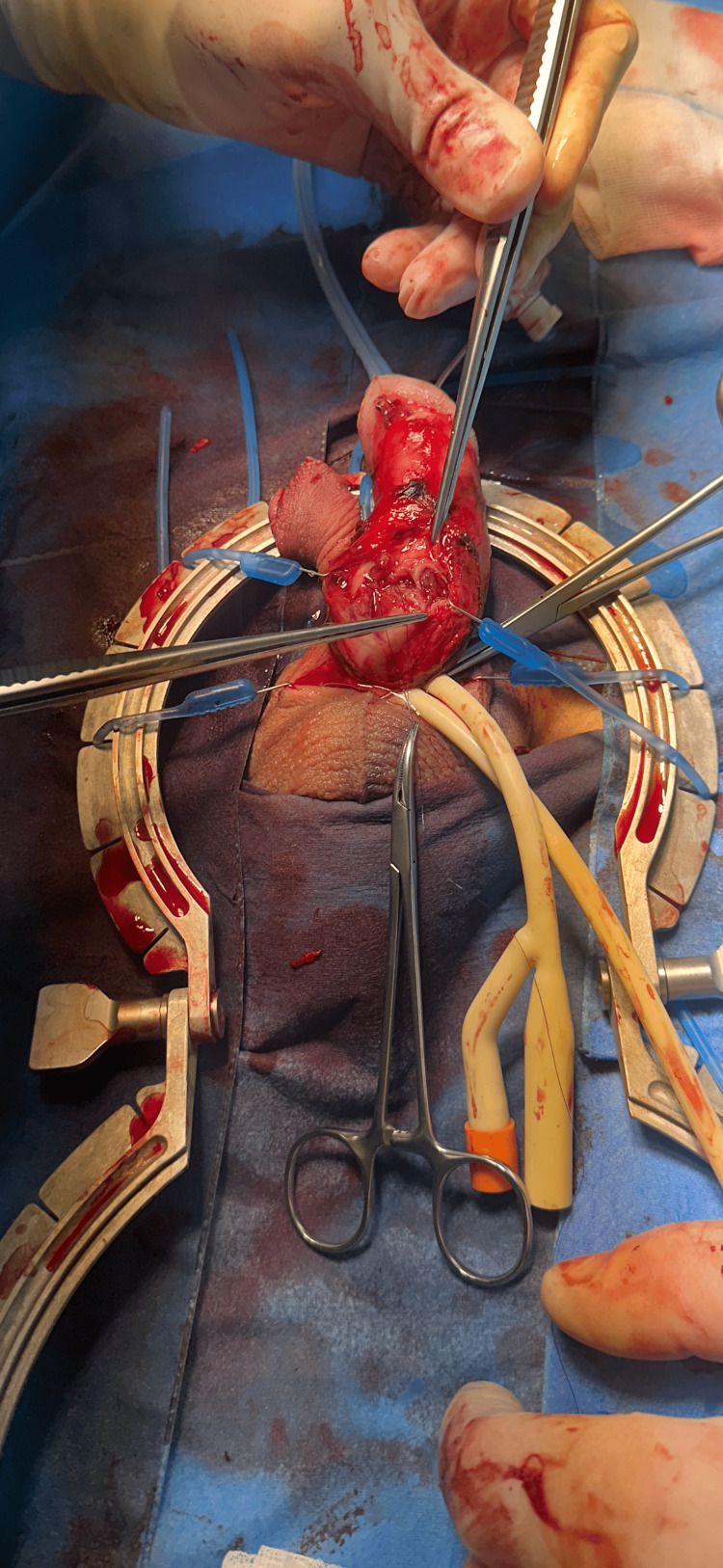 Figure 1
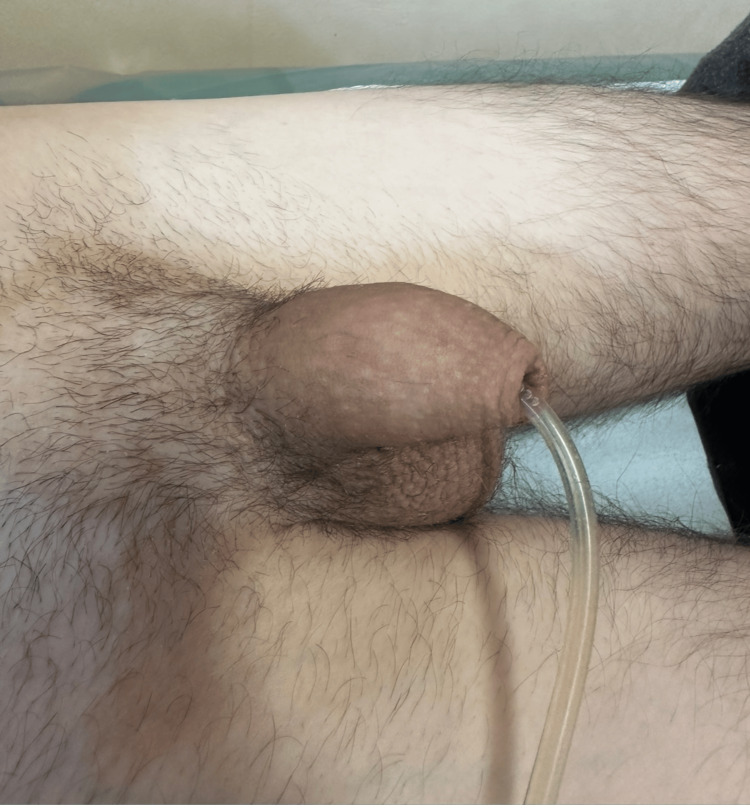 Figure 2
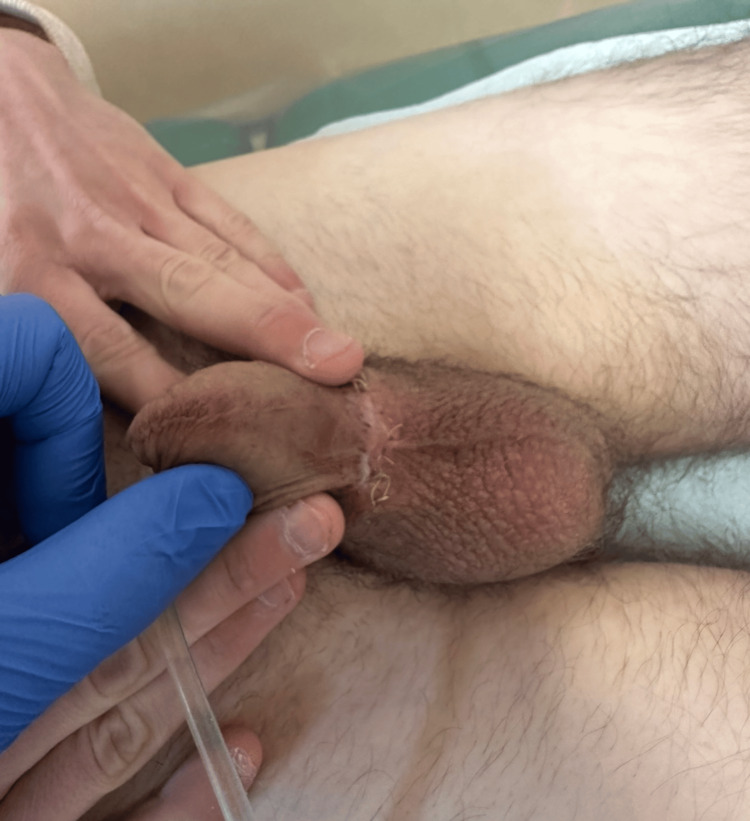 Figure 3
Peer Reviews
No public reviews on file for this paper yet. If you reviewed it on a platform where reviews are public (OpenReview, ICLR, NeurIPS, ICML), you can paste yours below so the community can read it here.
Videos
No videos yet. Explain this paper in a talk, walkthrough, or lecture? Add one.
Taxonomy
TopicsUrological Disorders and Treatments · Urologic and reproductive health conditions · Urinary Bladder and Prostate Research
Introduction
Penile trauma associated with sexual activity is a urological emergency, most commonly presenting as a penile fracture. While classic penile fracture involves rupture of the tunica albuginea of the corpora cavernosa, concurrent urethral injury is less frequent, seen in approximately 10%-20% of cases [1,2]. Prompt surgical repair is crucial to prevent long-term complications such as erectile dysfunction, urethral stricture, or penile curvature [3,4]. This case report presents an unusual presentation of postcoital bleeding due to combined rupture of the corpus spongiosum, corpus cavernosum, and urethra in a young male, managed surgically with a favorable outcome.
Case presentation
A 28-year-old previously healthy male presented to the Emergency Department with acute urethral bleeding following consensual sexual intercourse. He reported hearing a sudden "cracking" sound followed by immediate penile detumescence and active bleeding from the urethral meatus. On examination, the penis appeared externally normal, without swelling, hematoma, or deviation. The only clinical finding was active bleeding from the urethral meatus. Blood was noted at the urethral orifice. No scrotal tenderness or perineal ecchymosis was present. Laboratory tests, including urinalysis, CBC, and CRP, were unremarkable. Due to clinical suspicion of underlying corporal and urethral injury, the patient was taken to the operating room.
Surgical procedure
Sterile field preparation was performed, followed by penile degloving via a penoscrotal approach. A tourniquet was applied at the penile base. Injection of 0.9% NaCl into the corpora cavernosa revealed leakage from a tear on the ventral side of the penis involving both the corpus spongiosum and urethra. The deep (Buck's) fascia was dissected. Urethral repair was performed using 5-0 Monocryl absorbable sutures. Tunical repair of the corpus cavernosum was completed with 2-0 Serapren sutures. A repeat saline test confirmed a watertight closure. Layered penile closure was carried out. A Foley catheter was inserted and a sterile dressing applied (Figure 1).
Intraoperative image showing rupture of the corpus spongiosum, corpus cavernosum, and urethra
The postoperative course was uneventful. The patient was discharged on postoperative day three with the catheter in place. At the 14-day follow-up, physical examination revealed satisfactory wound healing without signs of infection or hematoma (Figure 2 and Figure 3).
Postoperative day 14: appearance of external genitalia with Foley catheter in place. No signs of infection or hematoma
Postoperative day 14: satisfactory wound healing with normal anatomical appearance
Discussion
This case is notable due to the absence of classic signs of penile fracture, such as hematoma, palpable defect, or deformity. The isolated finding of urethrorrhagia may lead to underdiagnosis or delay in intervention. Surgeons should maintain a high index of suspicion even in the absence of typical external findings [1,2]. Penile fracture typically presents with a history of trauma during sexual activity, often accompanied by a snapping sound, pain, immediate detumescence, and swelling. While cavernosal rupture is the hallmark finding, associated urethral injury occurs in up to 20% of cases and should be suspected in the presence of urethrorrhagia or voiding difficulties [3,4]. In this case, early surgical intervention allowed for precise anatomical repair of both the urethra and cavernosal tissue. The penoscrotal approach provided optimal exposure. Intraoperative saline testing is a simple and effective method for identifying cavernosal defects. Early reconstruction reduces the risk of erectile dysfunction, curvature, and stricture formation [2,3]. This case highlights the importance of considering significant structural injury in patients with urethrorrhagia following intercourse and supports the role of early surgical exploration in suspected penile trauma.
Conclusions
Combined urethral and cavernosal injury following intercourse is rare but serious. High clinical suspicion, timely diagnosis, and prompt surgical management are key to ensuring good outcomes. Penile exploration, anatomical repair, and layered closure can restore function and prevent complications.
The reference list from the paper itself. Each links out to its DOI / PubMed record.
- 1Fracture of the penis Br J Surg Eke N 5555658920021197254410.1046/j.1365-2168.2002.02075.x · doi ↗ · pubmed ↗
- 2Penile fracture: a meta-analysis Urol Int Amer T Wilson R Chlosta P Al Buheissi S Qazi H Fraser M Aboumarzouk OM 3153299620162695393210.1159/000444884 · doi ↗ · pubmed ↗
- 3Urethral injury in penile fracture: a narrative review Int Braz J Urol Barros R Ribeiro JG Da Silva HA De SáFR Fosse AMJúnior Favorito LA 1521574620203196162010.1590/S 1677-5538.IBJU.2020.99.02PMC 7025847 · doi ↗ · pubmed ↗
- 4Review of Cleveland Clinic experience with penile fracture Urology Fergany AF Angermeier KW Montague DK 3523555419991044373710.1016/s 0090-4295(99)00115-6 · doi ↗ · pubmed ↗