Adherence to a “MediterrAsian” diet is associated with weight loss-independent improvements in liver fat and lipid profile, but not glucoregulation or inflammation: secondary analysis of a randomized controlled trial
Yu Chung Chooi, Faidon Magkos, Jadegoud Yaligar, Navin Michael, Suresh Anand Sadananthan, Yeshe Manuel Kway, S. Sendhil Velan, Kevin Junliang Lim, Xianning Lai, Long Hui Wong, Yap Seng Chong, Evelyn Xiu Ling Loo, Johan G. Eriksson

TL;DR
A Mediterranean-style diet improved liver fat and cholesterol in Chinese women with fatty liver, but not blood sugar or inflammation, even after weight loss.
Contribution
The study shows that dietary adherence to a MedDiet correlates with liver and lipid improvements, independent of weight loss, in Asian women with fatty liver.
Findings
Higher MedDiet adherence was linked to reduced liver fat and better lipid profiles.
Improvements in glucose regulation and inflammation were not associated with dietary adherence after adjusting for weight loss.
Vegetables, nuts, fish, legumes, and olive oil were key drivers of the observed benefits.
Abstract
Greater adherence to the Mediterranean Diet (MedDiet) has been associated with improved inflammatory biomarkers in Western populations, suggesting that the anti-inflammatory effect is crucial for improvements in body weight, body composition, and cardiometabolic risk factors observed with the MedDiet. We previously reported that a calorie-restricted MedDiet adapted to the Asian food culture has beneficial effects on body composition, liver fat, and cardiometabolic risk markers in Chinese women with fatty liver disease. To evaluate the effects of MedDiet on inflammation and examine the relationship between dietary adherence and changes in health outcomes. 88 non-diabetic Chinese women with fatty liver who participated in a 3-arm, 12-week dietary randomized controlled trial were included in this secondary analysis. Adherence to the MedDiet was assessed using a validated questionnaire.…
Genes, proteins, chemicals, diseases, species, mutations and cell lines named across the full text — each resolved to its canonical identifier and authoritative record.
Click any figure to enlarge with its caption.
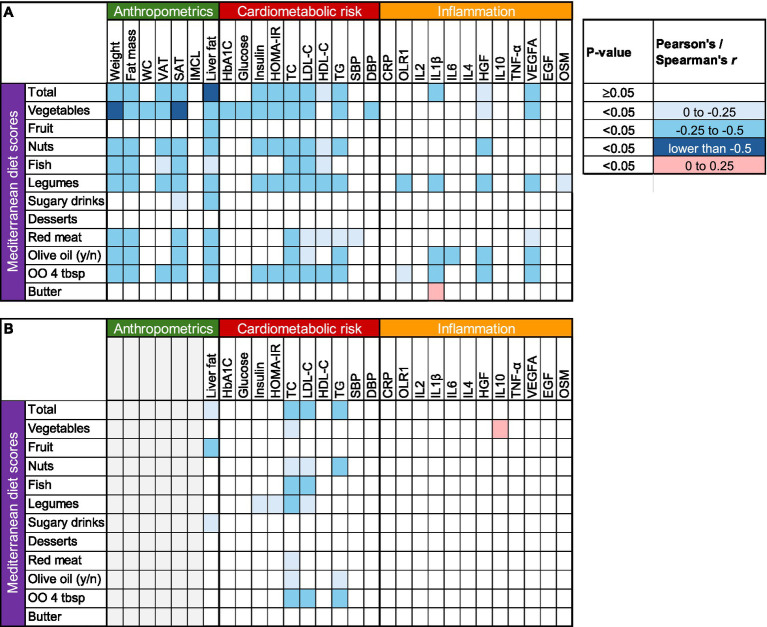 Figure 1
Peer Reviews
No public reviews on file for this paper yet. If you reviewed it on a platform where reviews are public (OpenReview, ICLR, NeurIPS, ICML), you can paste yours below so the community can read it here.
Videos
No videos yet. Explain this paper in a talk, walkthrough, or lecture? Add one.
Taxonomy
TopicsLiver Disease Diagnosis and Treatment · Nutritional Studies and Diet · Diet and metabolism studies