Genomic analyses support locally derived crown-of-thorns seastar outbreaks in the Pacific
Carlos Leiva, Marta Martín-Huete, Sarah Lemer

TL;DR
Genomic analysis shows crown-of-thorns seastar outbreaks in the Pacific are locally derived, not spread across oceans, and reveals new insights into their population structure and possible species classification.
Contribution
The study uses low-coverage whole-genome sequencing to demonstrate local origins of COTS outbreaks and challenges existing species classifications.
Findings
Pacific COTS populations are highly structured and outbreaks are locally derived, not spread through open ocean.
Three main COTS lineages are geographically restricted to Hawai‘i, French Polynesia, and the West Pacific.
Current COTS populations have the highest effective sizes in the last million years, suggesting human or climate influence.
Abstract
Crown-of-thorns seastars (COTS, Acanthaster spp.) are the most notorious coral predators, whose devastating outbreaks cause recurrent and extensive coral depletion across Indo-Pacific reefs. However, the spread potential of COTS outbreaks and the anthropogenic role in their initiation have remained a subject of intense debate for over five decades. Here, using low-coverage whole-genome sequences of 247 COTS, we show that Pacific COTS populations are highly structured, indicating that outbreaks do not spread through open ocean, but instead are locally derived. Pacific COTS populations are grouped in three main lineages geographically restricted to Hawai‘i, French Polynesia, and the West Pacific, with the latter showing further significant genetic substructure. Phylogenomic analyses indicated that the Hawai‘i COTS lineage likely represents a different undescribed species and challenged…
Genes, proteins, chemicals, diseases, species, mutations and cell lines named across the full text — each resolved to its canonical identifier and authoritative record.
Click any figure to enlarge with its caption.
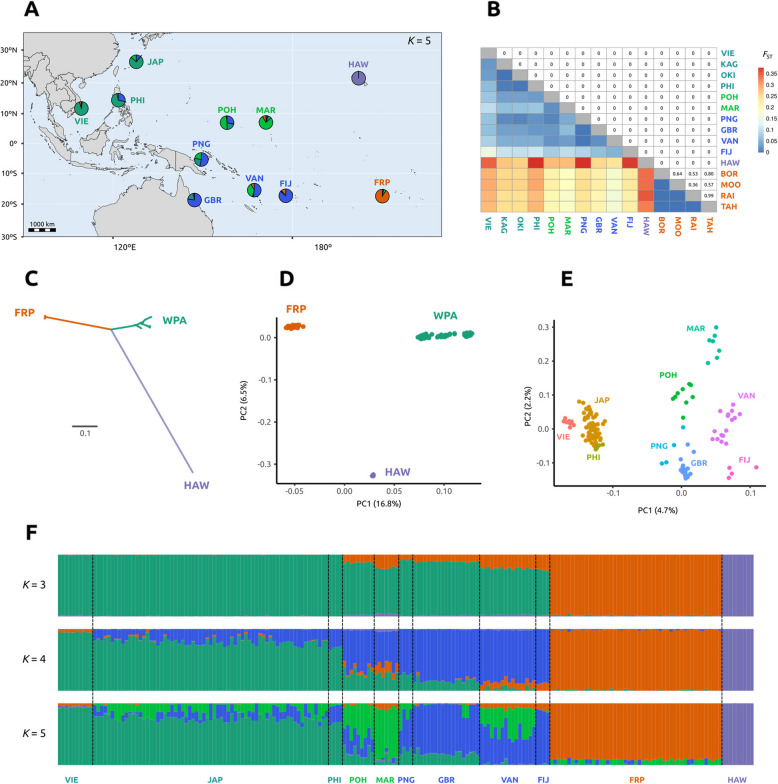 Figure 1
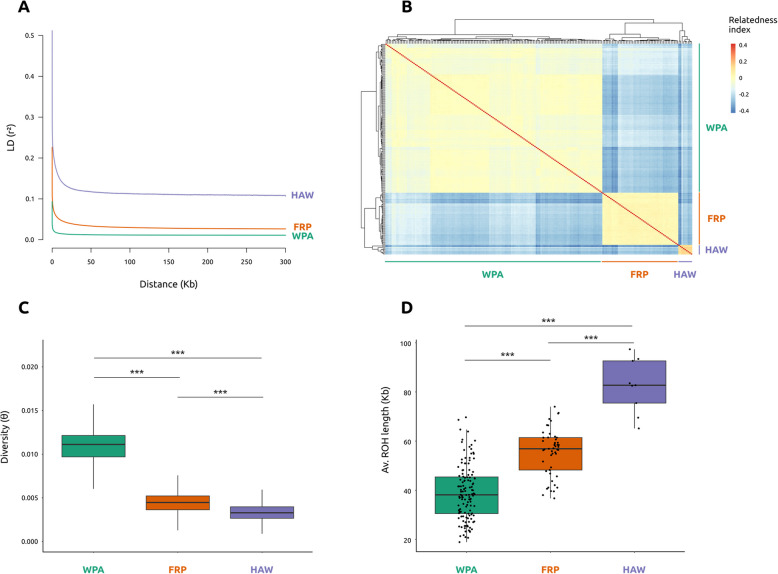 Figure 2
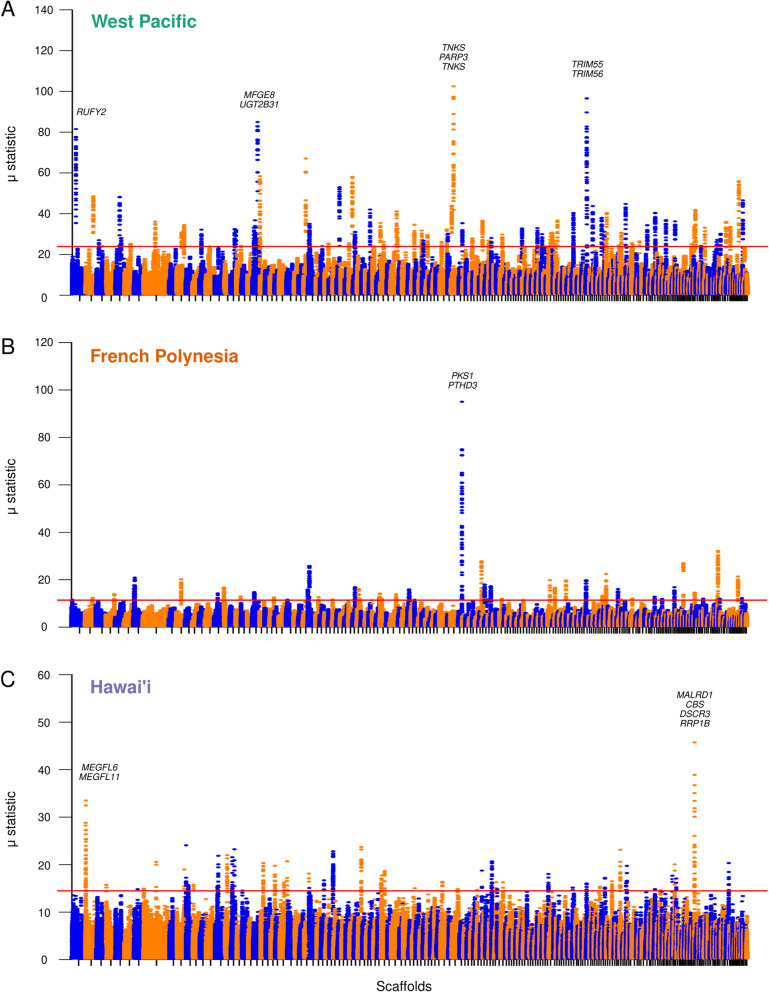 Figure 3
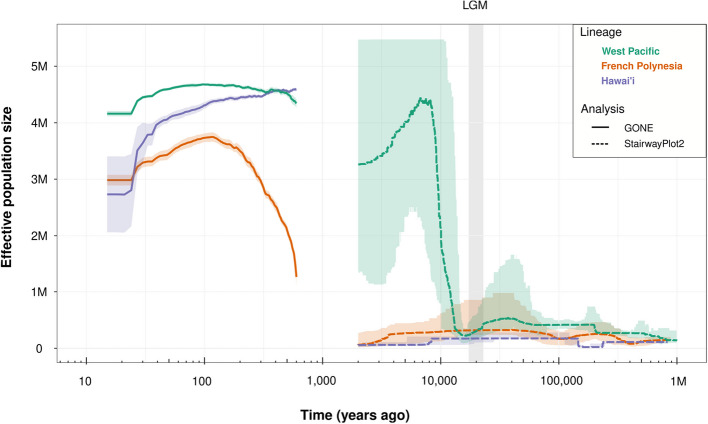 Figure 4
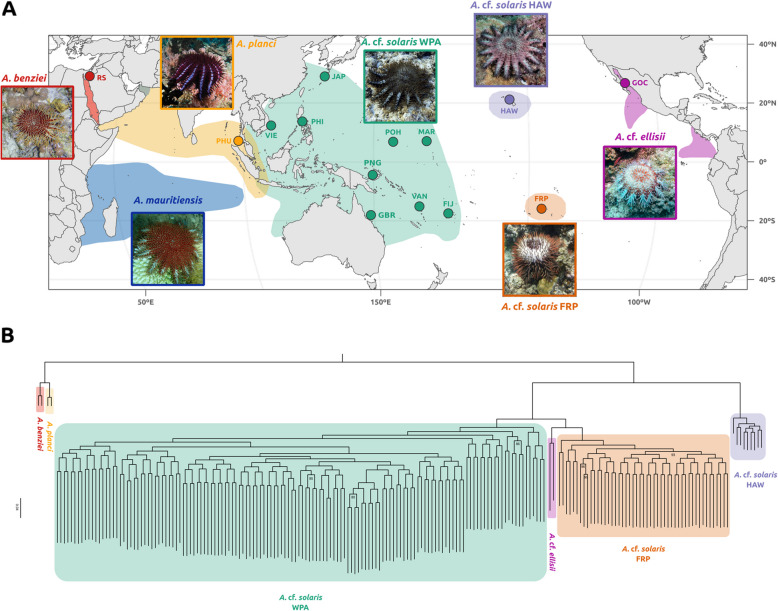 Figure 5
Peer Reviews
No public reviews on file for this paper yet. If you reviewed it on a platform where reviews are public (OpenReview, ICLR, NeurIPS, ICML), you can paste yours below so the community can read it here.
Videos
No videos yet. Explain this paper in a talk, walkthrough, or lecture? Add one.
Taxonomy
TopicsIdentification and Quantification in Food · Environmental DNA in Biodiversity Studies · Genetic diversity and population structure