Online learning for crisis response: evaluating reach and perceived knowledge gains from the MOOC “Infection, Prevention, and Control of Acute Respiratory Infections for Healthcare Workers in Low- and Middle-Income Countries (IPC MOOC)”
Bernarda Espinoza-Castro, Verónica Encina, Marie Astrid Garrido, Fausto Ignatov Vinueza, Juan Pablo Piedra, Ximena Garzon-Villalba, Katja Radon

TL;DR
An online course on infection control for healthcare workers in Ecuador was found to be effective, with high completion and satisfaction rates across diverse groups.
Contribution
The study evaluates the effectiveness of a MOOC in improving IPC knowledge among healthcare workers in LMICs, highlighting its scalability and accessibility.
Findings
75% of participants successfully completed the IPC MOOC with no significant differences based on gender, region, or occupation.
80% of participants reported high satisfaction with the course, and 95% would recommend it to colleagues.
Perceived knowledge gains were similar for manual and intellectual workers after completing the course.
Abstract
The COVID-19 pandemic had challenged healthcare systems worldwide, significantly affecting healthcare workers (HWs), particularly in low- and middle-income countries (LMICs). To address the urgent need for infection prevention and control (IPC) training among diverse healthcare roles, the Massive Open Online Course (MOOC) titled "Infection, Prevention, and Control of Acute Respiratory Infections for Healthcare Workers in Low- and Middle-Income Countries (IPC MOOC)" was developed and implemented in Ecuador. This study aimed to evaluate reach and perceived knowledge gains from the IPC MOOC, focusing on whether successful course completion was influenced by sociodemographic factors or occupational roles (manual vs. intellectual work) and whether satisfaction and perceived learning outcomes differed between these groups. The IPC MOOC was developed through an interdisciplinary collaboration…
Genes, proteins, chemicals, diseases, species, mutations and cell lines named across the full text — each resolved to its canonical identifier and authoritative record.
Click any figure to enlarge with its caption.
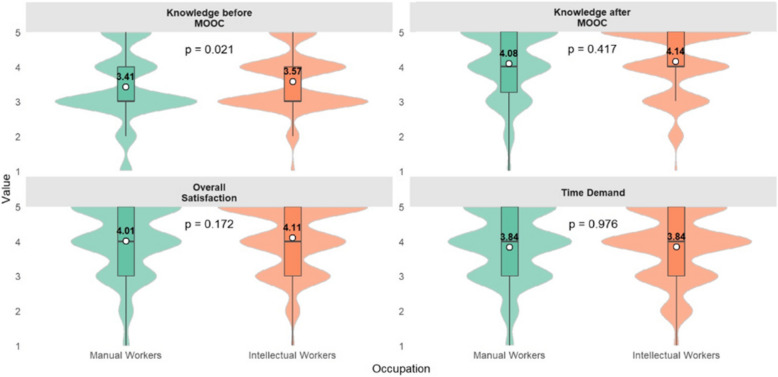 Figure 1
Peer Reviews
No public reviews on file for this paper yet. If you reviewed it on a platform where reviews are public (OpenReview, ICLR, NeurIPS, ICML), you can paste yours below so the community can read it here.
Videos
No videos yet. Explain this paper in a talk, walkthrough, or lecture? Add one.
Taxonomy
TopicsCOVID-19 and Mental Health · COVID-19 epidemiological studies · Disaster Response and Management