Chicken liver and eggshell crackers are a safe and affordable animal source food for overcoming micronutrient deficits during pregnancy and lactation in Indonesia: a double-blind, cluster randomized controlled trial (SISTIK Growth Study)
Aly Diana, Sofa Rahmannia, Yenni Zuhairini Suhadi, Dimas Erlangga Luftimas, Haidar Rizqi, Afini Dwi Purnamasari, Ayunda Jihadillah, Mohammad Brachim Ansari, Dearly Ayu Zahrotun Haq, Aisyah Nur Pratiwi, Dina Novtyana Puspita, Yeni Intan Kusuma Dewi Affandy

TL;DR
A study in Indonesia tested micronutrient-enriched crackers during pregnancy and lactation but found no significant growth benefits compared to standard crackers.
Contribution
The study evaluated a novel, locally available food-based intervention to address micronutrient deficiencies during pregnancy and lactation.
Findings
There was no significant difference in growth outcomes between the micronutrient-enriched and standard cracker groups.
Both groups showed improved LAZ-scores and reduced stunting prevalence over the study period.
Maternal hemoglobin levels and anemia rates were similar between the two groups.
Abstract
Poor diets and micronutrient deficiencies during pregnancy and lactation are common in Indonesia, potentially affecting linear growth. National maternal programs focus predominantly on iron-folic acid (IFA) supplementation, but adherence is poor. We explored a strategy utilizing locally available micronutrient-rich foods in the form of micronutrient-enriched crackers (MEC) to improve neonatal and infant growth. The Sustainable Intervention of Supplementation to Improve Kid’s (SISTIK) Growth Study was a double-blind, cluster randomized controlled trial conducted in 28 village clusters in Sumedang, Indonesia (Nov 2020–Jan 2023). Villages—unit of randomization—were stratified by size and assigned to receive either MEC or standard wheat crackers (SWC), along with nutrition and health education, morbidity control, and national IFA supplementation programs. Eligible pregnant women (19–35…
Genes, proteins, chemicals, diseases, species, mutations and cell lines named across the full text — each resolved to its canonical identifier and authoritative record.
Click any figure to enlarge with its caption.
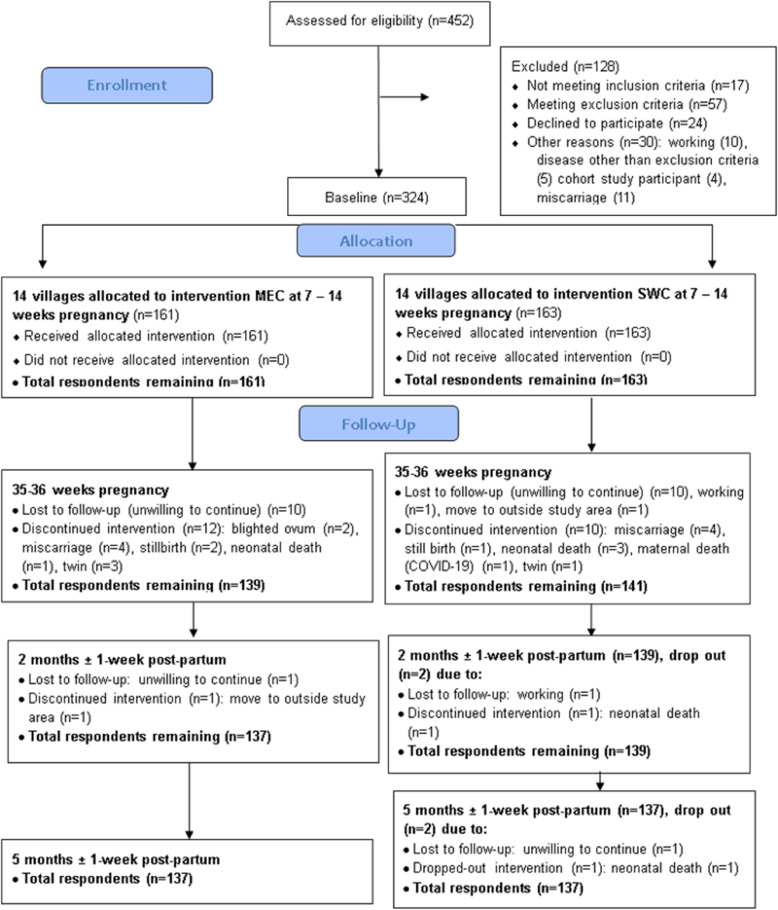 Figure 1
Peer Reviews
No public reviews on file for this paper yet. If you reviewed it on a platform where reviews are public (OpenReview, ICLR, NeurIPS, ICML), you can paste yours below so the community can read it here.
Videos
No videos yet. Explain this paper in a talk, walkthrough, or lecture? Add one.
Taxonomy
TopicsChild Nutrition and Water Access