Current and future temperature suitability for autochthonous transmission of malaria in Canada
Kevin Siebels, Victoria Ng, Nicholas Ogden, Steven Schofield, Antoinette Ludwig

TL;DR
This study shows that climate change is making parts of Canada more suitable for malaria transmission, with increasing temperature suitability for the malaria parasite.
Contribution
The study identifies geographic locations in Canada with rising temperature suitability for malaria transmission under current and future climate scenarios.
Findings
Up to 34% of the Canadian population may experience suitable conditions for Plasmodium falciparum transmission.
Plasmodium vivax transmission suitability could affect up to 56% of the Canadian population.
Projected suitability varies based on climate scenarios and models.
Abstract
Malaria continues to be one of the most significant infectious diseases in terms of morbidity and mortality. In many parts of North America, including parts of southern Canada, competent malaria vectors Anopheles quadrimaculatus and Anopheles freeborni are present. With climate change, Canada may be increasingly suitable for transmission of the malaria parasite Plasmodium spp. The objective of this study was to identify the geographic locations in Canada where, and the frequency with which, temperature conditions may be suitable for autochthonous transmission of Plasmodium vivax and Plasmodium falciparum under current and projected climate. Temperature and duration thresholds from historic Plasmodium spp. transmission studies were applied on gridded historical and projected data to compute yearly frequencies of suitable conditions in Canada. The resulting yearly frequencies from 2000…
Genes, proteins, chemicals, diseases, species, mutations and cell lines named across the full text — each resolved to its canonical identifier and authoritative record.
Click any figure to enlarge with its caption.
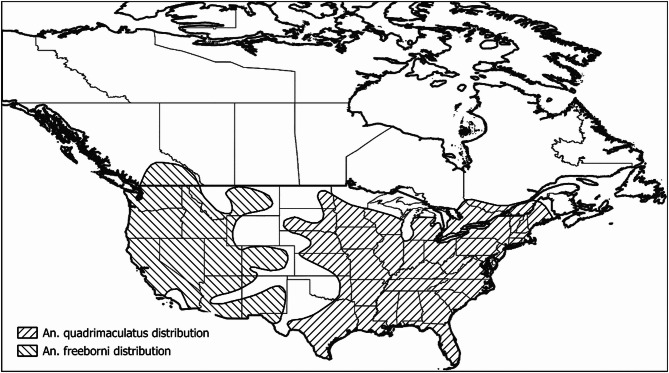 Figure 1
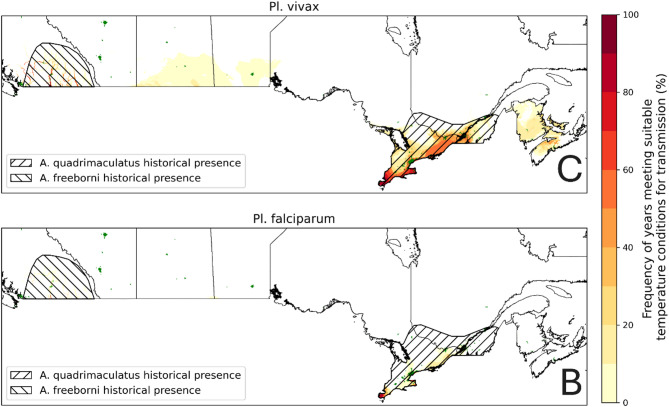 Figure 2
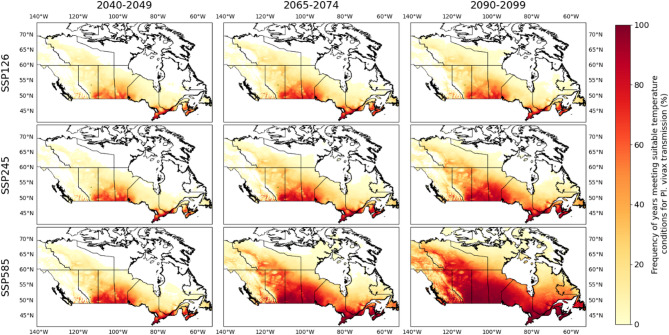 Figure 3
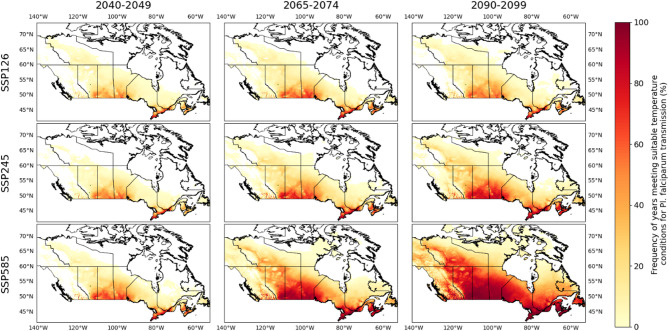 Figure 4
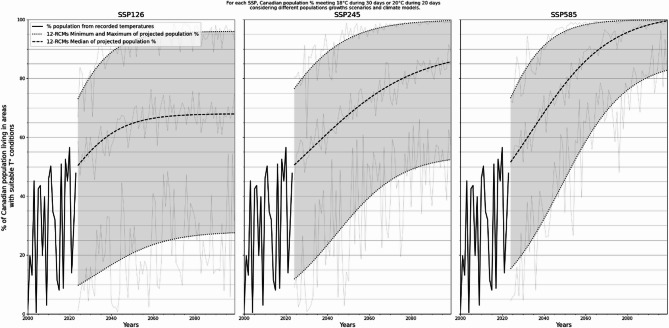 Figure 5
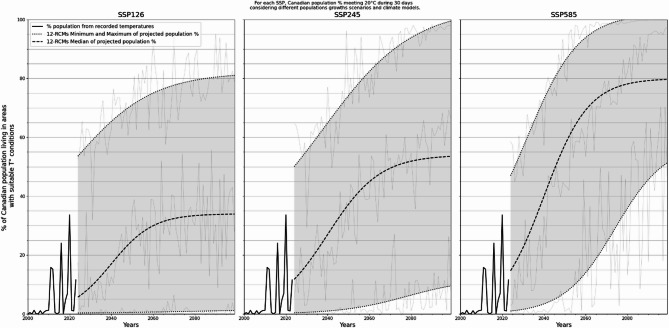 Figure 6
Peer Reviews
No public reviews on file for this paper yet. If you reviewed it on a platform where reviews are public (OpenReview, ICLR, NeurIPS, ICML), you can paste yours below so the community can read it here.
Videos
No videos yet. Explain this paper in a talk, walkthrough, or lecture? Add one.
Taxonomy
TopicsMalaria Research and Control · Viral Infections and Vectors · Mosquito-borne diseases and control