I don’t know-responses in the international trauma questionnaire caregiver-version: caregivers’ knowledge about children’s mental health
Brigitte Lueger-Schuster, Dina Weindl-Wagner, Andrea Zagaria, Moritz Russo, Irina Zrnić Novaković, Karin Zajec, Judith Noske, Alexander Haselgruber

TL;DR
This study explores how caregivers' uncertainty about their child's mental health symptoms, using an 'I don't know' option, can help improve understanding and treatment in trauma cases.
Contribution
The study introduces an 'I don’t know' response option in trauma questionnaires to better understand caregiver knowledge gaps in children's mental health.
Findings
43.49% of caregivers used at least one 'I don’t know' response in the questionnaire.
Social anxiety and suicidal tendencies in children were significantly associated with caregivers' 'I don’t know' responses.
A latent class analysis identified two distinct caregiver groups: 'Knowers' and 'Don’t Knowers'.
Abstract
To assess psychological problems in children having experienced traumatic events, multiple sources of information are gathered, including the caregiver’s report. Caregiver and child reports rarely accord. As there is no consensus why reports differ, this study investigated the caregivers’ knowledge on their child’s psychological symptoms, implementing an “I don’t know” option (IDK) in a measure on (complex) posttraumatic stress disorder– (C)PTSD. Data of 269 caregivers (including 70.19% biological parents and 11.15% other caregivers) and their children (Mage = 13.02, 55% female) were collected at entry assessments in a child psychiatry hospital. Standardized measures, including the International Trauma Questionnaire - Child and Adolescents Version (ITQ-CA), and a mirroring Caregivers’ Version (ITQ-CG) were used. Gender and age differences in IDK were investigated through Fisher’s Exact…
Genes, proteins, chemicals, diseases, species, mutations and cell lines named across the full text — each resolved to its canonical identifier and authoritative record.
Click any figure to enlarge with its caption.
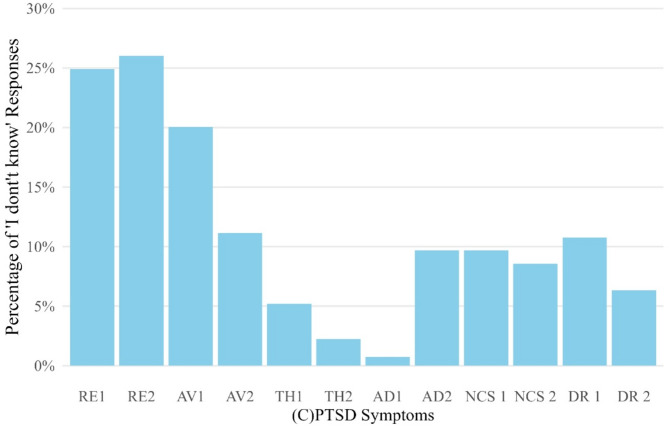 Figure 1
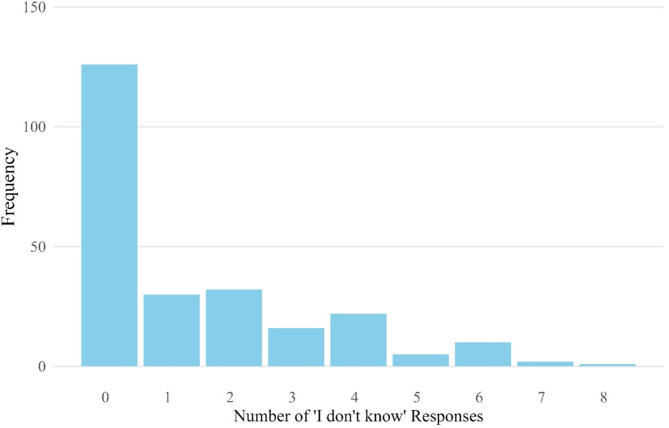 Figure 2
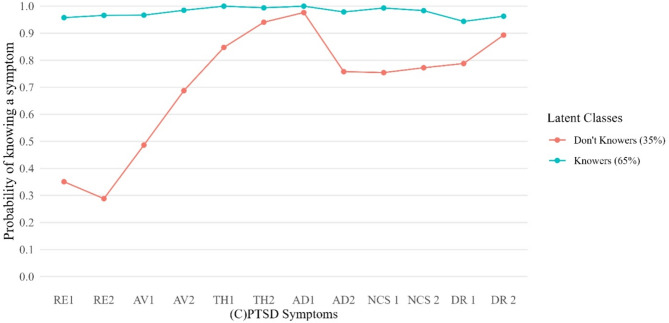 Figure 3
Peer Reviews
No public reviews on file for this paper yet. If you reviewed it on a platform where reviews are public (OpenReview, ICLR, NeurIPS, ICML), you can paste yours below so the community can read it here.
Videos
No videos yet. Explain this paper in a talk, walkthrough, or lecture? Add one.
Taxonomy
TopicsChild Abuse and Trauma · Migration, Health and Trauma · Child and Adolescent Psychosocial and Emotional Development