In vitro testing of a novel implant for angular stabilisation of the posterior pelvic ring
Laura Zengerle, Ivan Marintschev, Christian Liebsch, Oliver Toschka, Gunther Hofmann, Hans-Joachim Wilke

TL;DR
Researchers tested a new implant for stabilizing pelvic fractures in the lab and found it to be as effective as existing methods.
Contribution
A novel angle-stable nail system was biomechanically evaluated for posterior pelvic ring stabilization.
Findings
The novel implant reversed pelvic instability caused by fractures as effectively as conventional techniques.
S1 screws remain the biomechanical standard for treating type IIb fragility fractures.
Lumbopelvic suspension and S2 screws are not recommended for type IIb fractures but may serve as alternatives in specific cases.
Abstract
Dorsal pelvic ring fractures occur in younger patients due to high-energy trauma or in elderly patients due to osteoporosis as fragility fractures of the pelvis (FFP). To date, there is no consensus on the optimal stabilization technique to treat fragility fractures of the posterior pelvic ring. The purpose of this biomechanical in vitro study was to evaluate a novel angle-stable nail system with respect to its stabilising ability in comparison with established procedures. Eight fresh frozen human pelvic specimens (51–90 years, BMD 40–111 mg CaHA/cm³), were destabilised using a standardised FFP IIb fracture model according to Rommens and Hofmann (equivalent to AO/OTA 61C1.3) and consecutively stabilised with the different implant systems. The intact, fractured, and surgically treated pelvises were tested in a custom-developed pelvic test set up integrated into a universal spine tester.…
Genes, proteins, chemicals, diseases, species, mutations and cell lines named across the full text — each resolved to its canonical identifier and authoritative record.
Click any figure to enlarge with its caption.
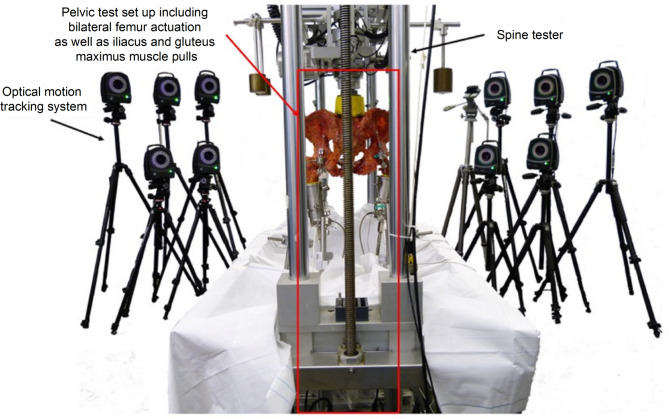 Figure 1
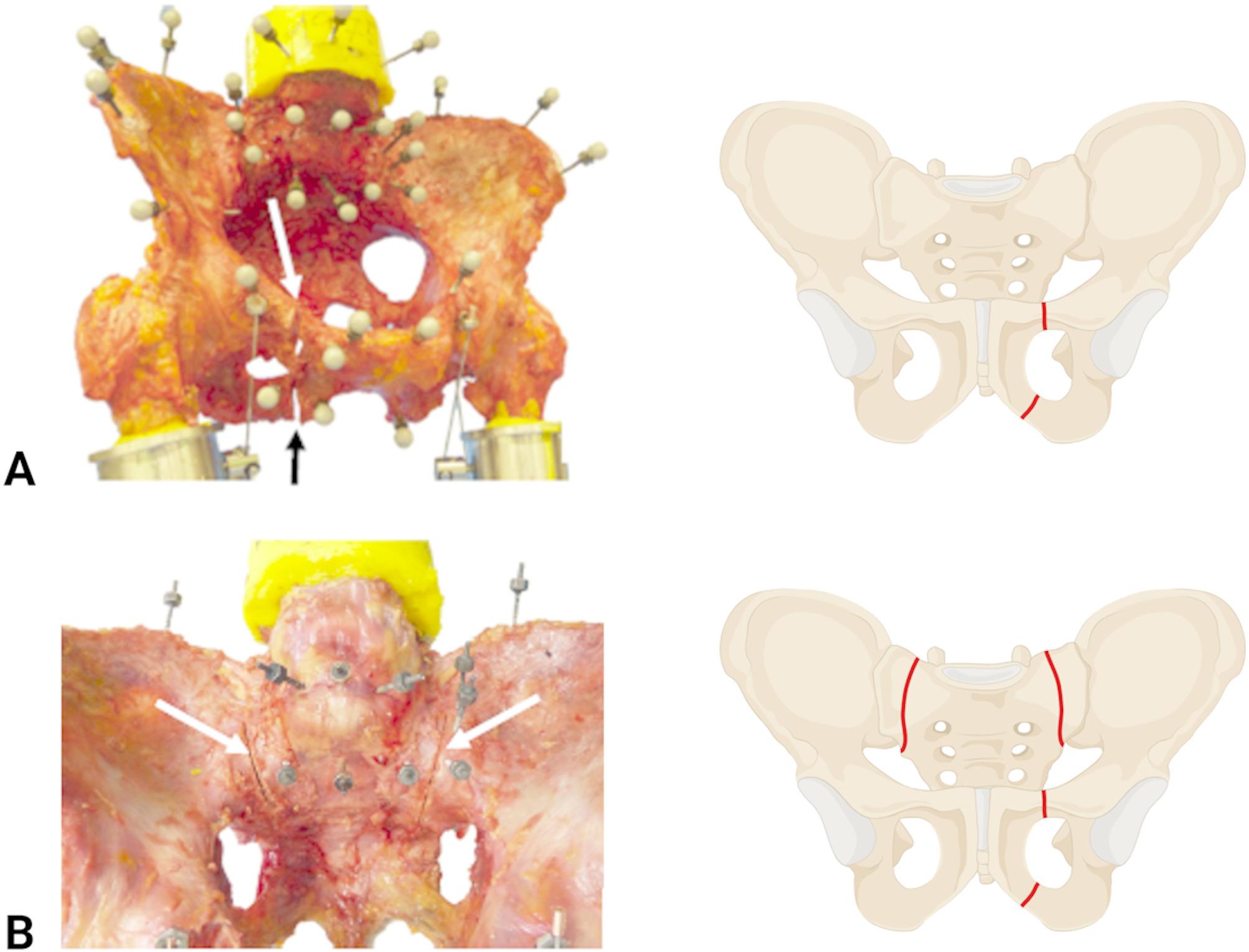 Figure 2
 Figure 3
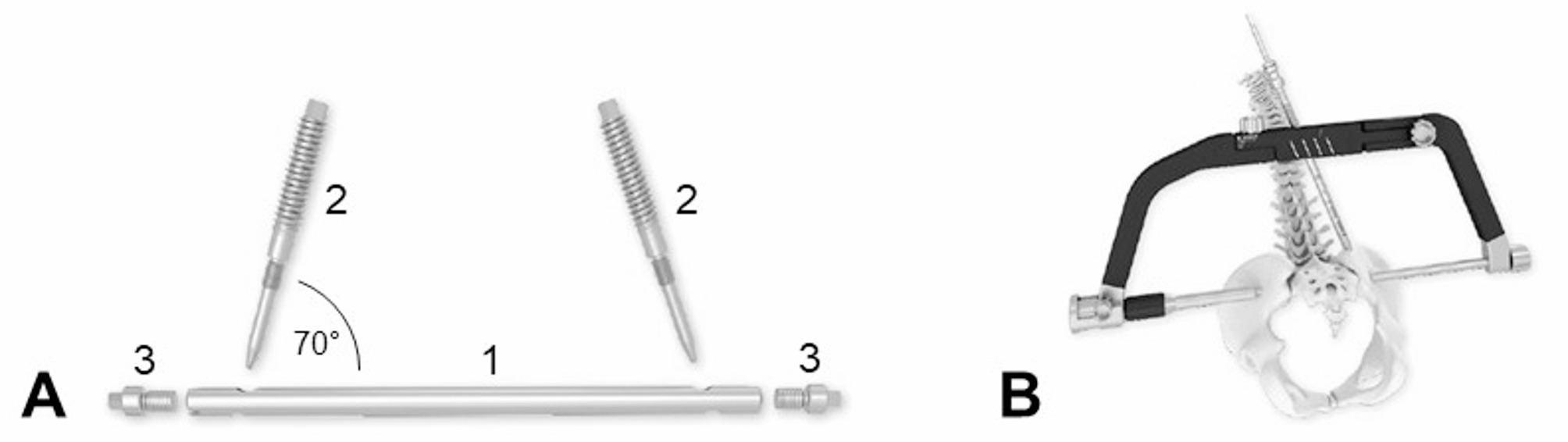 Figure 4
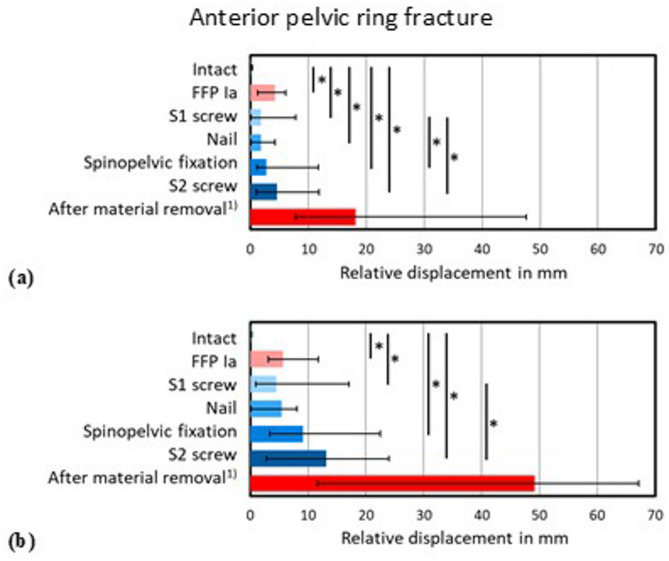 Figure 5
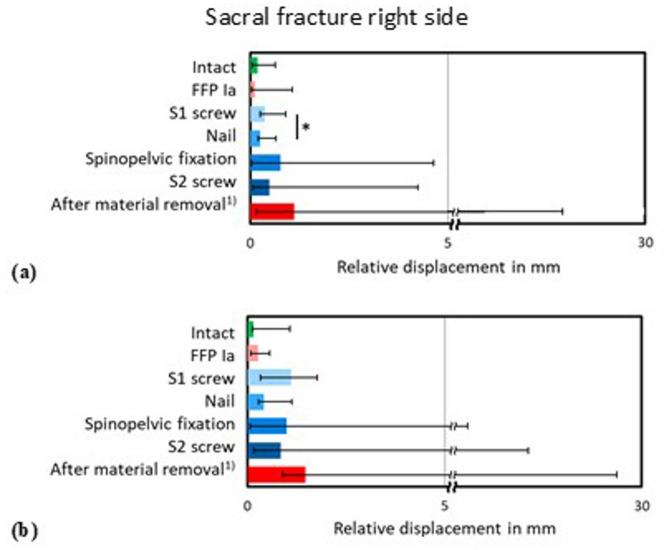 Figure 6
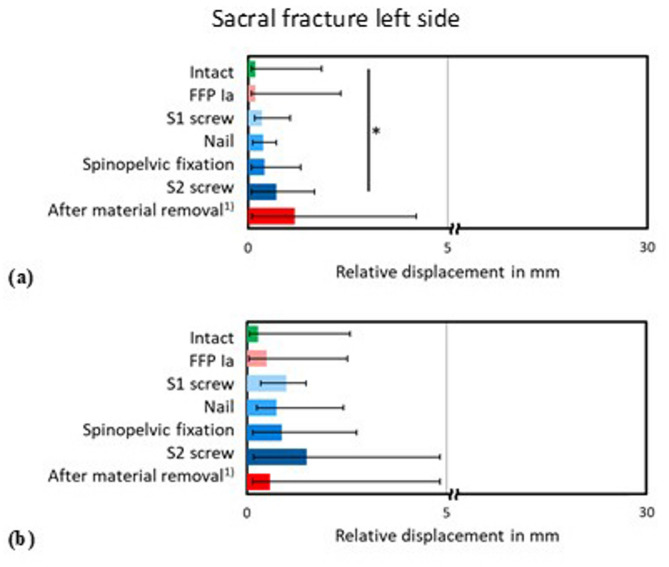 Figure 7
Peer Reviews
No public reviews on file for this paper yet. If you reviewed it on a platform where reviews are public (OpenReview, ICLR, NeurIPS, ICML), you can paste yours below so the community can read it here.
Videos
No videos yet. Explain this paper in a talk, walkthrough, or lecture? Add one.
Taxonomy
TopicsPelvic and Acetabular Injuries · Pregnancy-related medical research · Pelvic floor disorders treatments