Oxidative Activation of the Heme Nitric Oxide/Oxygen-Binding Protein (H-NOX) from
Aishat Alatishe, Therese Albert, Cameron Christopher Lee-Lopez, Rashedul Hasan, Pierre Moënne-Loccoz, Kelly N. Chacón, Erik T. Yukl

TL;DR
This paper explores how a bacterial protein called H-NOX senses nitric oxide and activates signaling pathways, revealing a new mechanism involving oxidation of a zinc ligand.
Contribution
The study identifies a novel oxidative activation mechanism in H-NOX proteins involving zinc ligand oxidation, distinct from previously known systems.
Findings
Spectroscopic analysis of Cc H-NOX reveals formation of a 5cLS Fe(II)-NO heme.
Oxidation of the zinc ligand Cys residues activates Cc H-NOX without inhibiting HnoK autophosphorylation.
X-ray absorption data show a change in zinc coordination upon oxidation but no zinc loss.
Abstract
The heme nitric oxide/oxygen-binding proteins (H-NOX) are bacterial homologues of the sensor domain of mammalian soluble guanylate cyclase (sGC), a multidomain enzyme that catalyzes the production of cyclic guanosine monophosphate (cGMP) in response to NO. In facultative anaerobes, H-NOX proteins sense nitric oxide (NO) and regulate various communal behaviors including biofilm formation, motility, virulence, and quorum sensing. Rupture of the proximal heme iron-histidine bond during the formation of a five-coordinate low-spin ferrous nitrosyl (5cLS Fe(II)-NO) heme is thought to be required for H-NOX activation, allowing them to interact with downstream signaling partners such as diguanylate cyclases (DGC), phosphodiesterases (PDE), or histidine kinases (HK). Some H-NOX homologues also contain a conserved Cys-ligated zinc-binding site, which can respond to oxidative stress, at least in…
Genes, proteins, chemicals, diseases, species, mutations and cell lines named across the full text — each resolved to its canonical identifier and authoritative record.
Click any figure to enlarge with its caption.
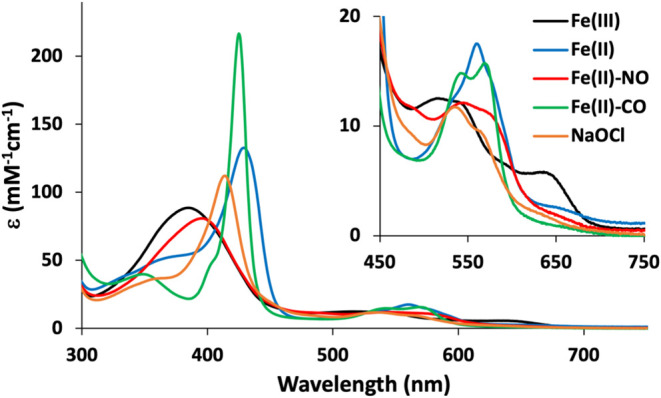 Figure 1
 Figure 2
 Figure 3
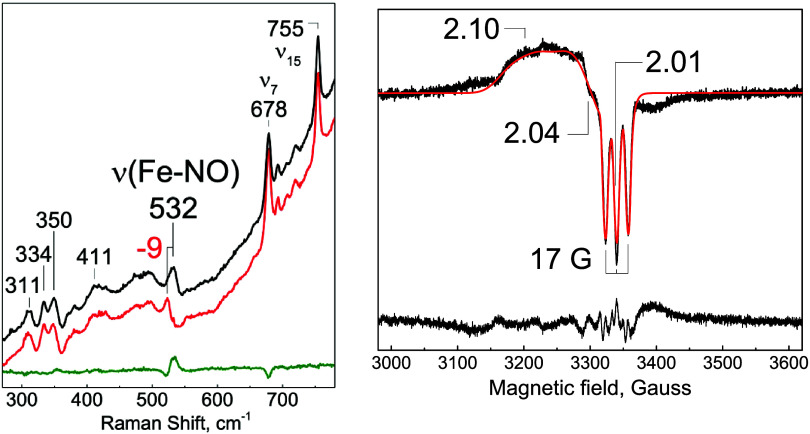 Figure 4
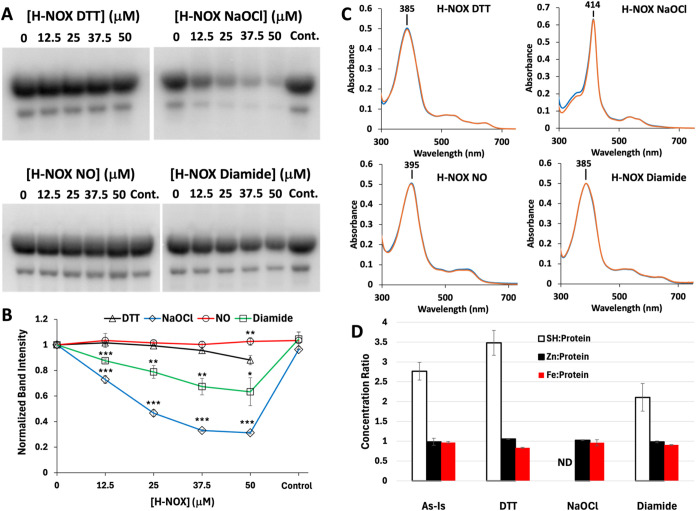 Figure 5
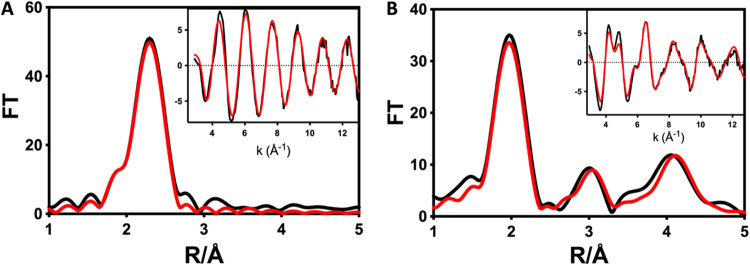 Figure 6
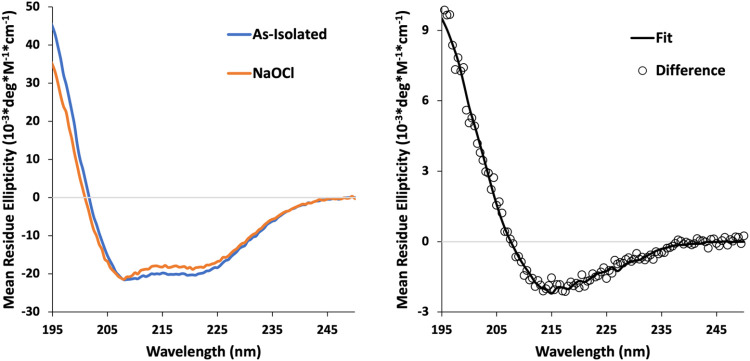 Figure 7
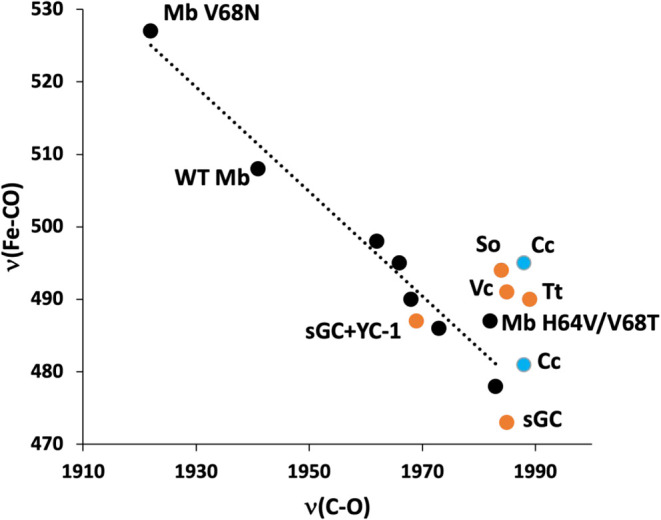 Figure 8
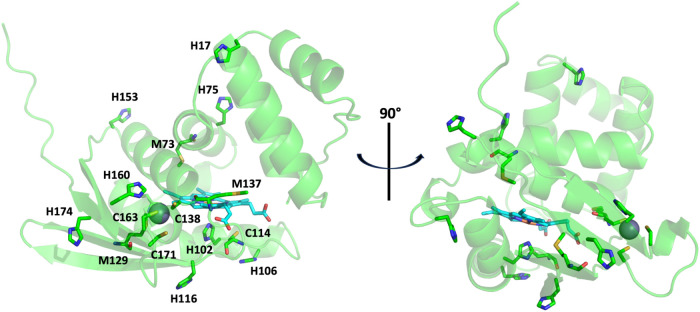 Figure 9
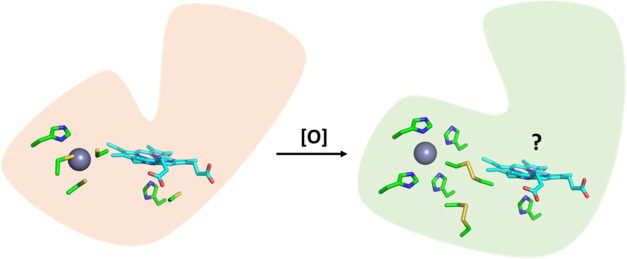 Figure 10
 Figure 11
Peer Reviews
No public reviews on file for this paper yet. If you reviewed it on a platform where reviews are public (OpenReview, ICLR, NeurIPS, ICML), you can paste yours below so the community can read it here.
Videos
No videos yet. Explain this paper in a talk, walkthrough, or lecture? Add one.
Taxonomy
TopicsHemoglobin structure and function · Nitric Oxide and Endothelin Effects · Ion channel regulation and function