(Reverse) Evolution of a Promiscuous Isochorismate Pyruvate Lyase into an Efficient Chorismate Mutase
Dominik E. Künzler, Luca Bressan, Linda Jäger, Marianne Gamper, Peter Kast

TL;DR
Scientists used directed evolution to convert an enzyme that breaks down isochorismate into a more efficient enzyme that transforms chorismate.
Contribution
The study demonstrates how directed evolution can reverse enzyme function and uncovers a potential evolutionary link between two enzyme types.
Findings
A PchB variant with 10-fold increased chorismate mutase activity was evolved.
A final PchB variant achieved a k_cat/K_m of 96,000 M–1 s–1, comparable to natural chorismate mutases.
Existing chorismate mutases were found to have unexpected isochorismate pyruvate lyase activity.
Abstract
PchB is an isochorismate pyruvate lyase (IPL) involved in siderophore biosynthesis in . Besides catalyzing the [1,5]-sigmatropic rearrangement of isochorismate, PchB also has weak chorismate mutase (CM) activity, promoting the [3,3]-sigmatropic transformation of chorismate. It has been suggested that the secondary metabolism enzyme PchB evolved from a primary metabolism CM precursor. Here, we employed directed evolution to convert PchB (back) into an efficient CM. A total of seven residues around the active site differing between PchB and a prototypical CM from were randomized, and the resulting gene library was subjected to selection for CM activity. After growth selection in an auxotrophic strain, a catalyst with 10-fold increased CM activity emerged. The improved enzyme was again randomized at three active site positions and subjected to selection, leading to a PchB variant with a k…
Genes, proteins, chemicals, diseases, species, mutations and cell lines named across the full text — each resolved to its canonical identifier and authoritative record.
Click any figure to enlarge with its caption.
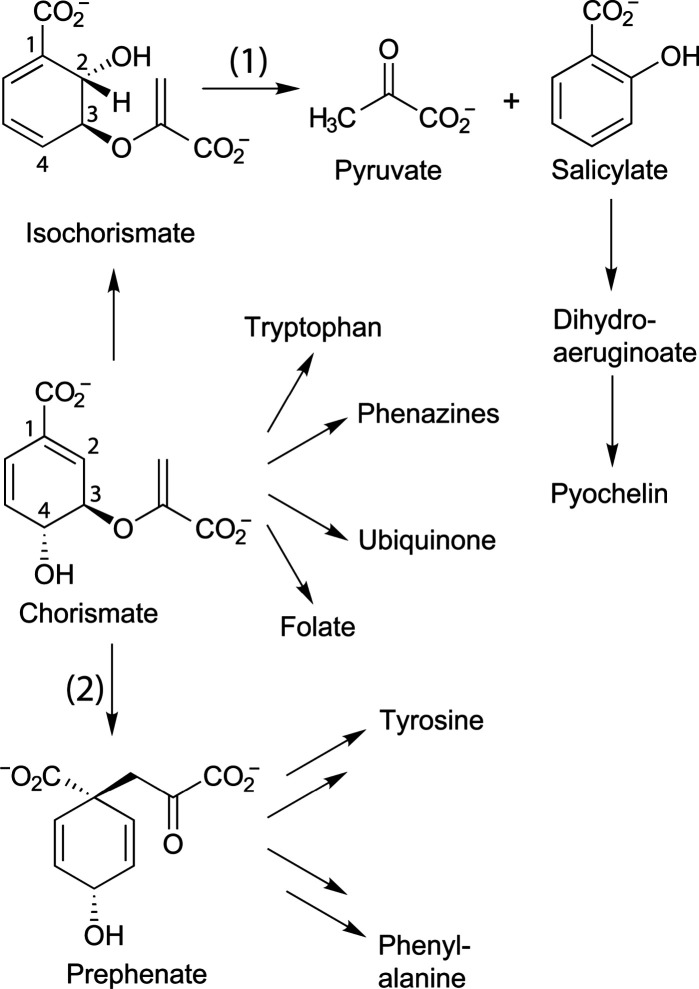 Figure 1
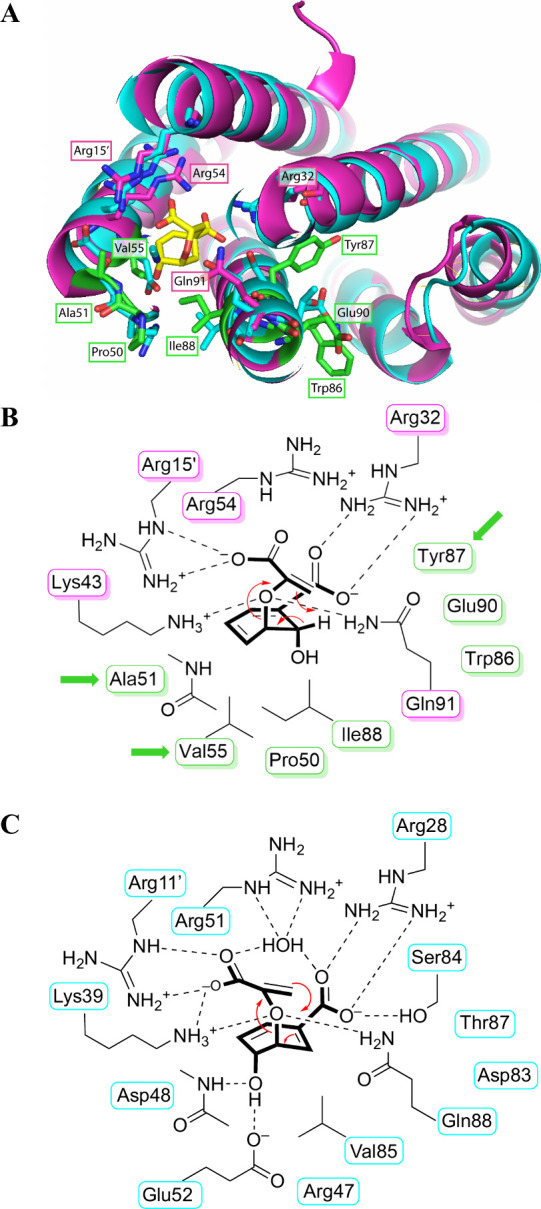 Figure 2
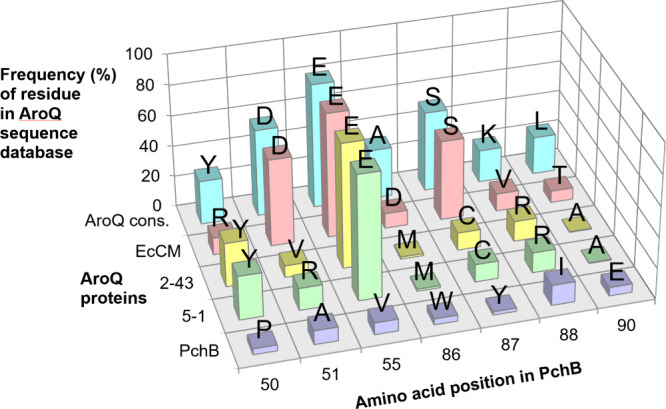 Figure 3
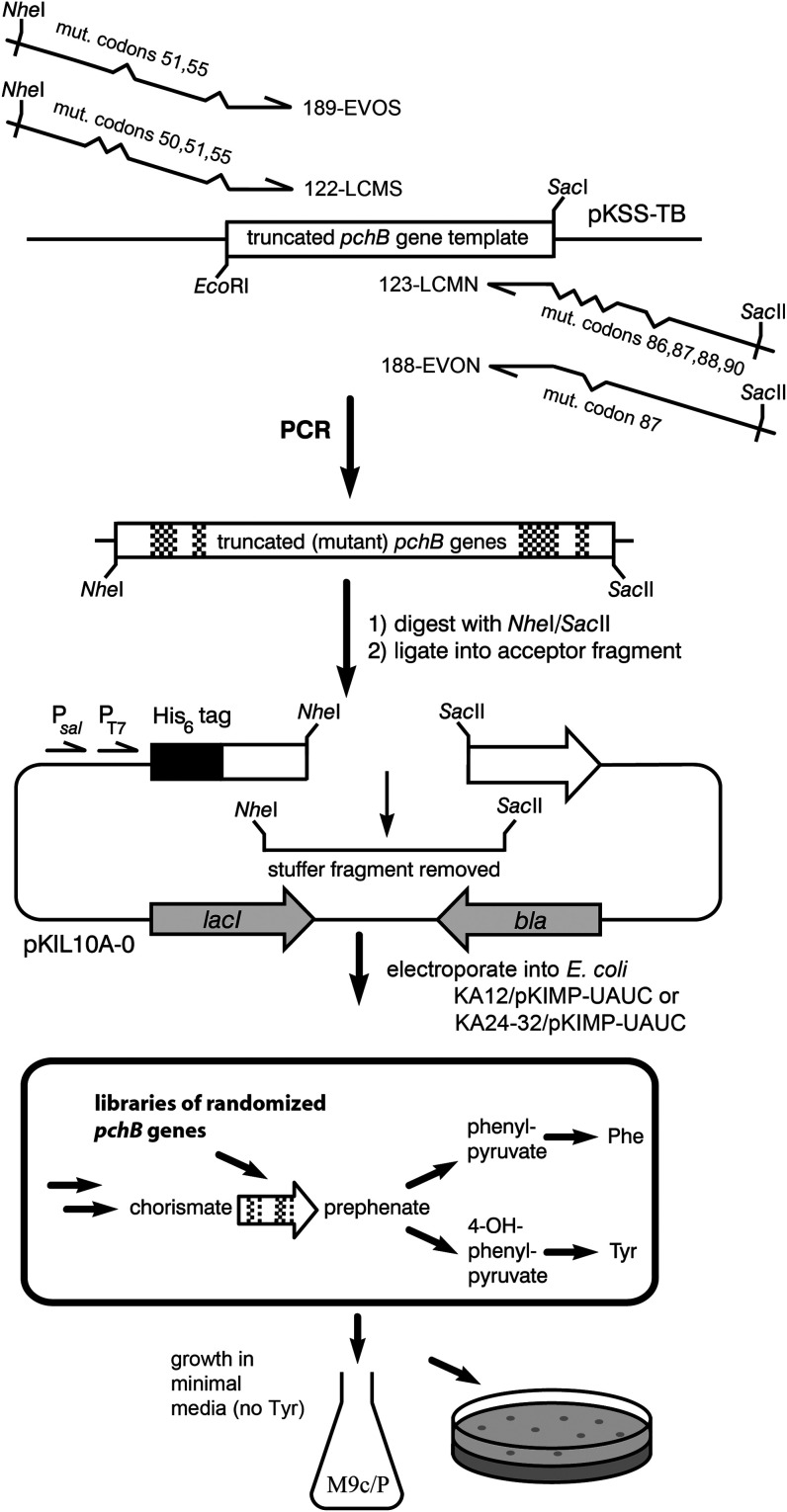 Figure 4
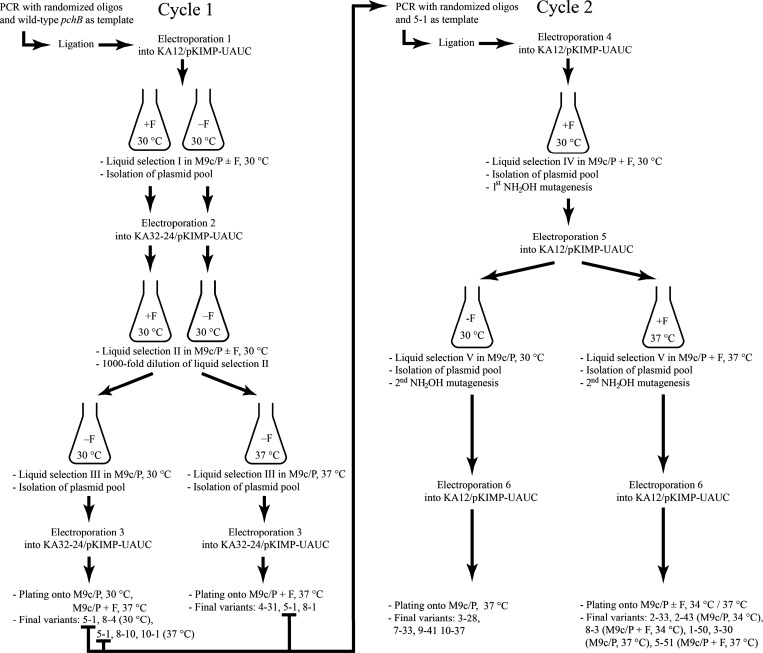 Figure 5
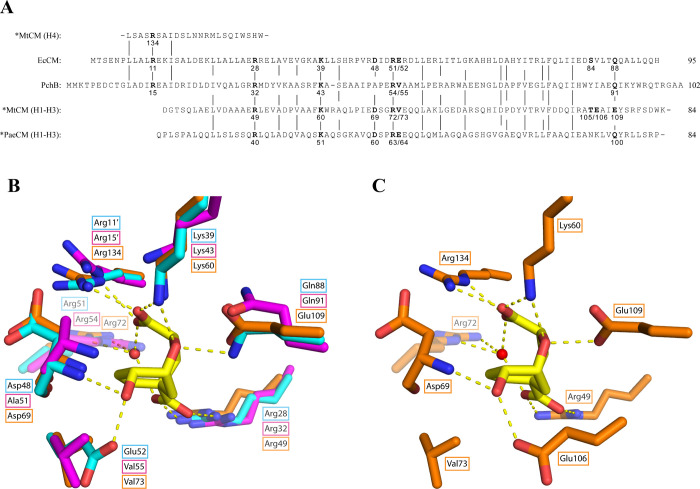 Figure 6
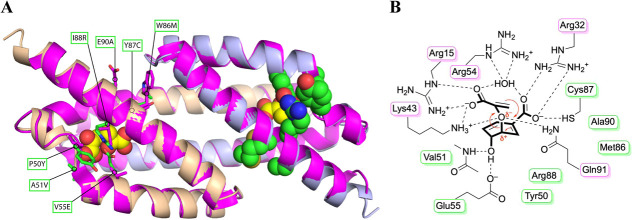 Figure 7
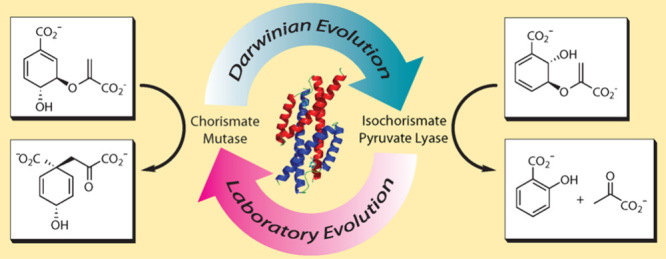 Figure 8
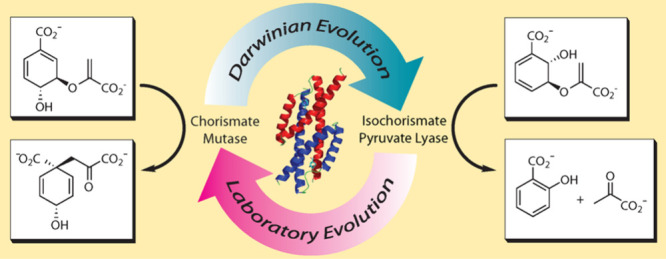 Figure 9
 Figure 10
 Figure 11
 Figure 12
Peer Reviews
No public reviews on file for this paper yet. If you reviewed it on a platform where reviews are public (OpenReview, ICLR, NeurIPS, ICML), you can paste yours below so the community can read it here.
Videos
No videos yet. Explain this paper in a talk, walkthrough, or lecture? Add one.
Taxonomy
TopicsAmino Acid Enzymes and Metabolism · Enzyme Structure and Function · Biochemical and Molecular Research