Allogeneic fibroblasts vs conventional debridement after successful endovascular interventions for treating chronic ulcers induced by peripheral artery disease
Azat Chinaliyev, Azat Chinaliyev, Bazylbek Zhakiyev, Didar Khassenov, Gulnara Sakhipova, Natalya Zagorulya, Gaukhar Kuanyshbayeva, Nurlan Zhampeissov, Damir Biktashev, Murat Jakanov, Ainur Donayeva, Ibrahim A. Abdelazim

TL;DR
This study compares allogeneic fibroblasts to traditional debridement for healing chronic ulcers caused by peripheral artery disease after successful endovascular treatment.
Contribution
The study demonstrates that allogeneic fibroblasts significantly accelerate ulcer healing compared to conventional debridement.
Findings
Allogeneic fibroblasts reduced the time for initial and complete ulcer healing compared to conventional debridement.
A statistically significant correlation was found between allogeneic fibroblast use and faster ulcer healing.
The treatment was noninvasive and effective in managing chronic ulcers after endovascular interventions.
Abstract
Fibroblasts are stromal and connective tissue cells that play crucial roles in the intracellular matrix and granulation tissue synthesis during tissue proliferation. They are also responsible for epithelialization and healing of skin lesions. Our aim was to compare the use of allogeneic fibroblasts with conventional debridement after successful endovascular interventions (EVIs) for the treatment of chronic ulcers induced by peripheral artery disease (PAD). A total of 116 participants with chronic ulcers due to PAD were randomly assigned, after successful EVI, to receive either allogeneic fibroblasts (study group; n = 58) or conventional debridement (control group; n = 58) for treatment of the ulcers. The participant data were collected over 1 year of follow-up to compare the effectiveness of both methods. The mean (SD) duration of initial and complete healing of chronic ulcers after…
Genes, proteins, chemicals, diseases, species, mutations and cell lines named across the full text — each resolved to its canonical identifier and authoritative record.
Click any figure to enlarge with its caption.
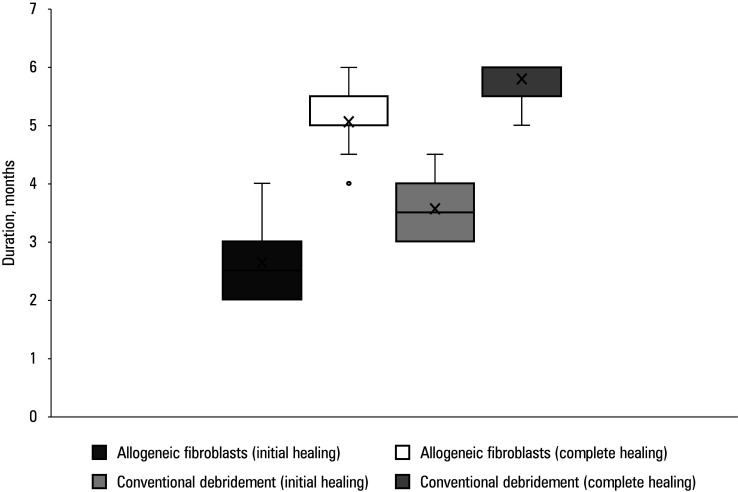 Figure 1
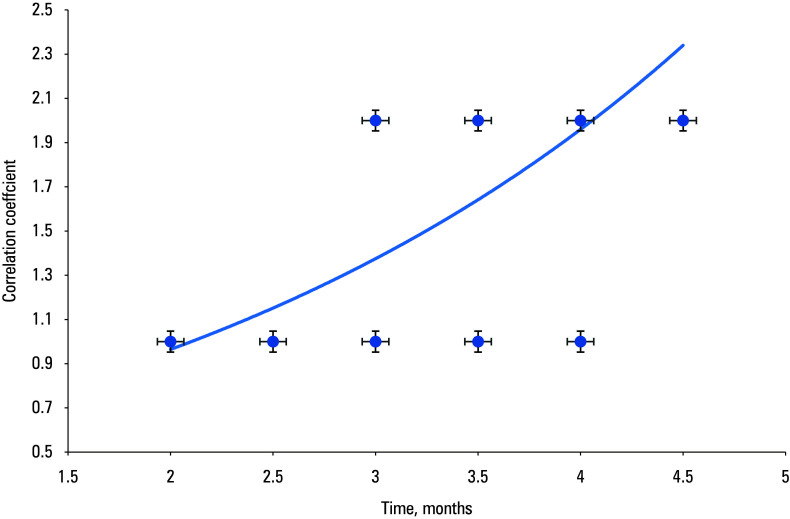 Figure 2
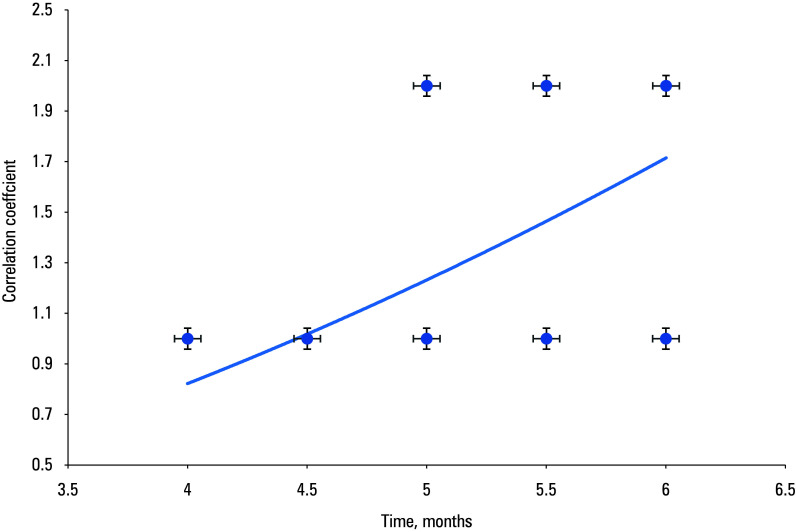 Figure 3
Peer Reviews
No public reviews on file for this paper yet. If you reviewed it on a platform where reviews are public (OpenReview, ICLR, NeurIPS, ICML), you can paste yours below so the community can read it here.
Videos
No videos yet. Explain this paper in a talk, walkthrough, or lecture? Add one.
Taxonomy
TopicsPeripheral Artery Disease Management · Diagnosis and Treatment of Venous Diseases · Diabetic Foot Ulcer Assessment and Management