Impact of different perioperative dexmedetomidine administration regimens on postoperative sleep quality in gastrointestinal tumor resection: a randomized controlled trial
Chengying Ji, Xiaodong Su, Chaohui Gao, Qijing Liu, Ying Liu, Qian Fu, Boxiong Gao, Jiayi Xie, Bokang Yang, Jinxiang Xie, Huping Song, Yatao Liu

TL;DR
This study compares two ways of giving dexmedetomidine during surgery and finds that adding it to postoperative pain treatment improves sleep quality after gastrointestinal tumor surgery.
Contribution
The study identifies a more effective administration strategy for dexmedetomidine to improve postoperative sleep quality in gastrointestinal tumor surgery.
Findings
Postoperative DEX addition improved sleep quality on day 1 compared to intraoperative infusion.
Group P had lower blood glucose and less blood loss during surgery.
Sex and group assignment were significant predictors of sleep quality on postoperative day 1.
Abstract
Perioperative sleep disorders constitute a recognized risk factor for multiple postoperative complications. Although dexmedetomidine (DEX) has been clinically employed to enhance perioperative sleep quality, its optimal administration protocol for postoperative sleep improvement remains undetermined. The aim of this study was to comparatively evaluate the therapeutic effect of distinct perioperative DEX administration strategies on postoperative sleep quality in patients undergoing elective gastrointestinal tumor resection via laparoscopy. A total of 48 patients undergoing laparoscopic gastrointestinal resection between September 2024 and January 2025 were enrolled and randomly allocated to the intraoperative continuous DEX infusion group (group I; n = 24) and the group with DEX added to postoperative intravenous analgesia (group P; n = 24) using a double-blind method. Sleep quality…
Genes, proteins, chemicals, diseases, species, mutations and cell lines named across the full text — each resolved to its canonical identifier and authoritative record.
Click any figure to enlarge with its caption.
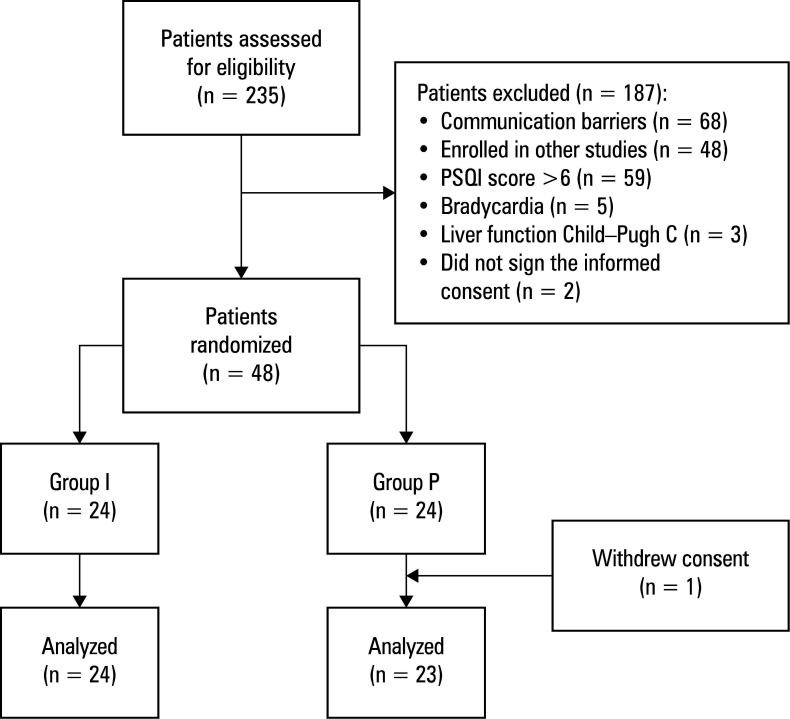 Figure 1
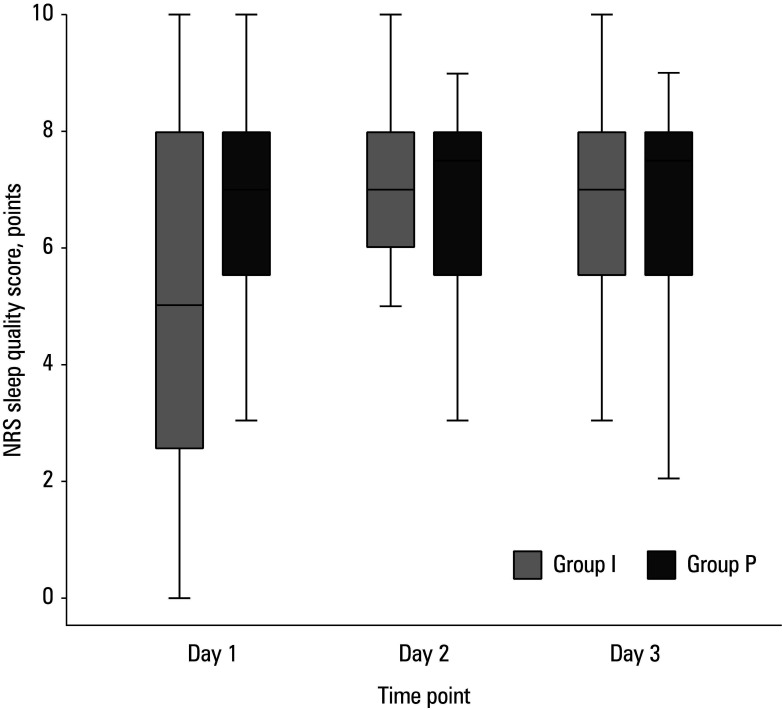 Figure 2
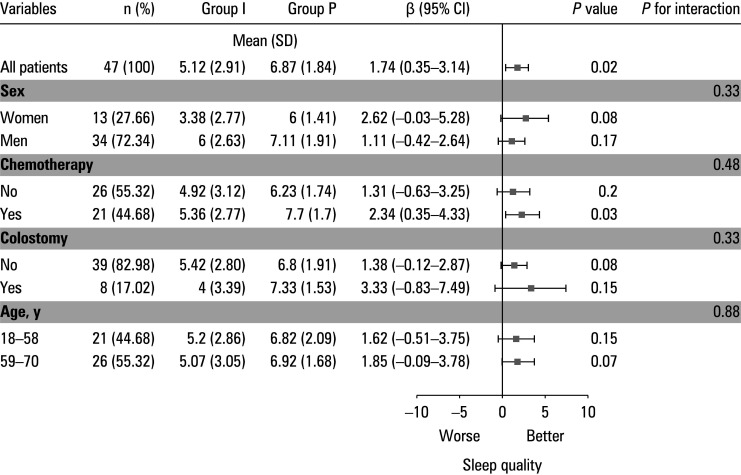 Figure 3
Peer Reviews
No public reviews on file for this paper yet. If you reviewed it on a platform where reviews are public (OpenReview, ICLR, NeurIPS, ICML), you can paste yours below so the community can read it here.
Videos
No videos yet. Explain this paper in a talk, walkthrough, or lecture? Add one.
Taxonomy
TopicsObstructive Sleep Apnea Research · Sleep and Wakefulness Research · Sleep and related disorders