Comparative performance evaluation of FilmArray RP 2.1 and targeted next-generation sequencing in upper respiratory tract infections
Wenxiang Jin, Zehan Dai, Pengyuan Zhu, Oliver Ma, Jiahao Li, Ava Kong, Junbin Wu, Feifei Liu, Miaozhi Li, Zixin Du, Dan Xue, Ganqiang Yang, Nafen Ye, Chunleung Lo, Chaohui Hu, Lei Zhang

TL;DR
This study compares two methods for diagnosing upper respiratory infections and finds that next-generation sequencing detects more pathogens than a commercial panel.
Contribution
Demonstrates that targeted next-generation sequencing outperforms FilmArray in pathogen detection breadth and positive detection rate for URTIs.
Findings
tNGS identified 34 pathogens versus 12 with FilmArray
tNGS had 51.05% detection rate versus 46.32% for FilmArray
tNGS achieved 90.16% overall detection accuracy with 95.45% sensitivity
Abstract
Upper respiratory tract infections (URTIs) represent a significant global health burden, impacting patient morbidity and quality of life. The implementation of accurate pathogen detection methods is crucial for precise diagnosis and effective clinical management of URTIs. This study evaluates the clinical performance of targeted next-generation sequencing (tNGS) as a diagnostic tool for comprehensive identification of URTI-associated pathogens. A total of 190 nasopharyngeal swab specimens from patients were enrolled for the study. These specimens underwent pathogen identification using both tNGS and the FilmArray respiratory panel. The results obtained from these two methods were then compared. Overall, tNGS identified 164 positive samples, compared to 91 positives identified by FilmArray. Regarding the shared target species or subtypes, tNGS identified 97 positive samples, whereas…
Genes, proteins, chemicals, diseases, species, mutations and cell lines named across the full text — each resolved to its canonical identifier and authoritative record.
Click any figure to enlarge with its caption.
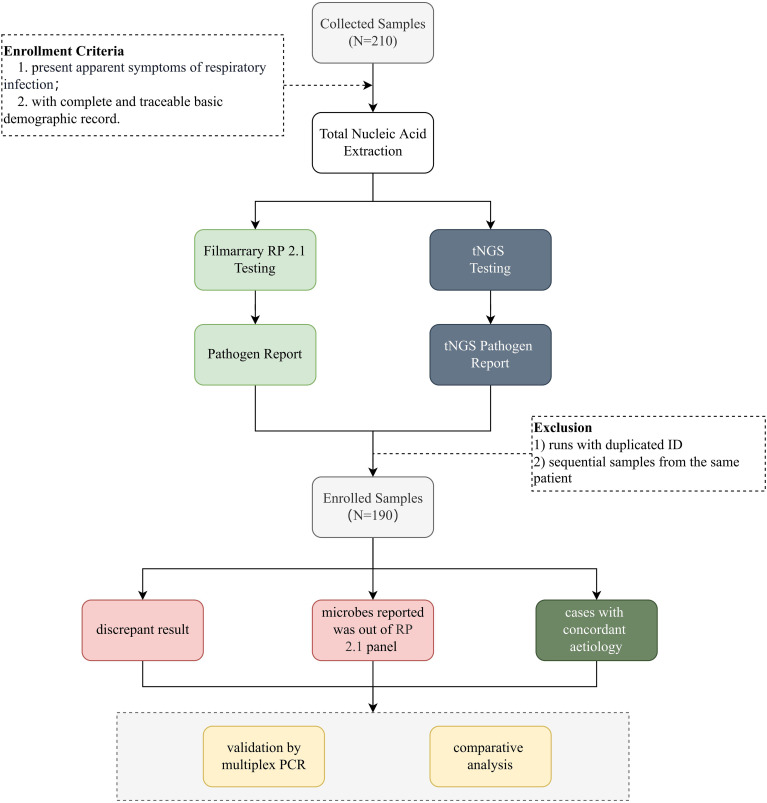 Figure 1
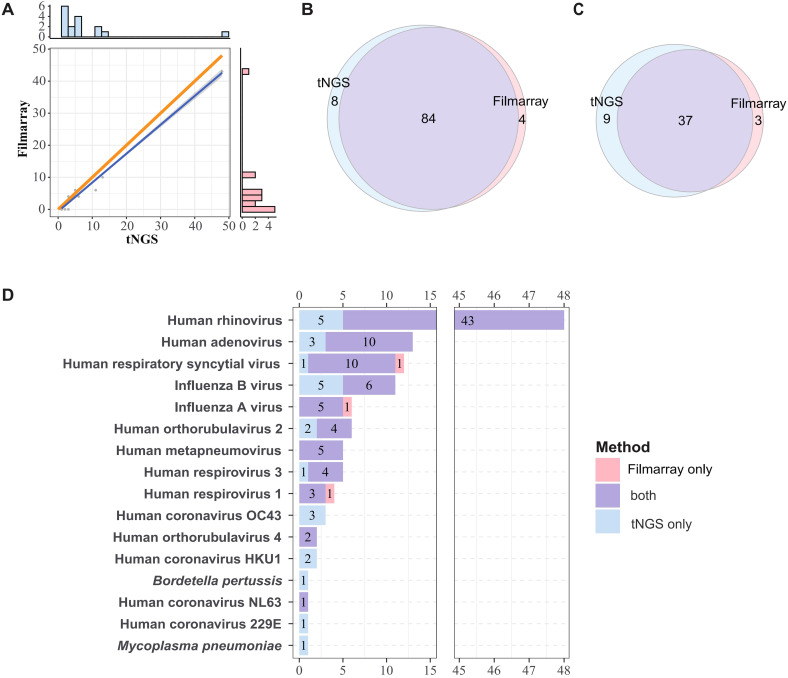 Figure 2
Peer Reviews
No public reviews on file for this paper yet. If you reviewed it on a platform where reviews are public (OpenReview, ICLR, NeurIPS, ICML), you can paste yours below so the community can read it here.
Videos
No videos yet. Explain this paper in a talk, walkthrough, or lecture? Add one.
Taxonomy
TopicsMycobacterium research and diagnosis · Otolaryngology and Infectious Diseases · Respiratory viral infections research