Acute and subchronic toxicity of aqueous extracts of Combretum micranthum (G. Don) and Gardenia sokotensis (Hutch) having ethnobotanical uses in Burkina Faso
OUEDRAOGO Elisabeth, ZABRE Généviève, TINDANO Basile, YOUGBARE Wendyam Joëlle Raymonde, OWONA Pascal Emmanuel, BAYALA Balé

TL;DR
This study evaluates the safety of two Burkinan medicinal plants used for bone diseases, finding they are generally non-toxic but may affect liver function at high doses.
Contribution
The study provides new toxicity data on Combretum micranthum and Gardenia sokotensis, commonly used for osteoporosis in Burkina Faso.
Findings
Aqueous extracts of C. micranthum and G. sokotensis showed no acute toxicity at 2000 mg/kg in mice.
Subchronic administration reduced triglycerides and cholesterol levels in rats.
High doses of the extracts caused significant changes in liver enzymes.
Abstract
Medicinal plants are the major sources of drugs used to treat diseases. Scientific studies were performed on some plants, but few data are available on the medicinal plants used to manage bone diseases in Burkina Faso. This study was conducted to identify medicinal plants used in the treatment of osteoporosis and investigate the acute and subchronic toxicity of Combretum micranthum and Gardenia sokotensis aqueous extracts. A survey was carried out through a structured interview with traditional practitioners. Phytochemical screening was performed using a validated thin-layer chromatographic method. The acute oral toxicity study of extracts was validated at 2000 mg/kg in mice. In the subchronic toxicity, rats were orally administered 100, 200, and 400 mg/kg of each extract for 90 days. Results show sixty-one plant species divided into 33 families. C. micranthum and G. sokotensis were…
Genes, proteins, chemicals, diseases, species, mutations and cell lines named across the full text — each resolved to its canonical identifier and authoritative record.
Click any figure to enlarge with its caption.
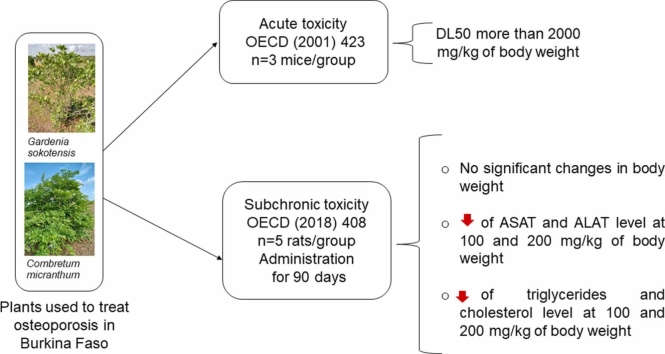 Figure 1
 Figure 2
 Figure 3
 Figure 4
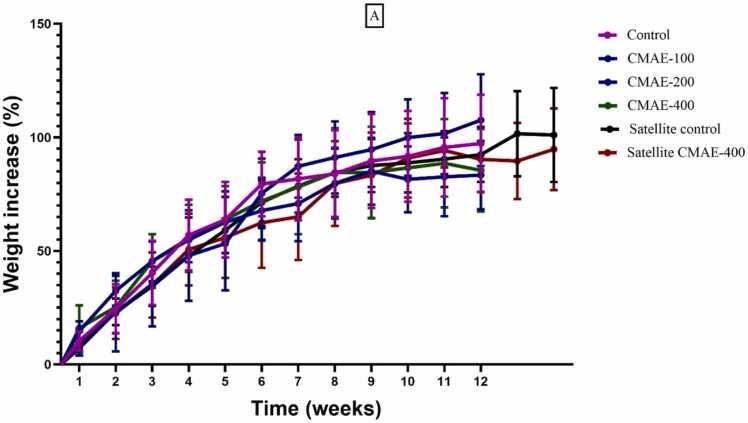 Figure 5
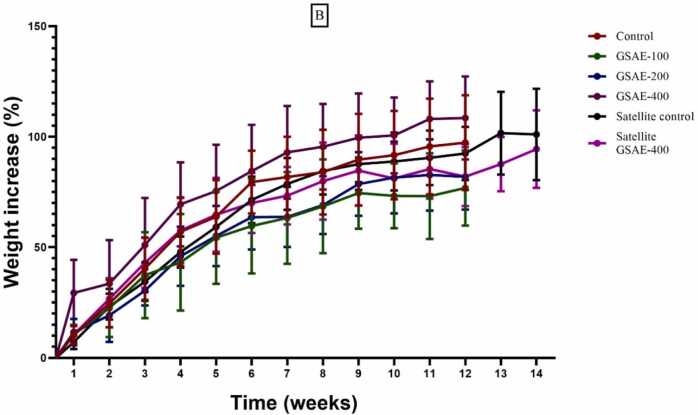 Figure 6
Peer Reviews
No public reviews on file for this paper yet. If you reviewed it on a platform where reviews are public (OpenReview, ICLR, NeurIPS, ICML), you can paste yours below so the community can read it here.
Videos
No videos yet. Explain this paper in a talk, walkthrough, or lecture? Add one.
Taxonomy
TopicsAfrican Botany and Ecology Studies · Ethnobotanical and Medicinal Plants Studies · Saffron Plant Research Studies