Sal is a proteobacterial bile acid aldolase that repurposes key thiolase catalytic residues for retroaldol cleavage of C5 steroid side chains
Nicolas Rolfe, Kurt L. Schroeter, Taylor JB. Forrester, Matthew S. Kimber, Stephen YK. Seah

TL;DR
This paper describes a bacterial enzyme that can cleave steroid side chains, offering new insights into steroid metabolism and potential biocatalytic applications.
Contribution
The study identifies a novel C5 side chain steroid aldolase from Proteobacteria with unique catalytic residues and structural features.
Findings
CtSal uses Tyr302 and Cys304 as catalytic residues, differing from actinobacterial homologs.
CtShyDUF35 modulates CtSal's substrate specificity via a C3H1 zinc finger.
A homolog in Trypanosoma brucei suggests a repurposed thiolase-like aldolase function.
Abstract
Aldolases hold potential as biocatalysts for the synthesis of novel steroid pharmaceuticals. The steroid aldolase from Comamonas testosteroni (CtSal) forms a complex with C. testosteroni steroid hydratase (CtShy). CtSal cleaves the C5 side chain of bile acid thioester steroids, whereas a previously characterized actinobacterial homolog from Thermonospora curvata (TcLtp2) targets the C3 side chain. We identified Tyr302 and Cys304 as the catalytic residues in CtSal, different from the paired Tyr residues found in TcLtp2. The 1.95 Å structure of CtSal bound to the C-terminal domain of unknown function 35 (DUF35) of CtShy (CtShyDUF35–CtSal) reveals a central CtSal dimer flanked by two CtShyDUF35 domains in an αββα arrangement. CtShyDUF35 has a unique Cys3His1 (C3H1) zinc finger that shapes the substrate-binding cleft of CtSal, preventing the binding of the flat cholesterol rings while…
Genes, proteins, chemicals, diseases, species, mutations and cell lines named across the full text — each resolved to its canonical identifier and authoritative record.
Click any figure to enlarge with its caption.
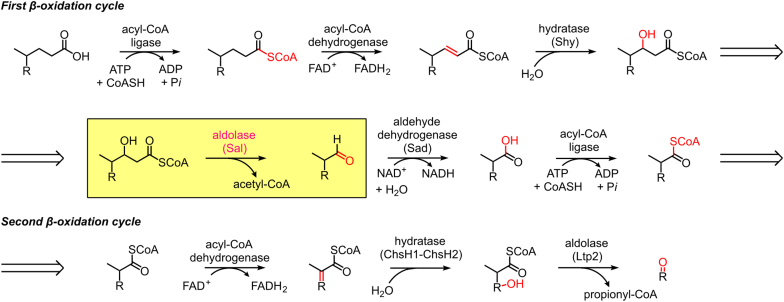 Figure 1
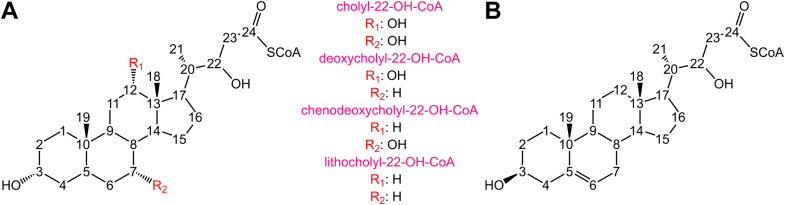 Figure 2
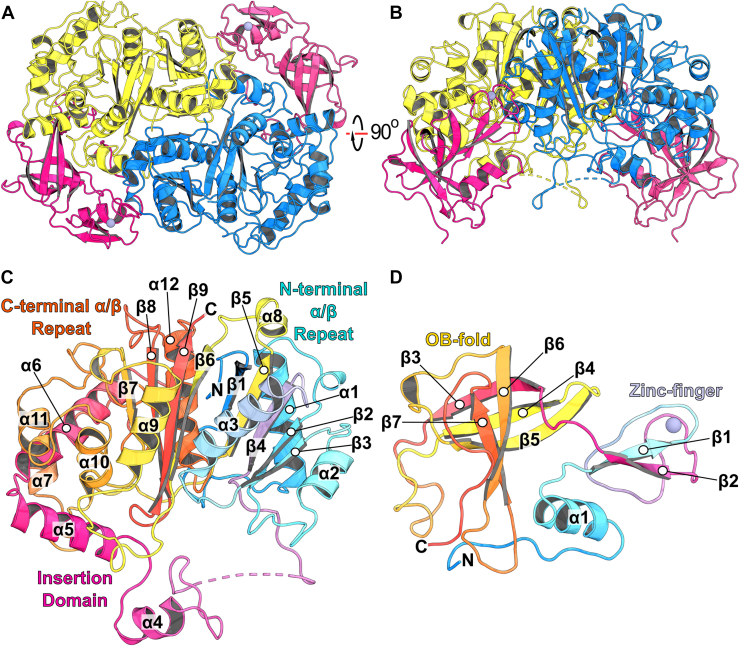 Figure 3
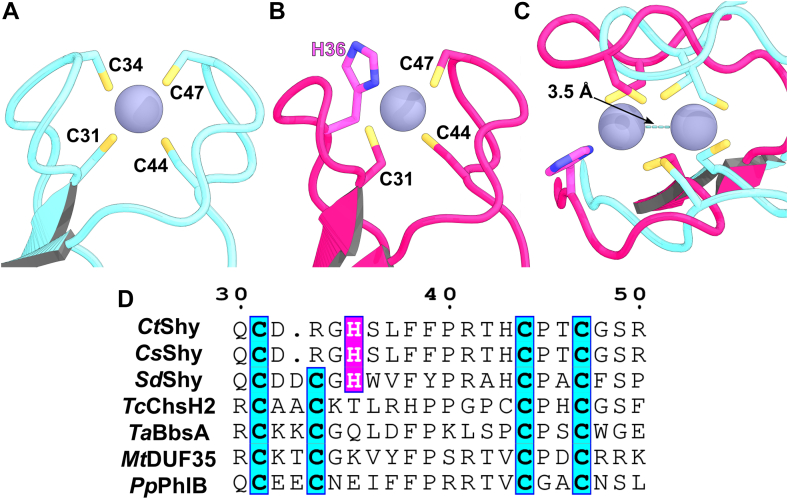 Figure 4
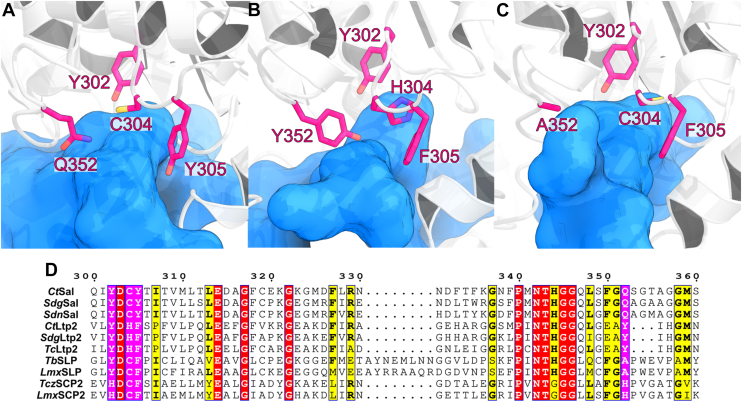 Figure 5
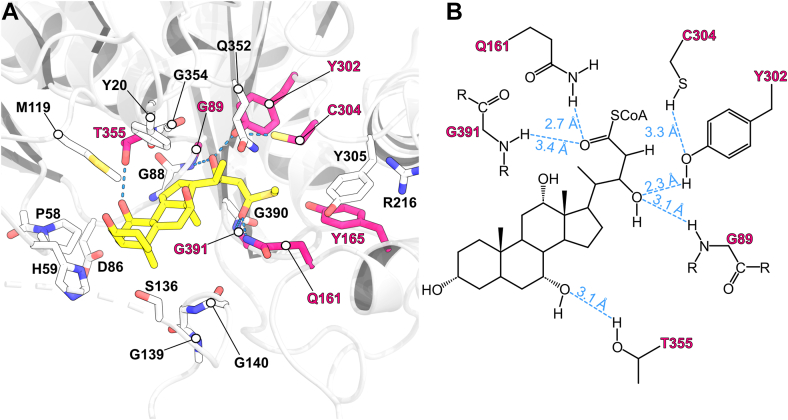 Figure 6
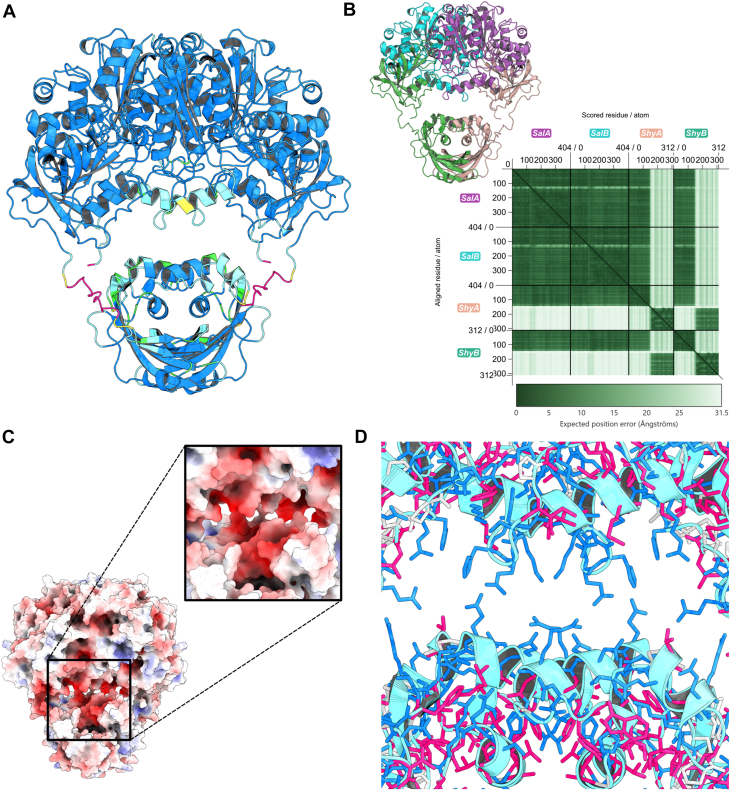 Figure 7
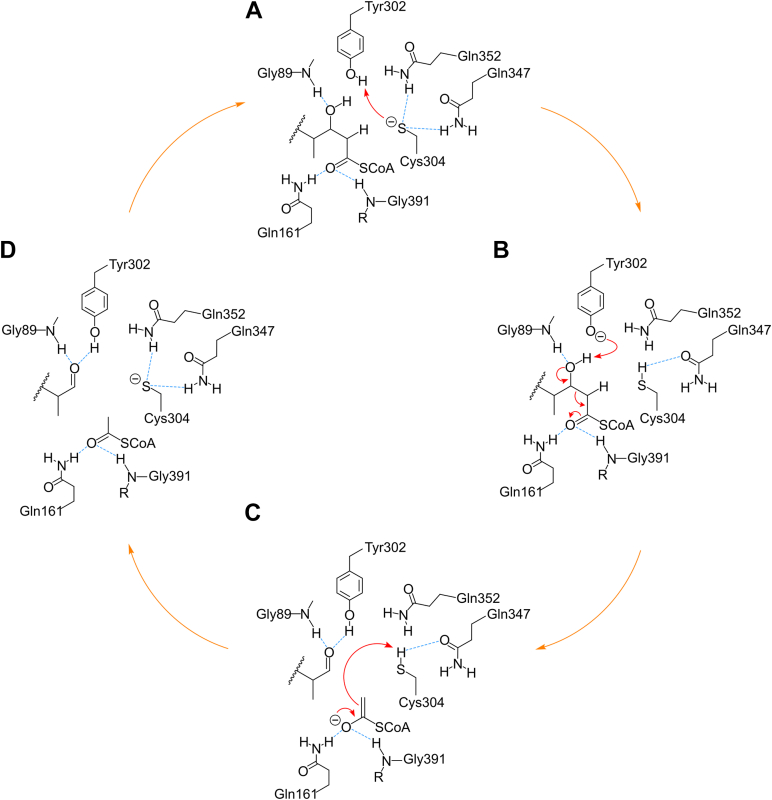 Figure 8
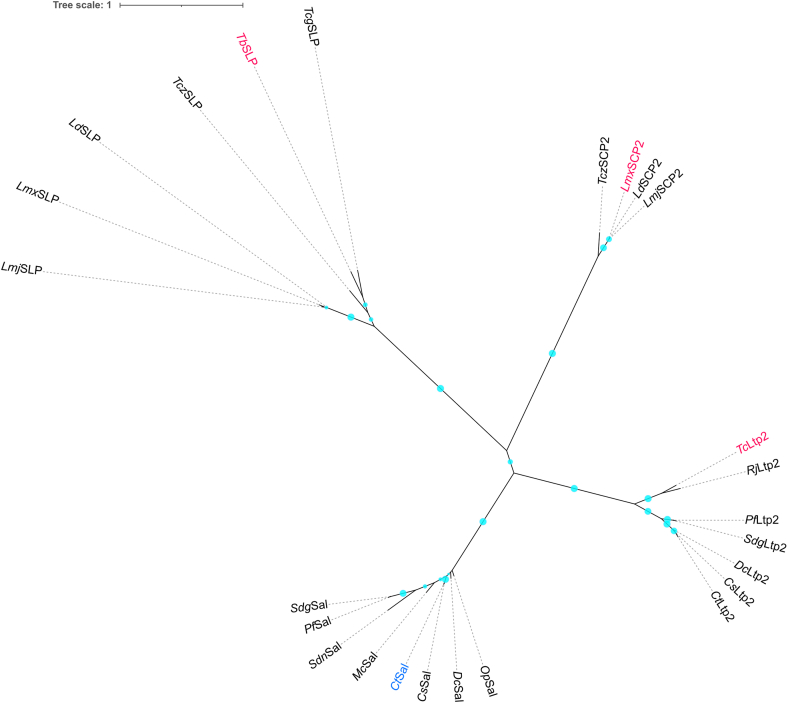 Figure 9
Peer Reviews
No public reviews on file for this paper yet. If you reviewed it on a platform where reviews are public (OpenReview, ICLR, NeurIPS, ICML), you can paste yours below so the community can read it here.
Videos
No videos yet. Explain this paper in a talk, walkthrough, or lecture? Add one.
Taxonomy
TopicsSteroid Chemistry and Biochemistry · Pharmacogenetics and Drug Metabolism · Hormonal Regulation and Hypertension