GAPDH heme delivery to Indoleamine 2,3-dioxygenase 1 involves their complex formation and complementary charge pairing at the protein-protein interface
Pranjal Biswas, Yue Dai, Dhanya T. Jayaram, Priya Das Sinha, Saurav Misra, Jesus Tejero, Belinda Willard, Dennis J. Stuehr

TL;DR
This study shows how the protein GAPDH directly transfers heme to IDO1 through a specific charge interaction, helping IDO1 become functional in immune responses and cancer.
Contribution
The study reveals a direct heme transfer mechanism between GAPDH and IDO1 via a novel Lys-Asp charge pairing at their interface.
Findings
GAPDH transfers heme to IDO1 directly through a previously unknown protein interface.
A Lys-Asp charge pairing is essential for the heme transfer between GAPDH and IDO1.
The interaction was confirmed in purified proteins and in human cells.
Abstract
In eukaryotes, the last steps of heme biosynthesis occur in mitochondria and so heme must be transported to reach many heme-dependent proteins that mature and function outside this organelle. Although the enzyme glyceraldehyde 3-phosphate dehydrogenase (GAPDH) has emerged as a key intracellular heme chaperone, how it performs heme deliveries to its numerous clients is poorly understood. It is unknown if handoffs of the GAPDH-bound heme require that it make direct contact with its clients or instead involve GAPDH passing its heme to middlemen proteins to execute the final heme transfers. To address this question, we studied GAPDH heme transfer to the client protein indoleamine 2,3-dioxygenase 1 (IDO1), whose enzyme activity is heme-dependent and regulates mammalian immune responses and cancer progression. A chemical crosslinking-mass spectrometry approach identified two Lys residues that…
Genes, proteins, chemicals, diseases, species, mutations and cell lines named across the full text — each resolved to its canonical identifier and authoritative record.
Click any figure to enlarge with its caption.
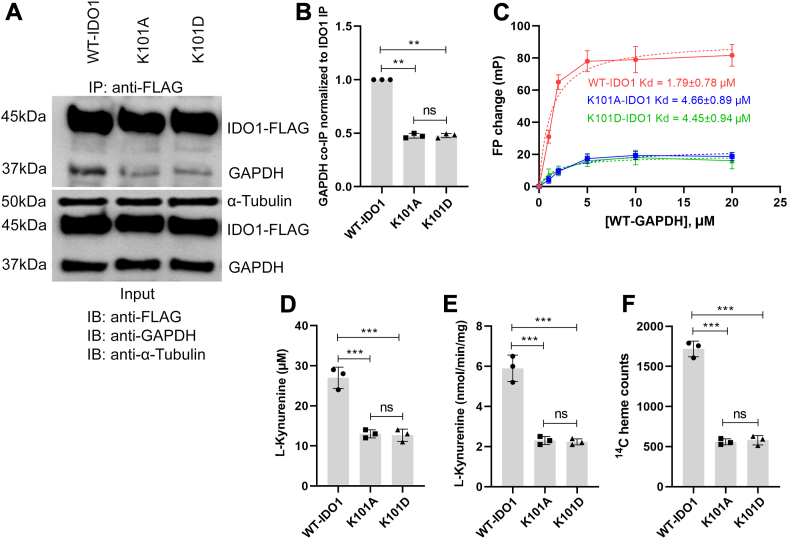 Figure 1
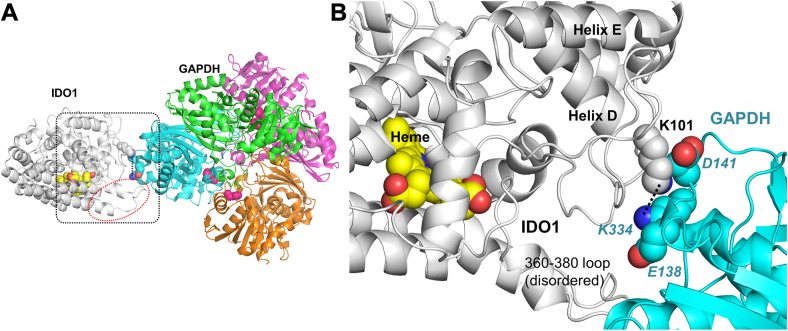 Figure 2
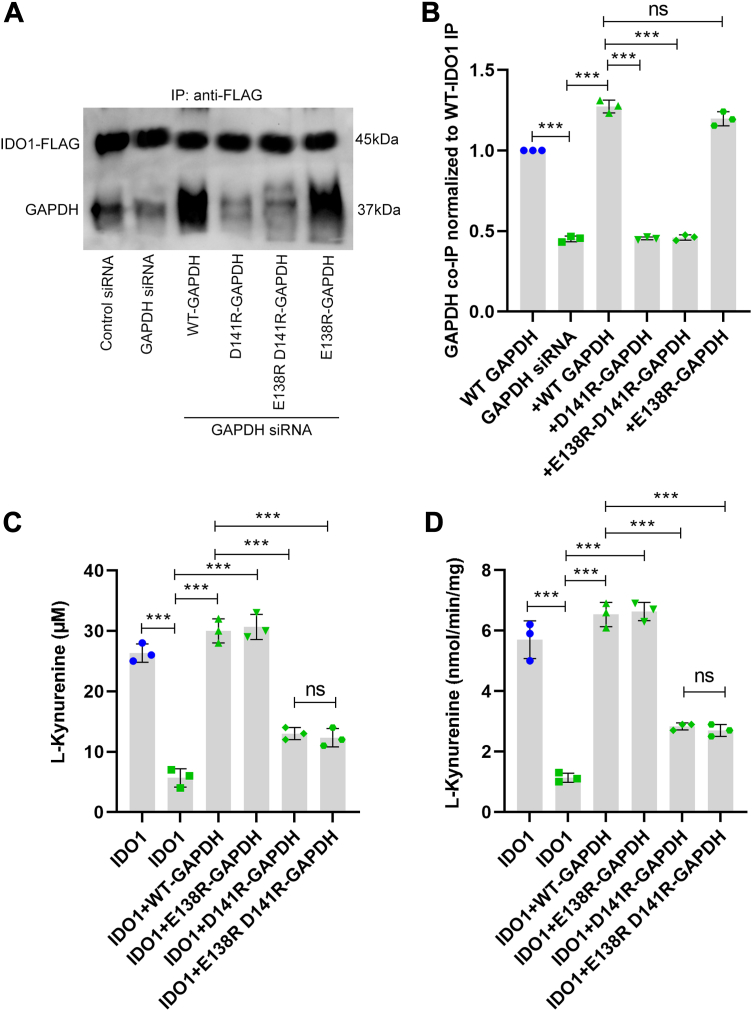 Figure 3
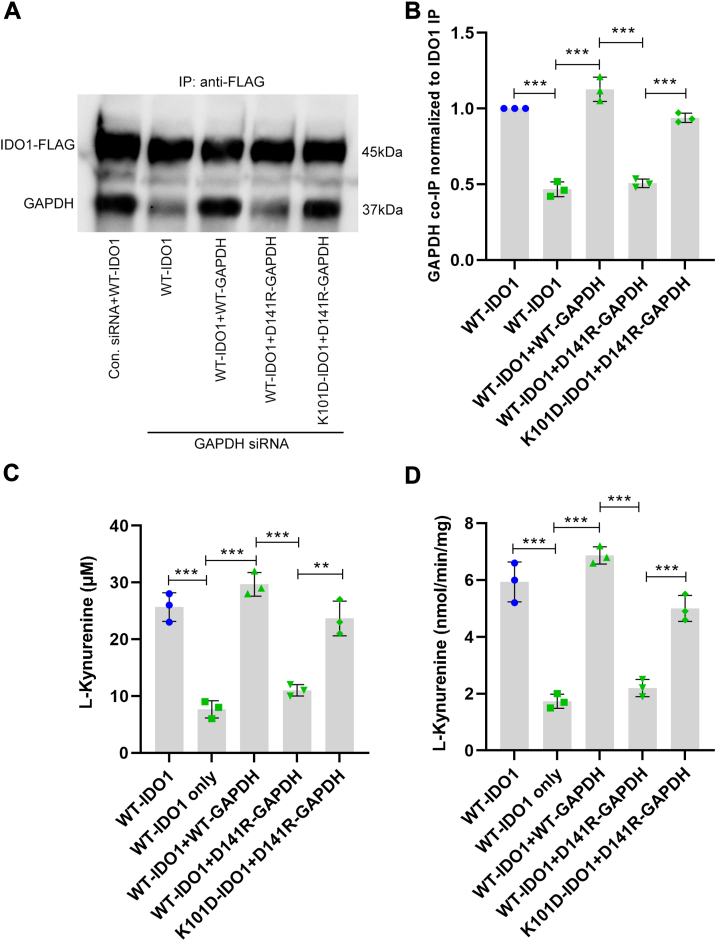 Figure 4
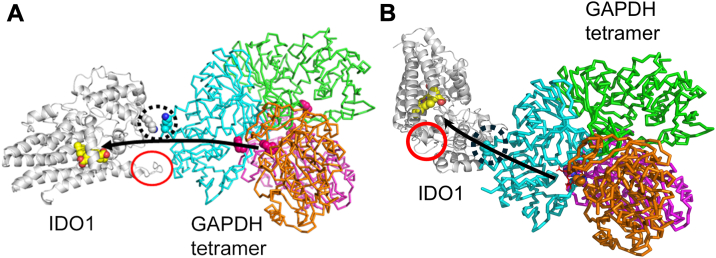 Figure 5
Peer Reviews
No public reviews on file for this paper yet. If you reviewed it on a platform where reviews are public (OpenReview, ICLR, NeurIPS, ICML), you can paste yours below so the community can read it here.
Videos
No videos yet. Explain this paper in a talk, walkthrough, or lecture? Add one.
Taxonomy
TopicsTryptophan and brain disorders · Genetic Neurodegenerative Diseases · Ion channel regulation and function