PulseRider Aneurysm Neck Reconstructive Device Versus Other Treatments in Patients With Wide-Neck Bifurcation Aneurysms: A Systematic Review
Mariana Olvera Morales, Diego Santillán Alcántar, Jose R Flores Valdés, Mariana Del Rio Rocha, Mark Reyes Anaya, Mauricio Montelongo Quevedo, Karla Y Bujdud Rodríguez, Gilberto Granados García, Luis C Lora Ponce, Sergio A Villar López, Juan P Navarro Garcia de Llano

TL;DR
This review compares the PulseRider device with other treatments for wide-neck brain aneurysms, finding it promising but needing more long-term data.
Contribution
The study provides a systematic comparison of the PulseRider device with existing treatments for wide-neck bifurcation aneurysms.
Findings
PRANRD achieved high initial occlusion rates with low complication rates.
PRANRD-assisted coiling had lower complete occlusion rates at six months compared to Y-stenting.
No procedure-related mortality was observed in the reviewed studies.
Abstract
Wide-neck bifurcation aneurysms (WNBA) are challenging to treat both surgically and endovascularly due to their complex anatomy. The FDA-approved PulseRider Aneurysm Neck Reconstructive Device (PRANRD; Cerenovus, Johnson & Johnson, Irvine, CA, USA) offers a novel endovascular treatment option; however, comparative data on its safety and efficacy remain limited. This review compares PRANRD with other treatment modalities for unruptured WNBA. A search of multiple databases identified 51 articles, of which three met the inclusion criteria, comprising two cohort studies and one case series, for a total of 134 patients treated with PRANRD. The device achieved complete angiographic occlusion in most cases with low complication rates. Compared to Y-stenting, PRANRD-assisted coiling demonstrated similar immediate occlusion rates but lower complete occlusion rates at six months. No…
Genes, proteins, chemicals, diseases, species, mutations and cell lines named across the full text — each resolved to its canonical identifier and authoritative record.
Click any figure to enlarge with its caption.
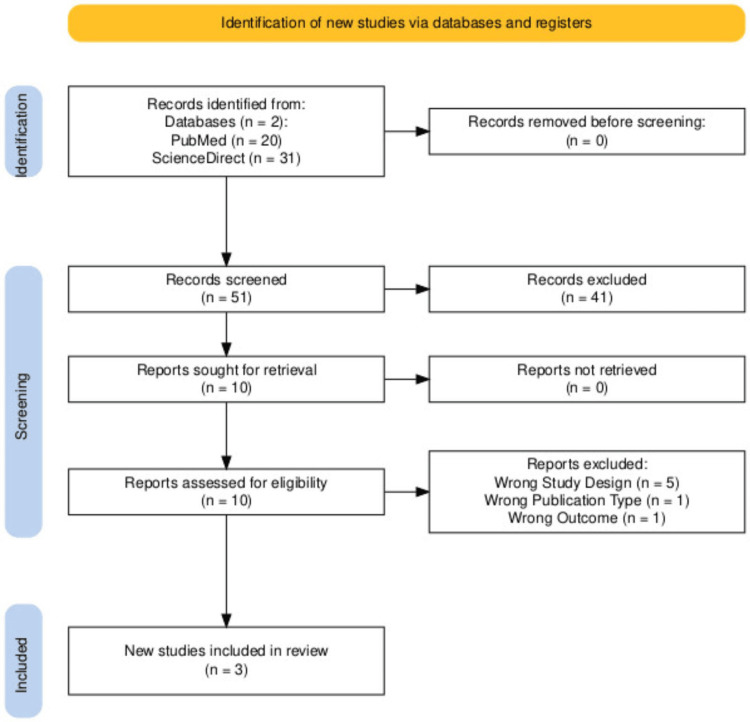 Figure 1
Peer Reviews
No public reviews on file for this paper yet. If you reviewed it on a platform where reviews are public (OpenReview, ICLR, NeurIPS, ICML), you can paste yours below so the community can read it here.
Videos
No videos yet. Explain this paper in a talk, walkthrough, or lecture? Add one.
Taxonomy
TopicsIntracranial Aneurysms: Treatment and Complications · Vascular Malformations Diagnosis and Treatment · Cardiovascular and Diving-Related Complications