Vaginal group B Streptococcus colonization among pregnant women in Ethiopia: Prevalence, risk factors, and antimicrobial susceptibility
Abeba Mengist

TL;DR
A study in Ethiopia found a 13% rate of vaginal Group B Streptococcus colonization in pregnant women, with higher rates in those who had given birth before and antibiotic resistance in some cases.
Contribution
This study provides new data on GBS prevalence, risk factors, and antimicrobial resistance in pregnant women in Jimma, Ethiopia.
Findings
Vaginal GBS colonization rate was 13% among 200 pregnant women in Jimma, Ethiopia.
Multigravida women had a higher colonization rate (17%) compared to primigravida women (3.4%).
GBS isolates showed resistance to ampicillin, penicillin, and clindamycin.
Abstract
Group B Streptococcus (GBS) colonization during pregnancy poses significant public health risks, contributing to adverse outcomes like neonatal septicemia, meningitis, and pneumonia. Transmission from mother to newborn during delivery is common. In Jimma, Ethiopia, limited data exist on GBS prevalence, risk factors, and antimicrobial resistance among pregnant women, with no universal screening protocol to mitigate neonatal infections. This study assessed GBS prevalence, antimicrobial susceptibility, and associated risk factors among 200 pregnant women at Jimma University Hospital. Vaginal swabs collected at 35–37 weeks gestation were cultured and tested for GBS using standard methods. Results showed a colonization rate of 13% (26/200), higher in multigravida (17%) compared to primigravida (3.4%). Resistance rates to ampicillin, penicillin, clindamycin, and erythromycin were 30.8%,…
Genes, proteins, chemicals, diseases, species, mutations and cell lines named across the full text — each resolved to its canonical identifier and authoritative record.
Click any figure to enlarge with its caption.
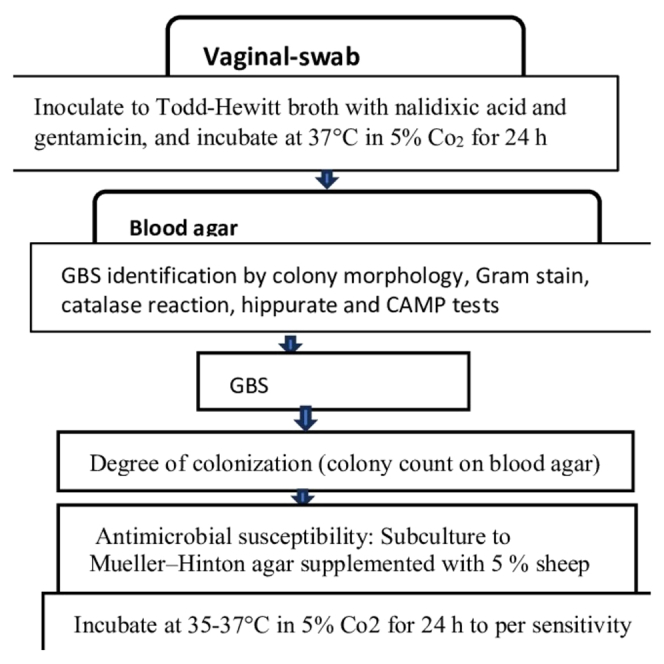 Figure 1
Peer Reviews
No public reviews on file for this paper yet. If you reviewed it on a platform where reviews are public (OpenReview, ICLR, NeurIPS, ICML), you can paste yours below so the community can read it here.
Videos
No videos yet. Explain this paper in a talk, walkthrough, or lecture? Add one.
Taxonomy
TopicsNeonatal and Maternal Infections · Preterm Birth and Chorioamnionitis · Reproductive tract infections research