Nutritional and Therapeutic Potential of Cassia fistula Pods: A Comprehensive Study on Mineral Composition, Immunomodulation, Antidiabetic Benefits, and Safety of Amaltas Tea in Southeast Punjab, Pakistan
Muhammad Naeem Zubairi, Muhammad Khurram Afzal, Muhammad Tauseef Sultan, Mohammad S. Mubarak, Shaikh Jamal Uddin

TL;DR
This study explores the health benefits of Cassia fistula pods, showing they are rich in minerals and may help lower blood sugar and boost immunity safely.
Contribution
The study provides new evidence on the antidiabetic, immunomodulatory, and safe use of Cassia fistula pod-based tea.
Findings
Cassia fistula pods contain significant amounts of copper, iron, manganese, and zinc.
The tea showed high inhibitory activity against α-glucuronidase and reduced blood glucose in animal models.
It demonstrated immunomodulatory effects and no toxicity in tested animals.
Abstract
Cassia fistula, a plant belonging to the Leguminosae family, grows in various regions, including South Africa, Asia, China, America, Canada, Bangladesh, Afghanistan, Pakistan, Brazil, and West India. Southeast Punjab, Pakistan, has long utilized C. fistula tea, which is becoming more popular due to its high mineral content, phytochemical compounds, and possible medical properties. This study investigates how to improve immunity, control diabetes, and ensure that it is safe to use. Knowing its makeup and effects might help justify its use in functional tea. The pods of C. fistula have been found to possess antidiabetic, anti‐enzyme, and immunomodulatory properties, as demonstrated by various tests. This work focuses on assessing properties and mineral profile analysis using the Association of Official Analytical Chemists standard protocol. The brine shrimp lethality method was…
Genes, proteins, chemicals, diseases, species, mutations and cell lines named across the full text — each resolved to its canonical identifier and authoritative record.
Click any figure to enlarge with its caption.
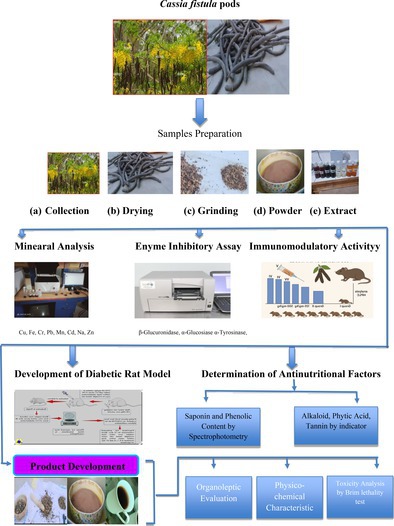 Figure 1
Peer Reviews
No public reviews on file for this paper yet. If you reviewed it on a platform where reviews are public (OpenReview, ICLR, NeurIPS, ICML), you can paste yours below so the community can read it here.
Videos
No videos yet. Explain this paper in a talk, walkthrough, or lecture? Add one.
Taxonomy
TopicsPhytochemistry and biological activity of medicinal plants · Ethnobotanical and Medicinal Plants Studies · Food Science and Nutritional Studies