Inorganic carbon levels regulate growth via SigC signaling cascade in cyanobacteria
Juha Kurkela, Linda Vuorijoki, Serhii Vakal, Otso Turunen, Satu Koskinen, Viktoria Reimann, Mithila Ray, Wolfgang R. Hess, Tiina A. Salminen, Taina Tyystjärvi

TL;DR
This study reveals how cyanobacteria adjust their growth based on carbon dioxide levels through a specific protein signaling pathway.
Contribution
The paper identifies a novel signaling cascade involving SigC, Slr1861, and Ssr1600 that regulates cyanobacterial growth in response to inorganic carbon.
Findings
SigC, Slr1861, and Ssr1600 form a signaling cascade that connects cyanobacterial growth to environmental CO2 levels.
High CO2 causes excessive RNAP-SigC holoenzyme formation, reducing photosynthesis and causing cell lysis in ΔrpoZ cells.
Reducing Ssr1600 levels in suppressor mutants restores normal growth and gene expression in high CO2 conditions.
Abstract
Cyanobacterial growth depends on inorganic carbon (Ci; CO2 and bicarbonate) concentration, but mechanism(s) adjusting photosynthesis and growth according to Ci remain unclear. ΔrpoZ cells lacking the ω subunit of the RNA polymerase (RNAP) show a unique high‐CO2 lethal phenotype in Synechocystis sp. PCC 6803.Bioinformatics, biochemical and 3D modeling studies were used to reveal how suppressor mutations rescue ΔrpoZ cells in 3% CO2.Suppressor mutations were mapped to the ssr1600 gene. Ssr1600 was shown to function as an anti‐σ factor antagonist. The Slr1861 protein was identified as an anti‐σ factor and as an Ssr1600 kinase. The Slr1861/Ssr1600 pair was shown to control the formation of RNAP‐SigC holoenzyme using a phosphorylation‐controlled partner‐switching mechanism. In high CO2, excess formation of growth‐limiting RNAP‐SigC holoenzyme in ΔrpoZ reduces the expression of cell wall…
Genes, proteins, chemicals, diseases, species, mutations and cell lines named across the full text — each resolved to its canonical identifier and authoritative record.
Click any figure to enlarge with its caption.
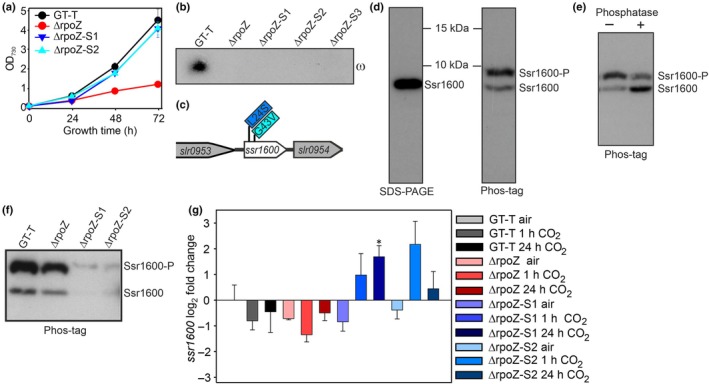 Figure 1
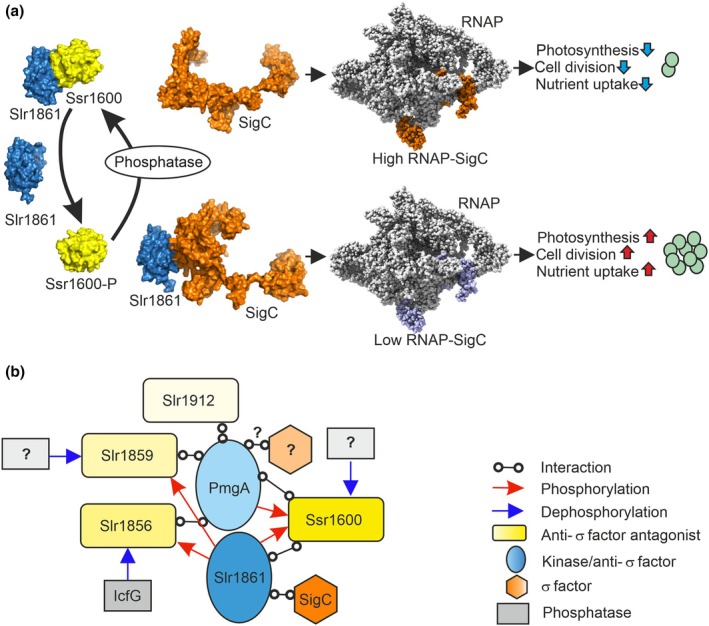 Figure 2
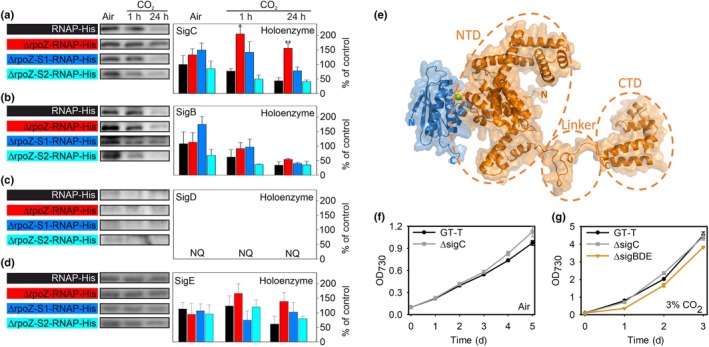 Figure 3
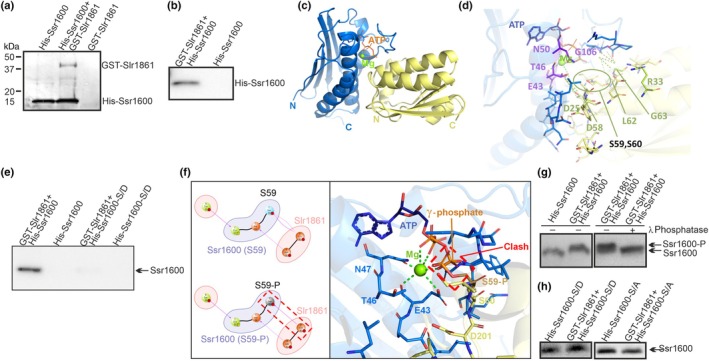 Figure 4
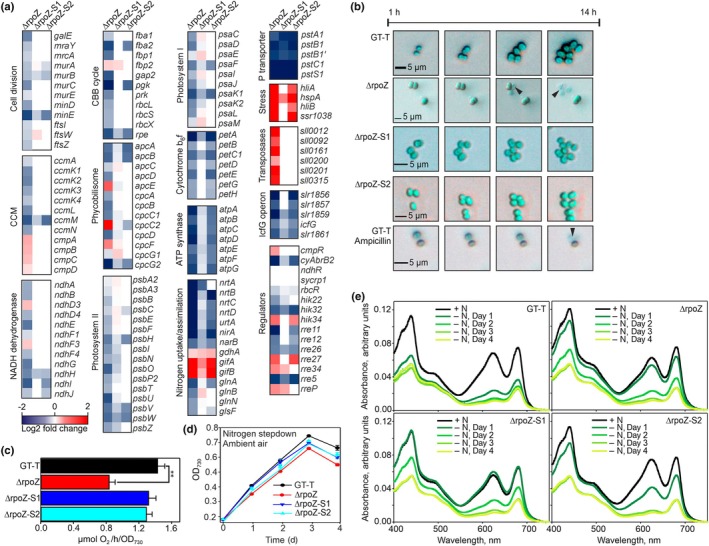 Figure 5
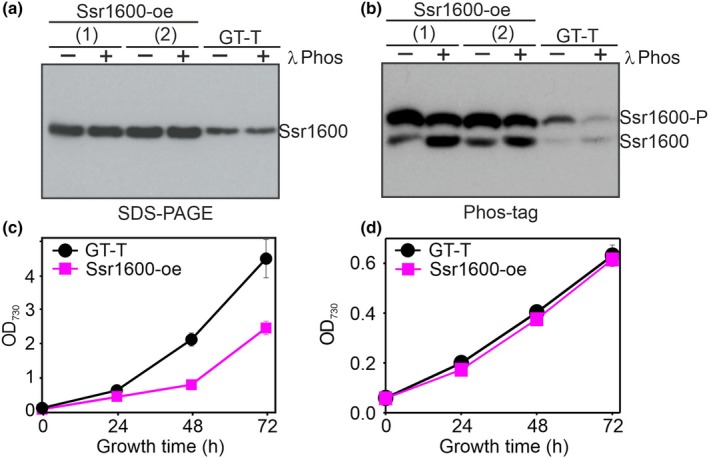 Figure 6
Peer Reviews
No public reviews on file for this paper yet. If you reviewed it on a platform where reviews are public (OpenReview, ICLR, NeurIPS, ICML), you can paste yours below so the community can read it here.
Videos
No videos yet. Explain this paper in a talk, walkthrough, or lecture? Add one.
Taxonomy
TopicsPhotosynthetic Processes and Mechanisms · Algal biology and biofuel production · Biocrusts and Microbial Ecology