Sex and Age-specific Association between Isokinetic Knee Extensor Muscle Strength and Diabetes Mellitus: A Cross-sectional Study from the Sports Program Service Study
Takahisa Ohta, Junzo Nagashima, Hiroyuki Sasai, Kazushige Sasaki, Naokata Ishii

TL;DR
Stronger knee muscles are linked to lower diabetes risk in Japanese adults, with differences seen by sex and age.
Contribution
Identifies sex- and age-specific inverse associations between isokinetic knee extensor strength and diabetes prevalence.
Findings
Higher isokinetic knee extensor strength is associated with lower diabetes prevalence in both men and women.
The inverse association is stronger in men aged 40 and older compared to older women.
Adjusting for confounders shows consistent trends across strength quartiles.
Abstract
Diabetes mellitus (DM) is an increasing public health concern in Japan and worldwide, highlighting the need for effective prevention. Lower limb muscle strength, a modifiable factor, may influence glycemic control, potentially in sex- and age-specific ways. This study examined the association between isokinetic knee extensor strength and DM prevalence in a large Japanese cohort. A total of 14,017 Japanese individuals (men: 6,227; women: 7,790) aged 18-89 years participated in this study. All participants completed the maximum voluntary isokinetic knee extensor strength test (60°/s) and medical examination. DM was defined as blood glucose ≥126 mg/dL, hemoglobin A1c ≥6.5%, or hypoglycemic medication. Multivariable odds ratios (ORs) and 95% confidence intervals were calculated using the lowest quartile knee muscle strength category as a reference after adjusting for potential confounders.…
Genes, proteins, chemicals, diseases, species, mutations and cell lines named across the full text — each resolved to its canonical identifier and authoritative record.
Click any figure to enlarge with its caption.
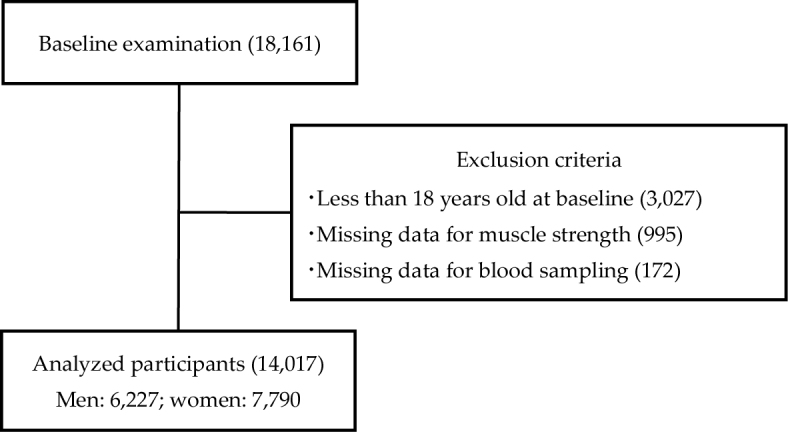 Figure 1
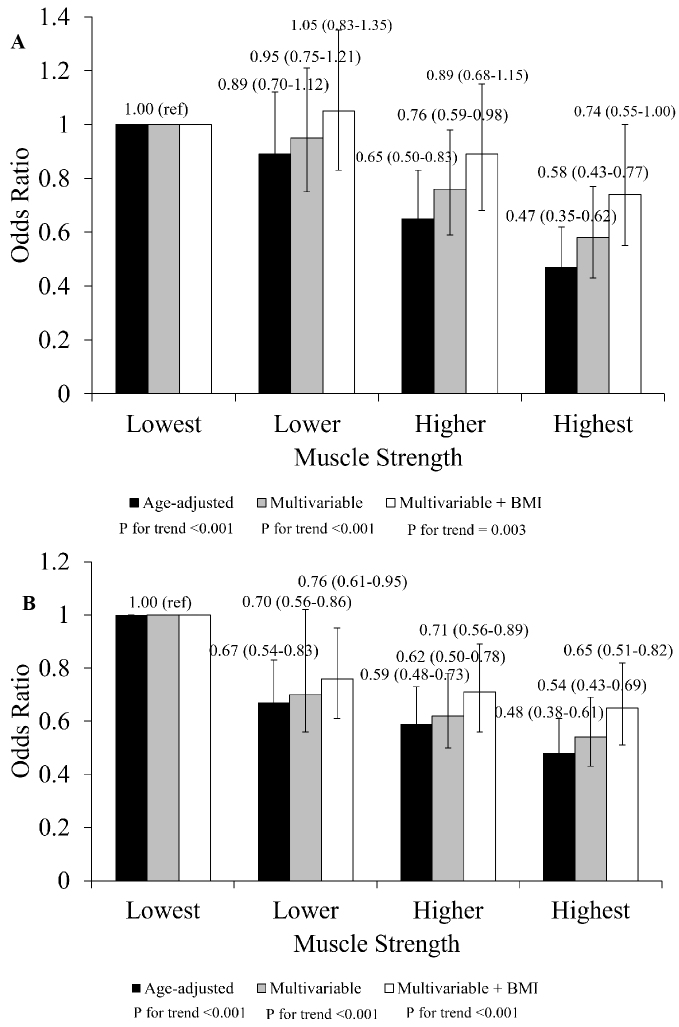 Figure 2
Peer Reviews
No public reviews on file for this paper yet. If you reviewed it on a platform where reviews are public (OpenReview, ICLR, NeurIPS, ICML), you can paste yours below so the community can read it here.
Videos
No videos yet. Explain this paper in a talk, walkthrough, or lecture? Add one.
Taxonomy
TopicsSports Performance and Training · Lower Extremity Biomechanics and Pathologies · Exercise and Physiological Responses