Breaking barriers in the sensitive and accurate mass determination of large DNA plasmids by mass photometry
Eduard H.T.M. Ebberink, Evolène Deslignière, Alisa Ruisinger, Markus Nuebel, Marco Thomann, Albert J.R. Heck

TL;DR
This paper introduces a new method using mass photometry to accurately measure the mass of large DNA plasmids by converting them into single-stranded DNA particles.
Contribution
A novel formic acid-based denaturation protocol enables accurate mass photometry of large DNA plasmids.
Findings
Standard mass photometry methods underestimate plasmid DNA masses by 30%–40%.
A formic acid-based protocol rapidly converts dsDNA into ssDNA-like particles suitable for accurate mass photometry.
The new method provides mass measurements within 1–3% of expected values for pDNA constructs up to 15 MDa.
Abstract
DNA plasmids (pDNAs) are essential for gene cloning and protein expression, whereby engineered plasmids serve as vectors to insert foreign DNA into host cells, enabling mass production of proteins and vaccines. Due to the rapidly increasing use and application of a wide variety of pDNA (e.g., CRISPR-based gene editing, RNA therapeutics, and DNA vaccines), analytical methods to characterize their key attributes are vital. Here we explore mass photometry (MP) to analyze pDNAs and find that it completely fails using standard procedures as developed for MP on proteins, with masses underestimated by 30%–40%. While DNA can be measured by using coated glass slides, the large double-stranded DNA (dsDNA) particles diffract light beyond the diffraction limit, rendering most landing events unusable. To overcome such issues, we introduce a formic acid-based denaturation protocol to convert dsDNA…
Genes, proteins, chemicals, diseases, species, mutations and cell lines named across the full text — each resolved to its canonical identifier and authoritative record.
Click any figure to enlarge with its caption.
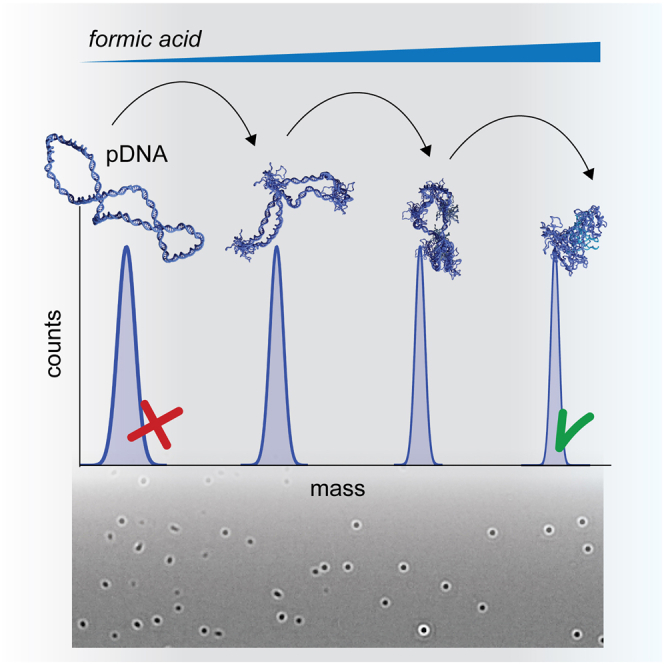 Figure 1
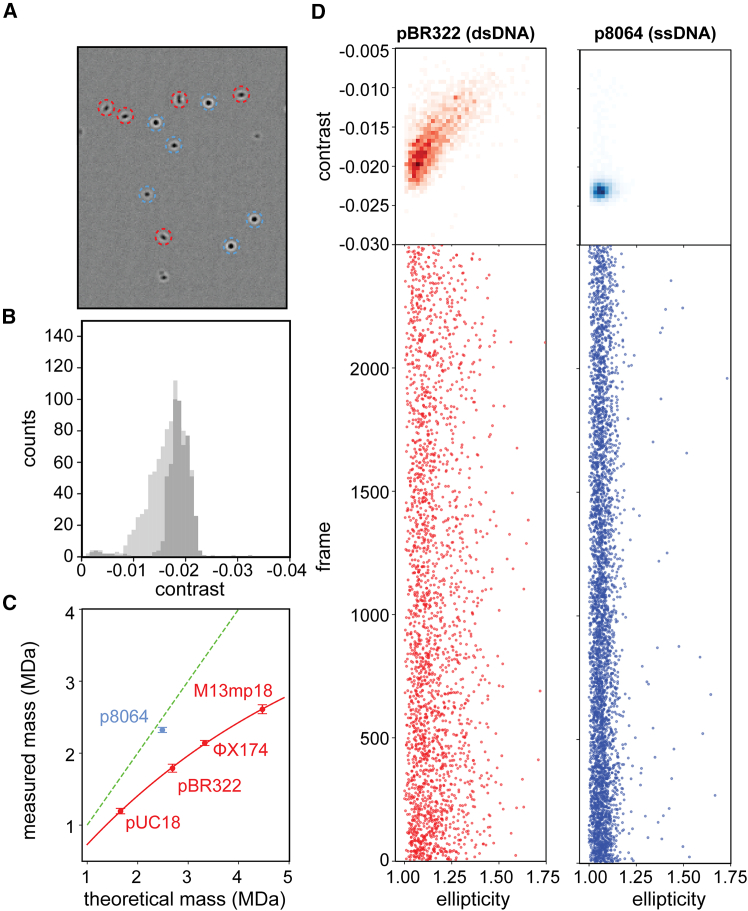 Figure 2
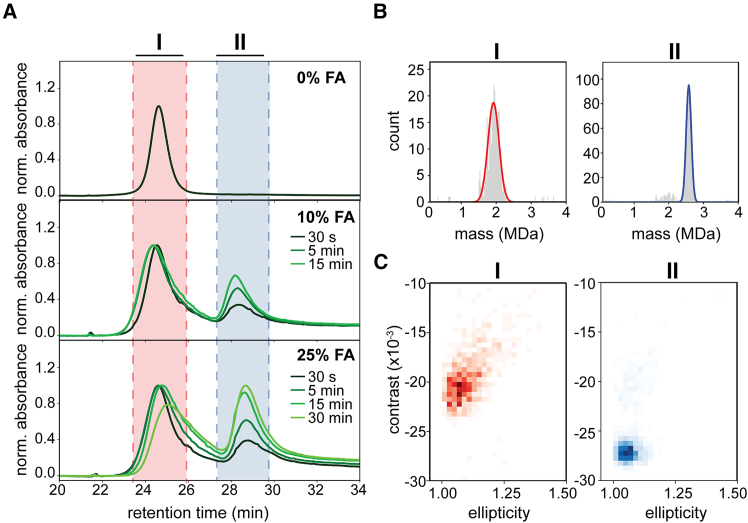 Figure 3
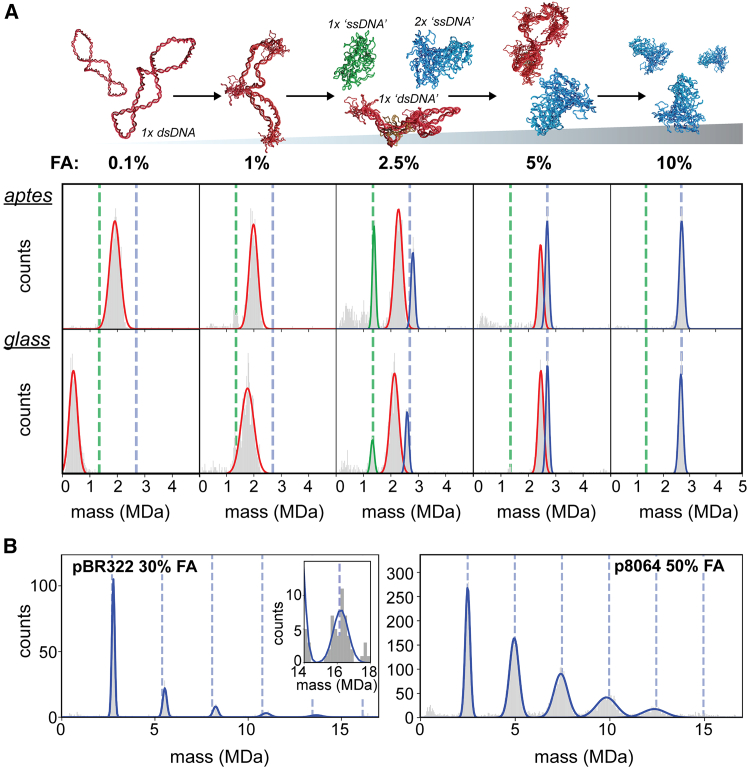 Figure 4
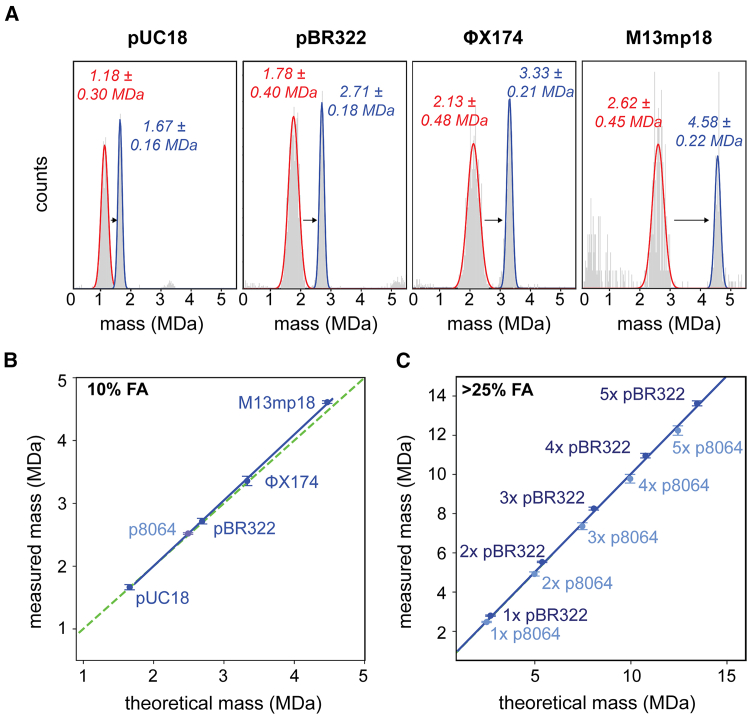 Figure 5
Peer Reviews
No public reviews on file for this paper yet. If you reviewed it on a platform where reviews are public (OpenReview, ICLR, NeurIPS, ICML), you can paste yours below so the community can read it here.
Videos
No videos yet. Explain this paper in a talk, walkthrough, or lecture? Add one.
Taxonomy
TopicsMolecular Biology Techniques and Applications