Vertical larynx actions and intergestural timing stability in Hausa ejectives and implosives
Miran Oh, Dani Byrd, Louis Goldstein, Shrikanth S. Narayanan

TL;DR
This study uses MRI to examine how the larynx moves during the production of specific Hausa consonants, revealing differences in timing and stability between ejectives, implosives, and pulmonic consonants.
Contribution
The paper introduces new insights into intergestural timing and larynx movement in non-pulmonic consonants using real-time MRI data.
Findings
Ejectives show greater vertical larynx movement compared to pulmonic consonants.
Implosives and pulmonic consonants differ in intergestural timing patterns, not larynx magnitude.
Ejectives exhibit the most stable temporal lags, followed by implosives and pulmonic consonants.
Abstract
The current project undertakes a kinematic examination of vertical larynx actions and intergestural timing stability within multi-gesture complex segments such as ejectives and implosives that may possess specific temporal goals critical to their articulatory realization. Using real-time MRI (rtMRI) speech production data from Hausa non-pulmonic and pulmonic consonants, this study illuminates speech timing between oral constriction and vertical larynx actions within segments and the role this intergestural timing plays in realizing phonological contrasts and processes in varying prosodic contexts. Results suggest that vertical larynx actions have greater magnitude in the production of ejectives compared to their pulmonic counterparts, but implosives and pulmonic consonants are differentiated not by vertical larynx magnitude but by the intergestural timing patterns between their oral and…
Genes, proteins, chemicals, diseases, species, mutations and cell lines named across the full text — each resolved to its canonical identifier and authoritative record.
Click any figure to enlarge with its caption.
 Figure 1
 Figure 2
 Figure 3
 Figure 4
 Figure 5
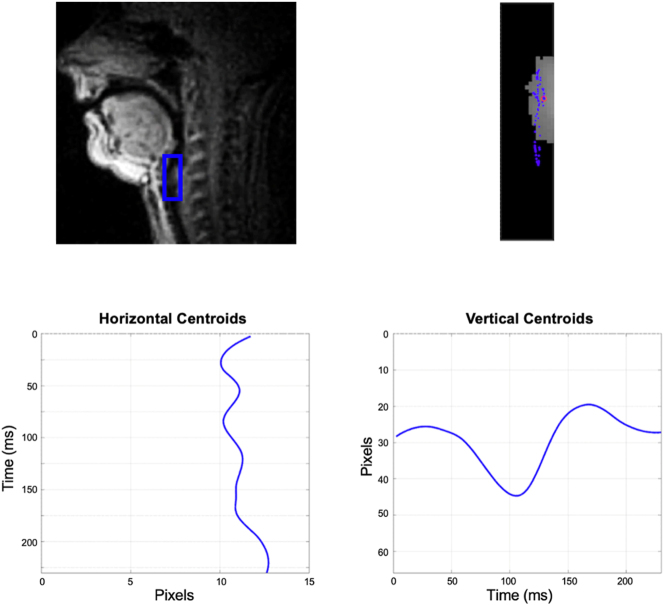 Figure 6
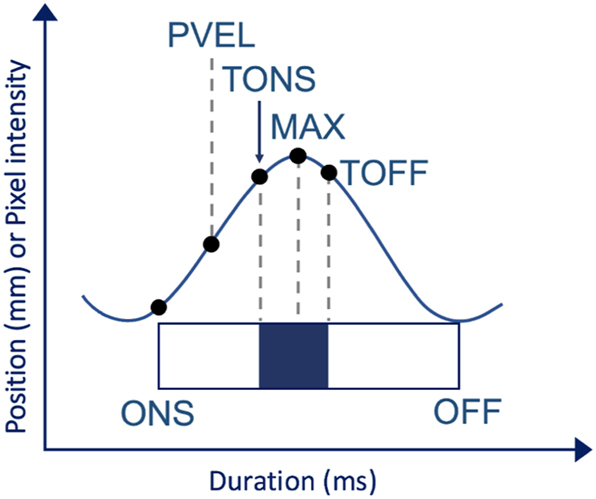 Figure 7
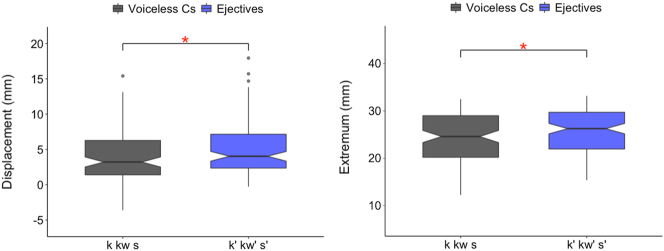 Figure 8
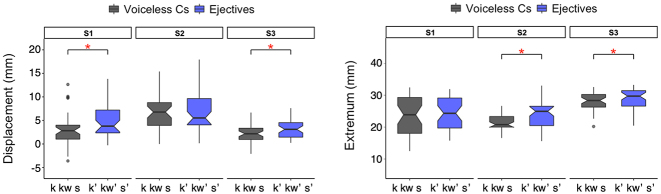 Figure 9
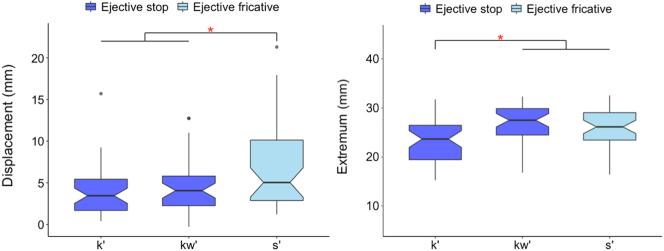 Figure 10
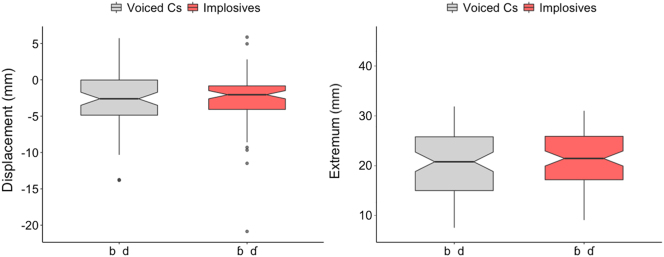 Figure 11
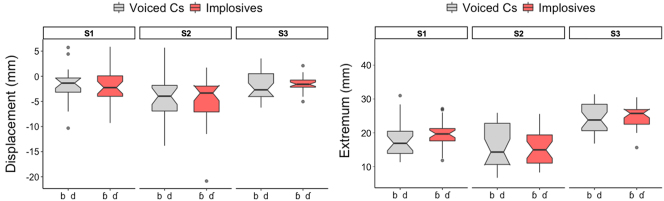 Figure 12
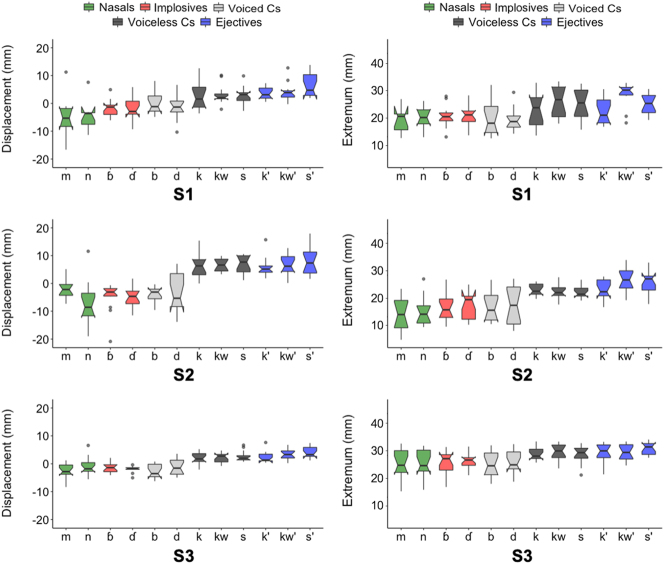 Figure 13
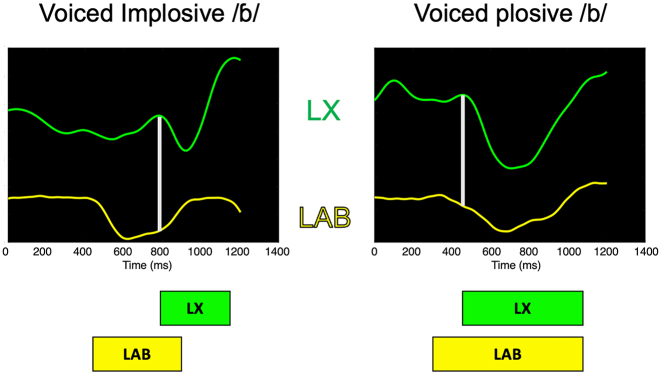 Figure 14
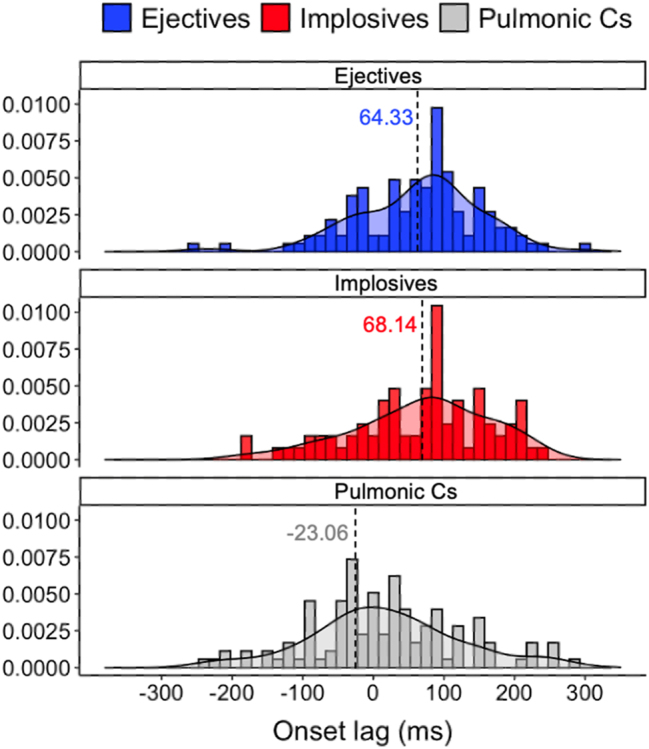 Figure 15
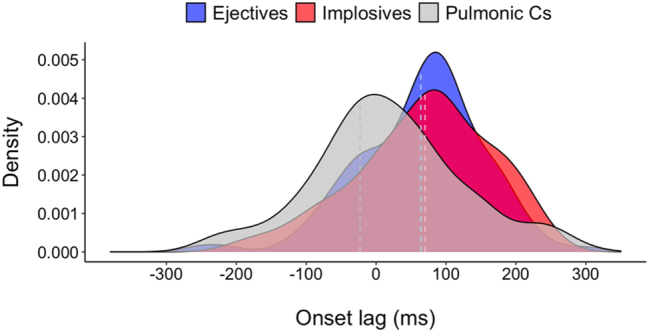 Figure 16
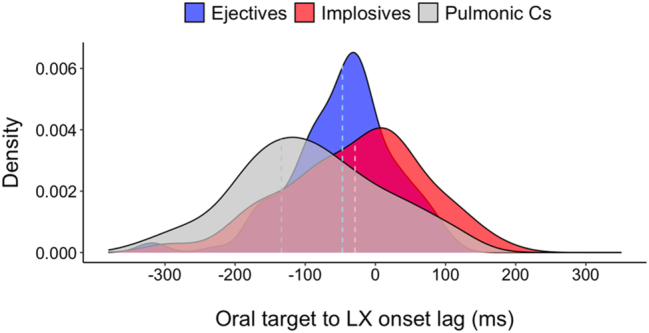 Figure 17
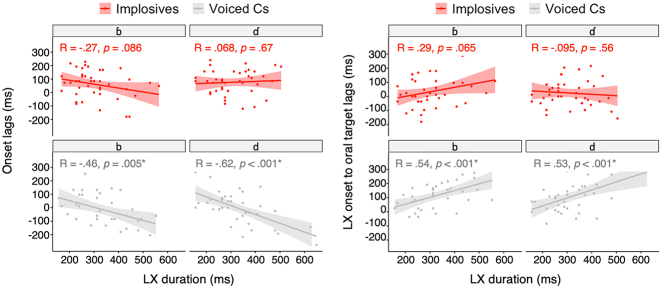 Figure 18
Peer Reviews
No public reviews on file for this paper yet. If you reviewed it on a platform where reviews are public (OpenReview, ICLR, NeurIPS, ICML), you can paste yours below so the community can read it here.
Videos
No videos yet. Explain this paper in a talk, walkthrough, or lecture? Add one.
Taxonomy
TopicsPhonetics and Phonology Research · Speech Recognition and Synthesis · Linguistic Variation and Morphology