Superior monocular visual function but compromised binocular balance in precision shooters compared to age and refraction matched controls
Izabela K. Garaszczuk, Wiktoria Jenczewska, Magdalena Asejczyk

TL;DR
Precision shooters have better monocular vision but worse binocular balance compared to non-athletes, suggesting visual adaptations from training.
Contribution
The study reveals task-specific visual adaptations in precision shooters, including enhanced monocular acuity and suppressed binocular balance.
Findings
Shooters showed superior near visual acuity and contrast sensitivity compared to controls.
National-level shooters had more stable fixation and better stereoacuity.
Frequent monocular use in shooting correlates with reduced binocular balance and convergence issues.
Abstract
Shooting sports demand exceptional visual performance, yet detailed assessments of visual function in precision shooters remain limited. This cross-sectional study evaluated 28 pistol and rifle shooters and 20 age- and refractive-error-matched non-athletic controls. Participants underwent comprehensive visual assessments, including tests of visual acuity (VA), Vernier acuity, contrast sensitivity, binocular vision, accommodation, ocular biometry, perimetry, and eye movement tracking. A subgroup of national-level athletes was also analyzed. Compared to controls, shooters demonstrated superior near VA (−0.08 ± 0.06 vs. 0.03 ± 0.07 logMAR; p = 0.003), binocular Vernier acuity (5.4 ± 3.2 vs. 8.7 ± 5.1 arcsec; p = 0.032), and dominant eye contrast sensitivity (p = 0.005). National-level shooters showed fewer gaze shifts (p = 0.044), more stable fixation, and better stereoacuity (25 vs. 35…
Genes, proteins, chemicals, diseases, species, mutations and cell lines named across the full text — each resolved to its canonical identifier and authoritative record.
Click any figure to enlarge with its caption.
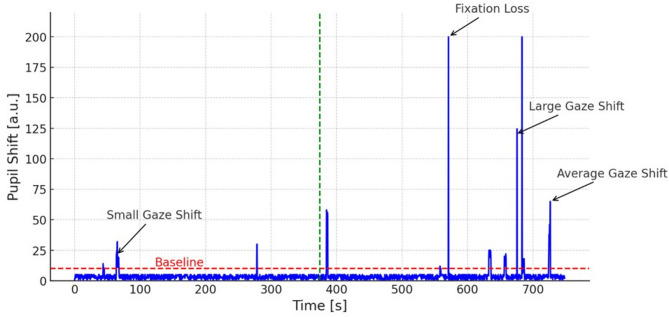 Figure 1
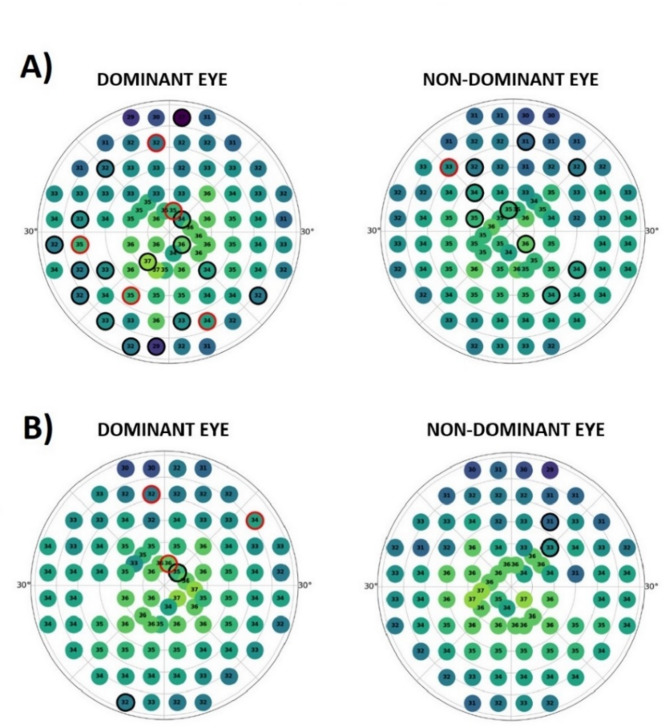 Figure 2
Peer Reviews
No public reviews on file for this paper yet. If you reviewed it on a platform where reviews are public (OpenReview, ICLR, NeurIPS, ICML), you can paste yours below so the community can read it here.
Videos
No videos yet. Explain this paper in a talk, walkthrough, or lecture? Add one.
Taxonomy
TopicsVisual perception and processing mechanisms · Ophthalmology and Visual Impairment Studies · Glaucoma and retinal disorders