Temporal characteristics of hemodynamic responses during active and passive hand movements in schizophrenia spectrum disorder
Harun A. Rashid, Tilo Kircher, Benjamin Straube

TL;DR
This study explores how people with schizophrenia spectrum disorder process movement-related brain activity differently compared to healthy individuals.
Contribution
The paper reveals delayed brain responses in SSD patients during active hand movements, suggesting impaired predictive mechanisms.
Findings
SSD patients showed delayed BOLD responses in brain regions like the right caudate and left thalamus during active vs. passive movements.
Delayed activation in the bilateral putamen and insula during active movement with own hand feedback was observed in SSD patients.
Altered timing of neural responses in SSD may contribute to disturbances in the sense of agency.
Abstract
In healthy individuals, active hand-movements typically elicit earlier neural processing than passive one, reflected by more positive contrast estimates of the first-order temporal derivative (TD) of hemodynamic response function (HRF) in functional MRI (fMRI) analyses. This temporal advantage might be due to prior movement-awareness and predictive mechanisms that support self-other distinction. However, it is unknown whether impaired predictive mechanisms in Schizophrenia Spectrum Disorder (SSD) influence earlier neural processing. Patients with SSD (n = 20) and healthy controls (HC; n = 20) performed active and passive hand movements, while detected delays in video feedback of their own or another person’s hand. The recorded fMRI data were analysed applying TD to examine timing and second-order dispersion derivative (DD) to evaluate duration of neural responses. Compared to HC,…
Genes, proteins, chemicals, diseases, species, mutations and cell lines named across the full text — each resolved to its canonical identifier and authoritative record.
Click any figure to enlarge with its caption.
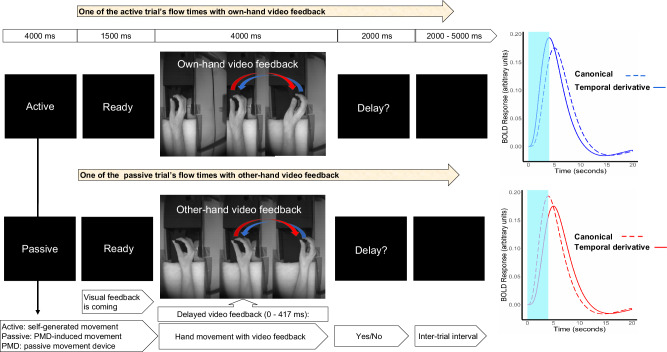 Figure 1
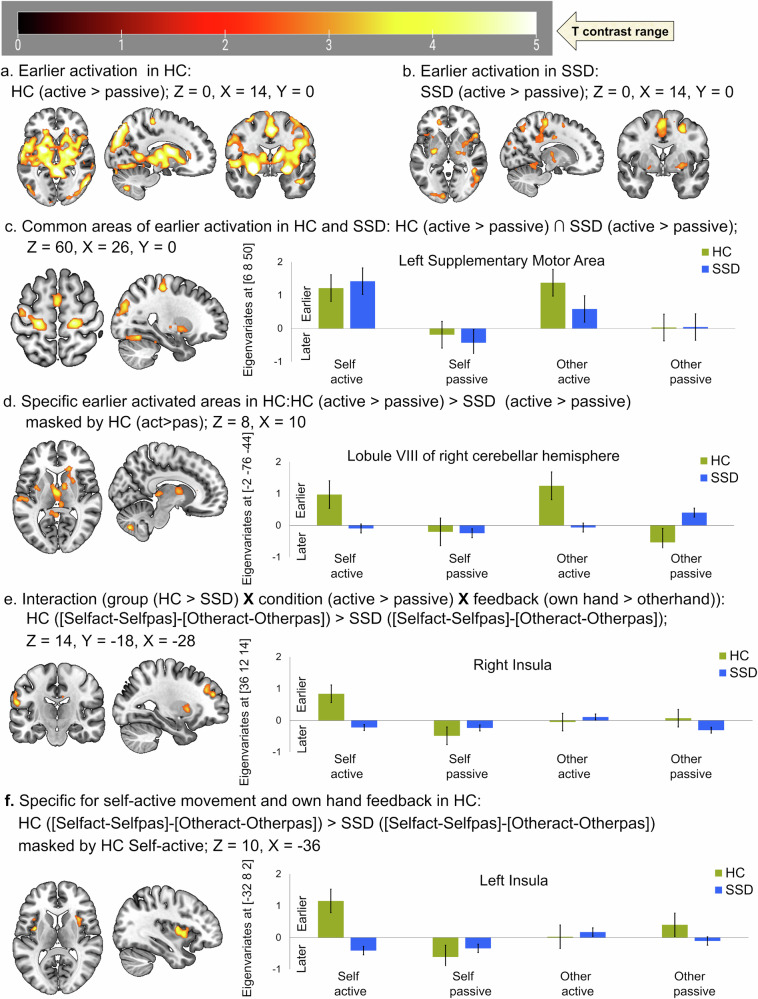 Figure 2
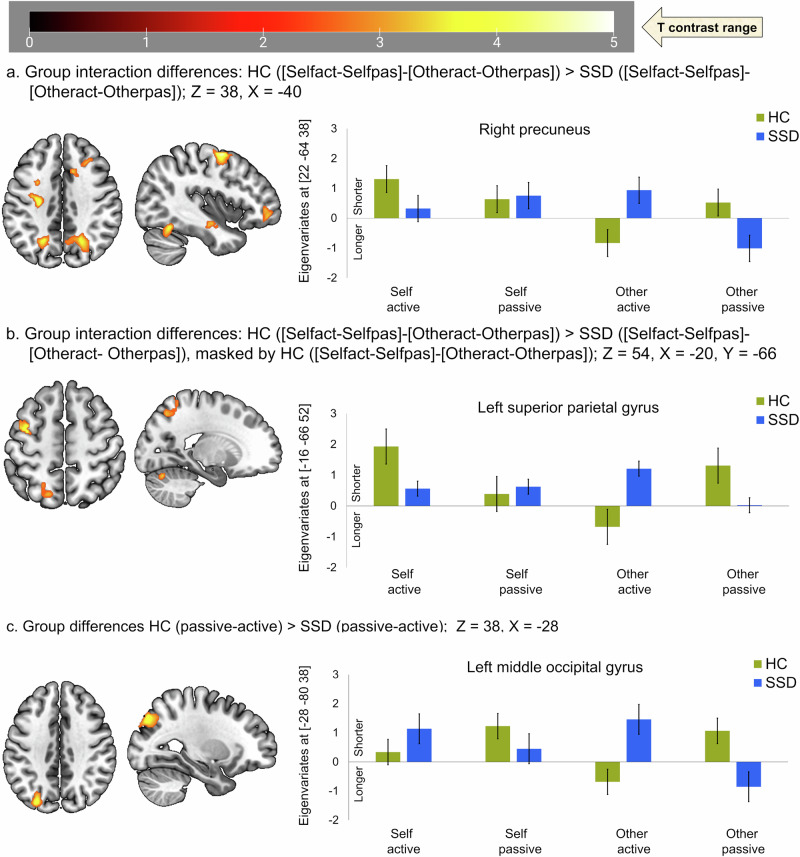 Figure 3
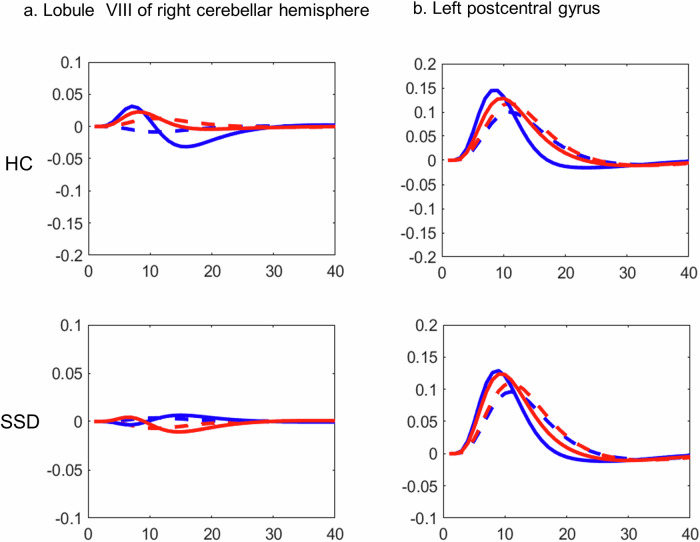 Figure 4
Peer Reviews
No public reviews on file for this paper yet. If you reviewed it on a platform where reviews are public (OpenReview, ICLR, NeurIPS, ICML), you can paste yours below so the community can read it here.
Videos
No videos yet. Explain this paper in a talk, walkthrough, or lecture? Add one.
Taxonomy
TopicsPsychosomatic Disorders and Their Treatments · Neuroscience and Music Perception · Functional Brain Connectivity Studies