Gibberellin-induced parthenocarpy in fruits of a prickly pear mutant
Rameshkumar Ramakrishnan, Udi Zurgil, Shamili Kanna, Danuše Tarkowská, Ondřej Novák, Miroslav Strnad, Noemi Tel-Zur, Yaron Sitrit

TL;DR
A prickly pear mutant produces seedless fruit due to high gibberellin levels, revealing how these hormones control fruit development.
Contribution
The study identifies the role of gibberellin biosynthesis and regulation genes in parthenocarpic fruit development in prickly pear.
Findings
BS1 mutant fruits show elevated levels of bioactive gibberellins (GA1, GA3, GA4) compared to revertant ovules.
GA-related genes like GID1, GA20ox, and GA2ox are differentially expressed in BS1 ovaries, influencing parthenocarpy.
Application of a GA inhibitor reverted BS1 fruits to seed-bearing, confirming GA's role in seed development.
Abstract
A parthenocarpic fruit mutant of prickly pear was isolated, revealing the role of GAs in parthenocarpic fruit development which is controlled by the GID-GA20ox/GA2ox genetic system modulating GA biosynthesis/regulation. We explored the intricate dynamics of parthenocarpic fruit development in prickly pear Opuntia ficus-indica (Cactaceae) through the investigation of fruits of the Beer Sheva1 (BS1) a parthenocarpic mutant and its revertant non-parthenocarpic stems. BS1 fruits, characterized by parthenocarpy and enlarged unfertilized ovules, provide a unique model for investigating the regulatory mechanisms underlying fruit development in prickly pear. We hypothesized that elevated levels of gibberellins (GAs) in BS1 ovaries induce parthenocarpic fruit development. By integrating different approaches, including GA quantification and expression analysis of ovaries from BS1 and revertant…
Genes, proteins, chemicals, diseases, species, mutations and cell lines named across the full text — each resolved to its canonical identifier and authoritative record.
Click any figure to enlarge with its caption.
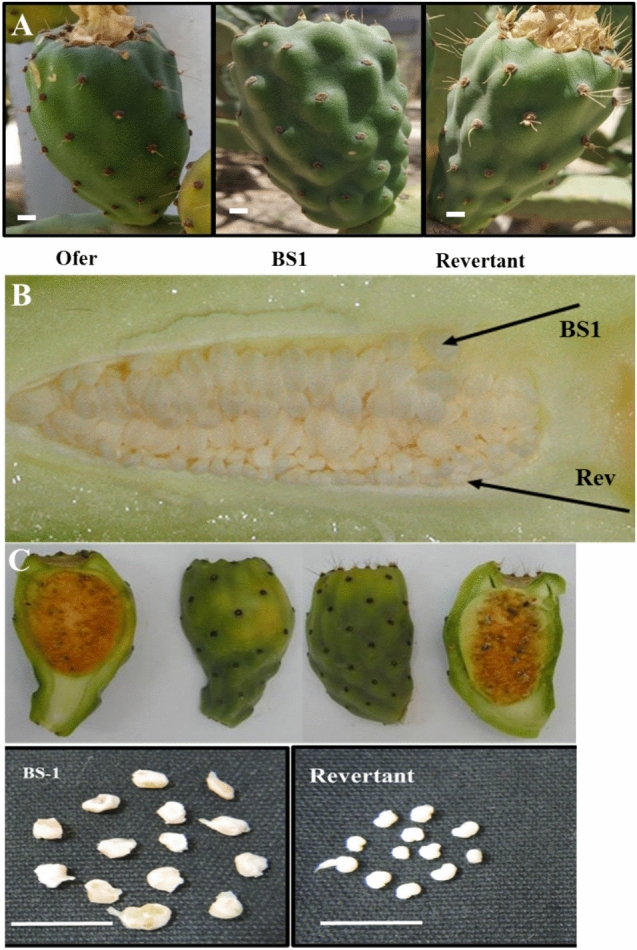 Figure 1
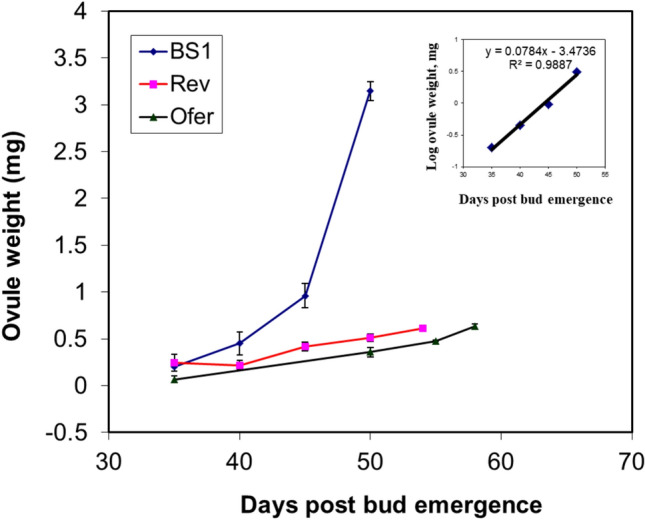 Figure 2
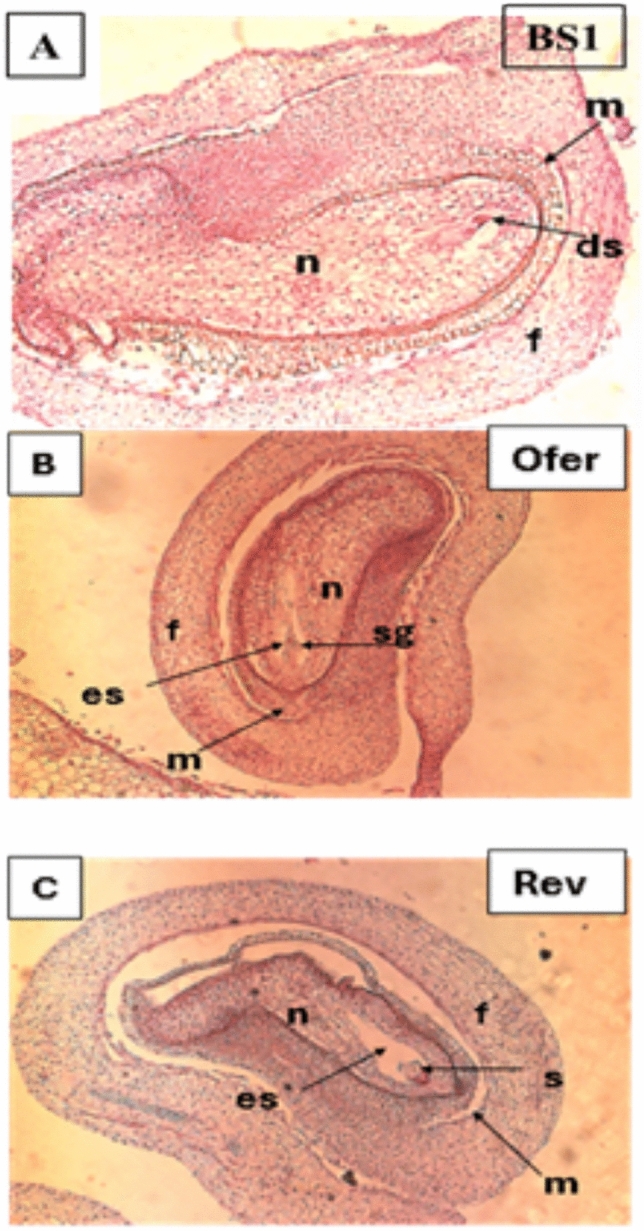 Figure 3
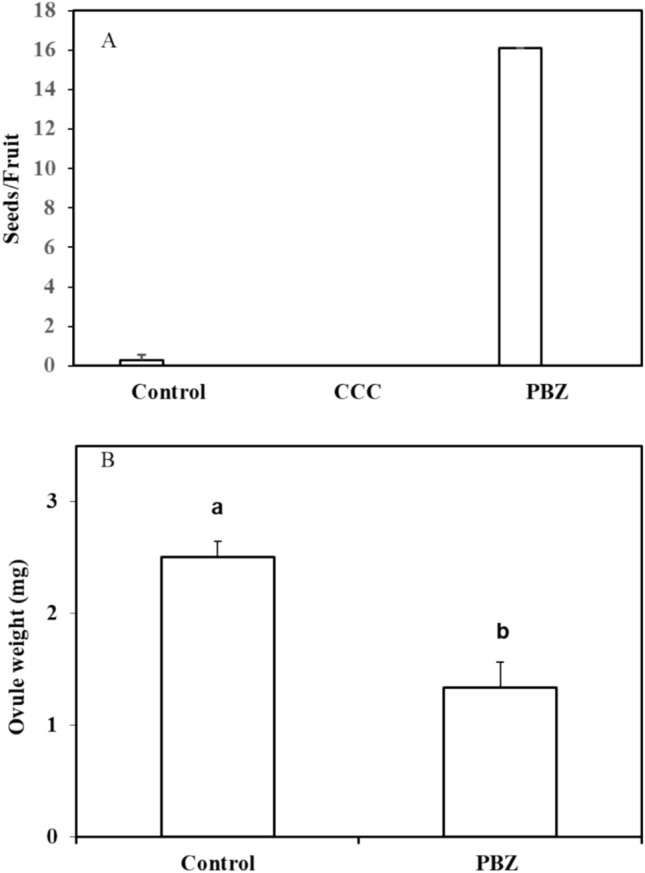 Figure 4
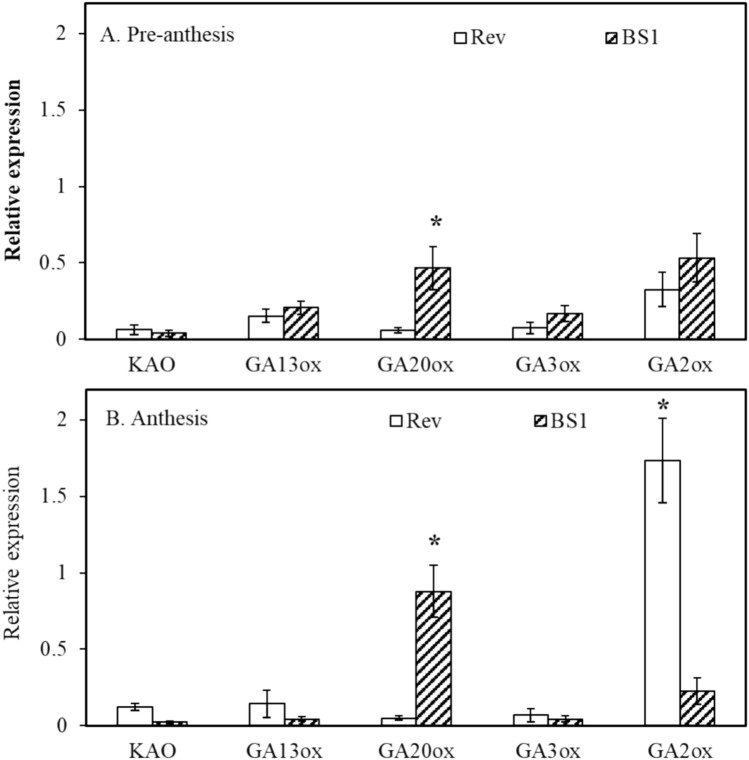 Figure 5
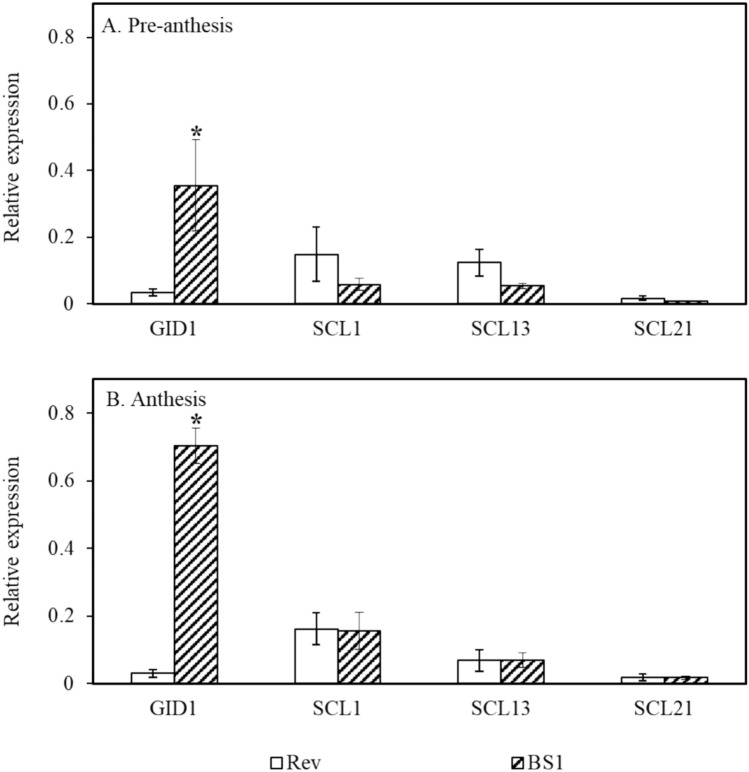 Figure 6
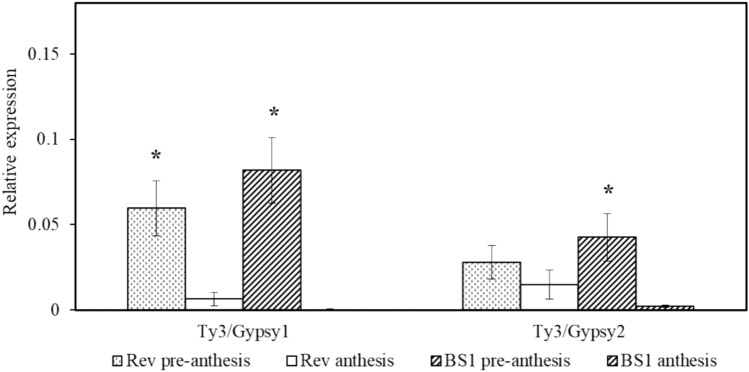 Figure 7
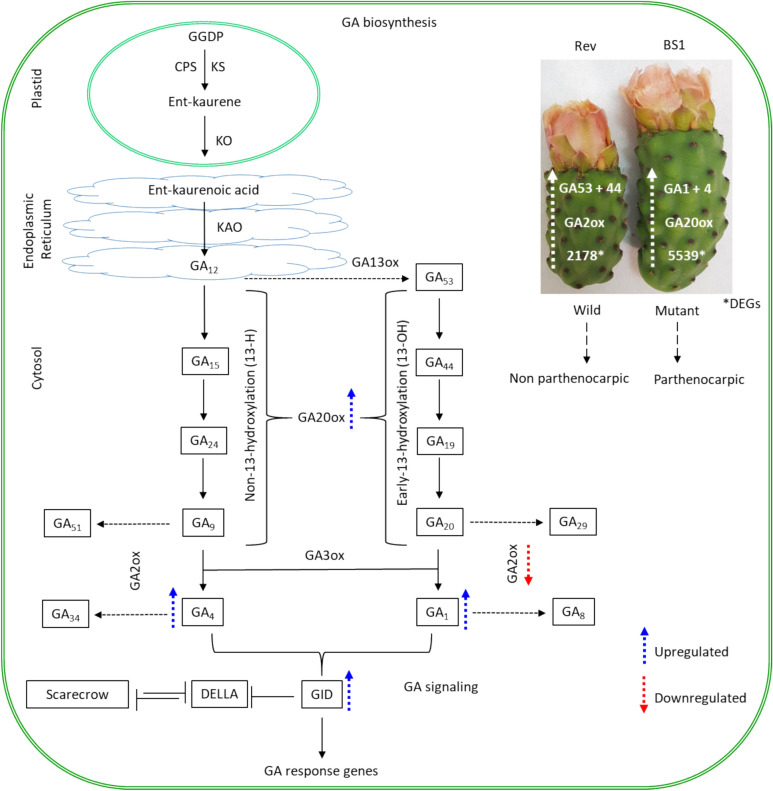 Figure 8
Peer Reviews
No public reviews on file for this paper yet. If you reviewed it on a platform where reviews are public (OpenReview, ICLR, NeurIPS, ICML), you can paste yours below so the community can read it here.
Videos
No videos yet. Explain this paper in a talk, walkthrough, or lecture? Add one.
Taxonomy
TopicsPlant Reproductive Biology · Plant Physiology and Cultivation Studies · Plant Molecular Biology Research