Case Report: A personalized model of care for surgical resection of complex brain tumor with atypical language dominance
Natalie Sherry, Neslihan Nisa Gecici, Amelia Stepniak, Daniel Miller, Ahmed Habib, Ajay Niranjan, Jessica Barrios-Martinez, Fang-Cheng Yeh, Jeffrey Balzer, Pascal O. Zinn

TL;DR
A personalized approach to brain tumor surgery is shown to be effective for a patient with atypical right hemisphere language dominance.
Contribution
This case introduces a personalized, multimodal approach for brain tumor resection in patients with atypical language dominance.
Findings
The patient exhibited right hemisphere language dominance despite being right-handed and monolingual.
Awake craniotomy with intraoperative mapping confirmed language representation in the right frontal and temporal lobes.
Neuropsychological testing revealed postoperative decline in semantic language, supporting the need for personalized surgical planning.
Abstract
The gold standard for preserving language and cognitive function during complex brain tumor resection is direct electrical stimulation (DES) during awake craniotomy. DES is predominantly utilized for left hemisphere (LH) tumors, where language dominance is most common. However, atypical language dominance and functional reorganization due to tumor growth are increasingly recognized and can complicate preoperative planning. We present the novel case of a 58-year-old monolingual, English-speaking, strongly right-handed male with recurrent right temporal glioblastoma who exhibited right hemisphere (RH) language dominance based on multimodal preoperative evaluation. The patient had no known perinatal or neurodevelopmental history, and he had previously undergone tumor resection under general anesthesia, with no postoperative aphasia. An awake craniotomy with intraoperative mapping (IOM) was…
Genes, proteins, chemicals, diseases, species, mutations and cell lines named across the full text — each resolved to its canonical identifier and authoritative record.
Click any figure to enlarge with its caption.
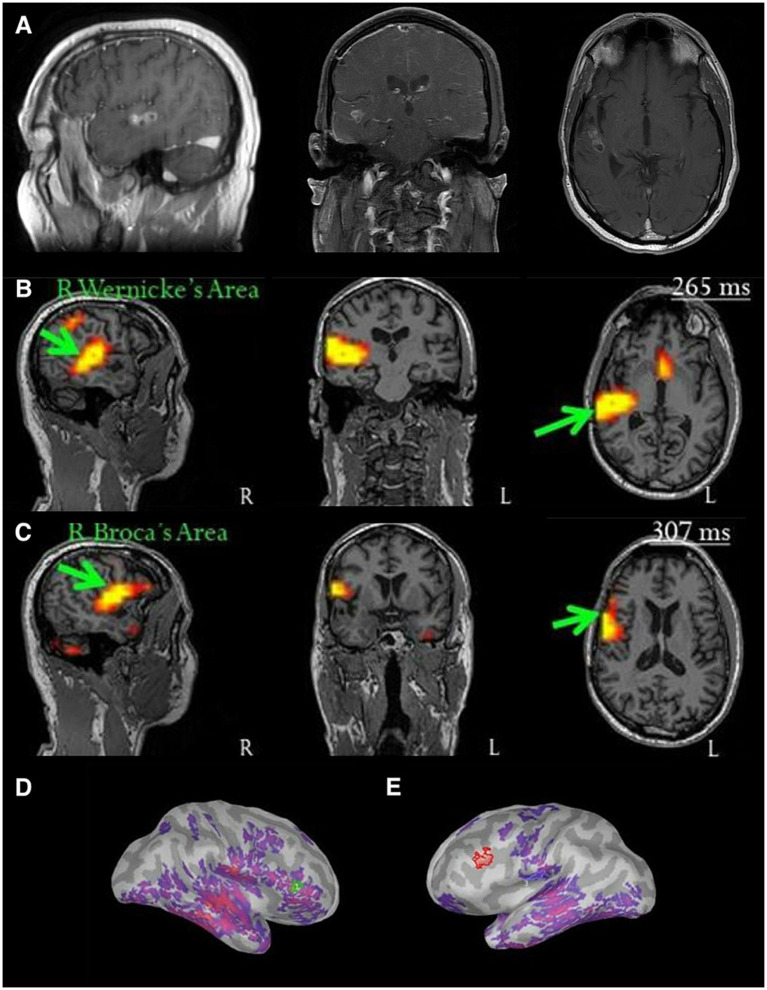 Figure 1
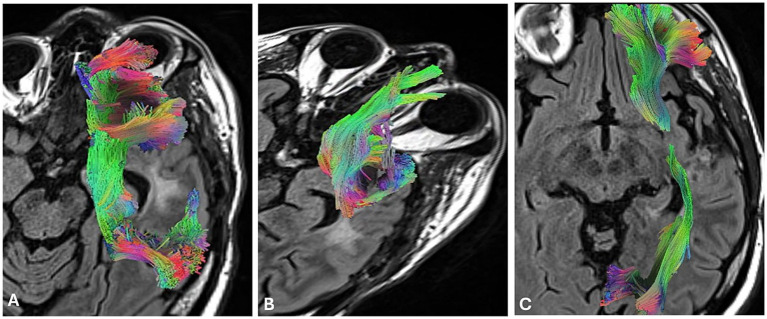 Figure 2
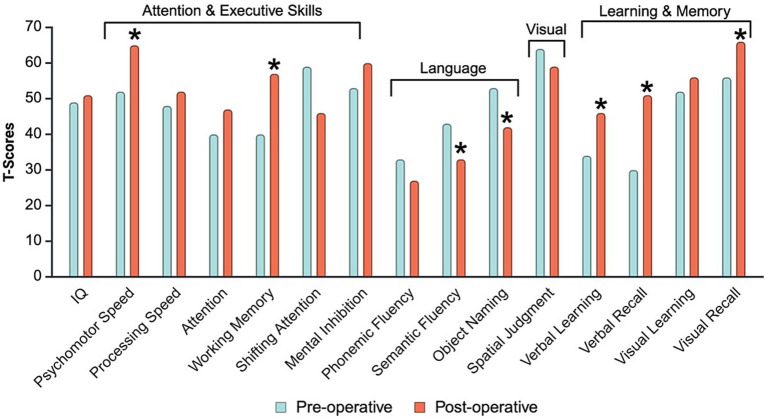 Figure 3
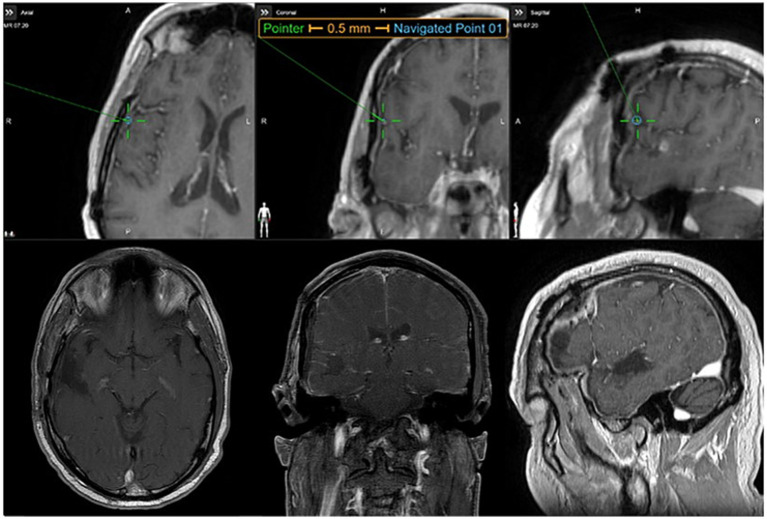 Figure 4
Peer Reviews
No public reviews on file for this paper yet. If you reviewed it on a platform where reviews are public (OpenReview, ICLR, NeurIPS, ICML), you can paste yours below so the community can read it here.
Videos
No videos yet. Explain this paper in a talk, walkthrough, or lecture? Add one.
Taxonomy
TopicsNeurobiology of Language and Bilingualism · Hemispheric Asymmetry in Neuroscience · Meningioma and schwannoma management