Developmental changes in independent bimanual coordination: evidence from the circles–lines coupling task in children aged 5–13 years
Satoshi Nobusako, Kenya Hashizoe, Akio Nakai

TL;DR
This study explores how children aged 5–13 improve their ability to control both hands independently, showing that this skill develops gradually with age and is linked to brain maturation.
Contribution
The study introduces the bimanual circles–lines coupling task as a practical, cost-effective tool for assessing bimanual coordination in children.
Findings
Bimanual coordination improves with age, as shown by decreasing ovalization index and bimanual coupling effect.
Bimanual coupling effect correlates with bimanual motor skills, suggesting a link between overcoming intermanual interference and motor development.
The task is developmentally sensitive and could be used in clinical and research settings to assess motor function in children.
Abstract
Bimanual coordination, particularly the ability to perform independent and simultaneous asymmetric movements with both hands, is essential for many daily activities and develops throughout childhood. However, its developmental trajectory remains unclear. This study investigated age-related changes in bimanual coordination using the bimanual circles–lines coupling (BC) task and explored its relationship with fine motor skills in children aged 5 to 13 years. A total of 150 typically developing children completed the BC task under unimanual (UM) and bimanual (BM) conditions. The bimanual coupling effect (BCE), reflecting interference between concurrent motor programs, was calculated as the difference in ovalization index (OI) between the two conditions. Fine motor abilities were assessed using the manual dexterity component of the Movement Assessment Battery for Children–2nd Edition…
Genes, proteins, chemicals, diseases, species, mutations and cell lines named across the full text — each resolved to its canonical identifier and authoritative record.
Click any figure to enlarge with its caption.
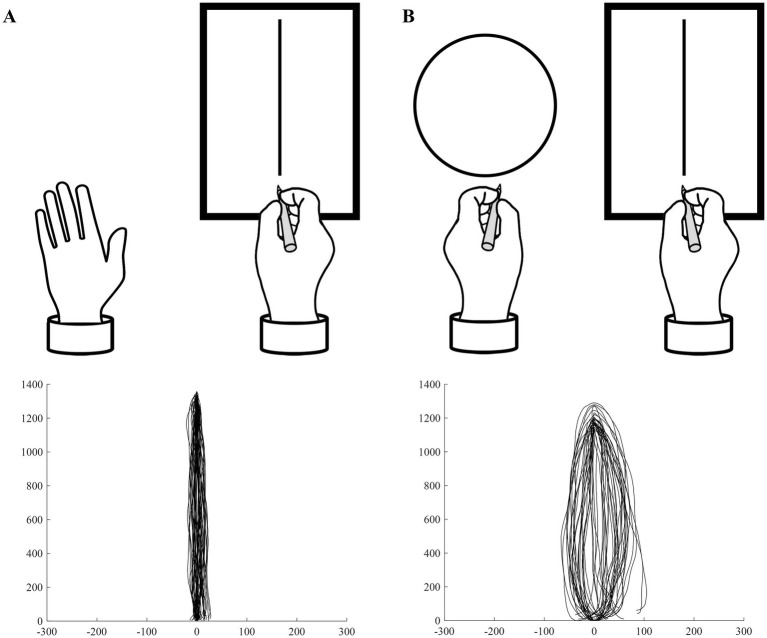 Figure 1
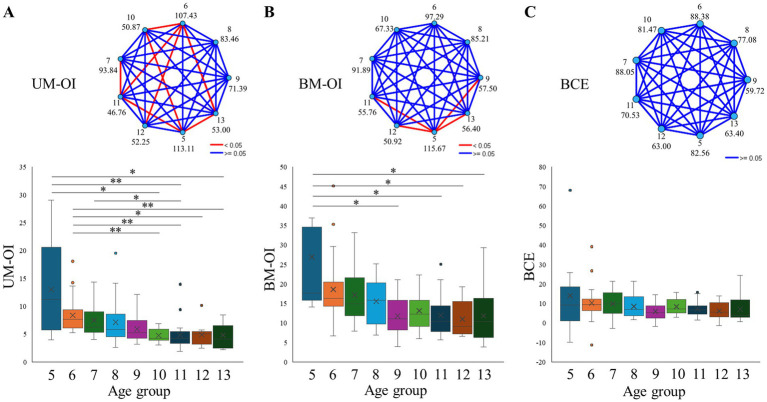 Figure 2
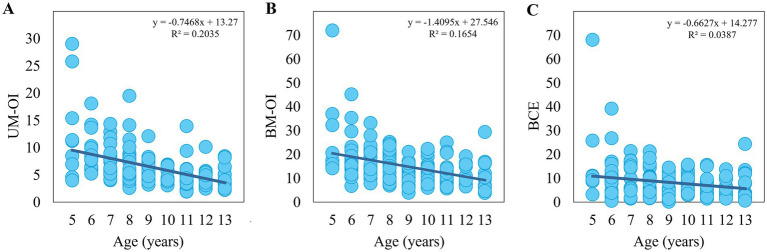 Figure 3
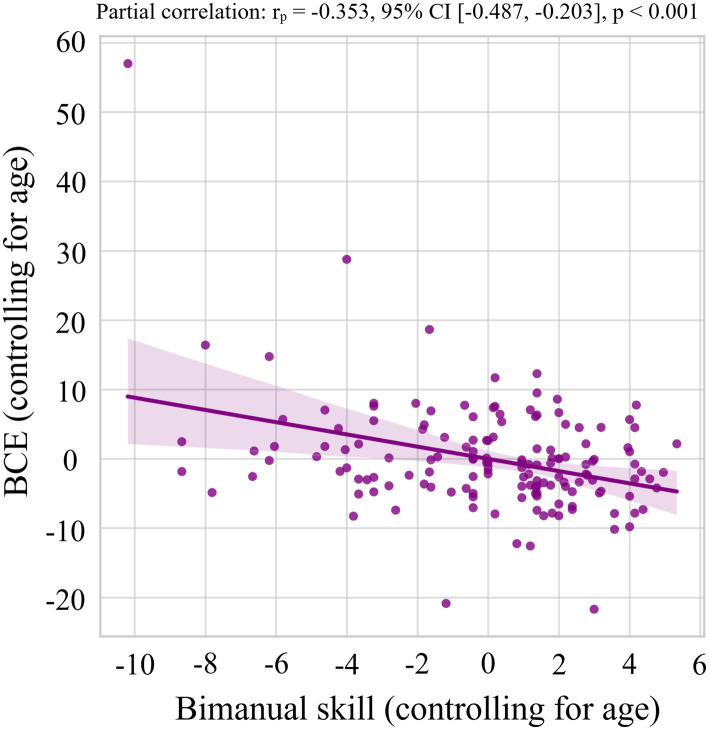 Figure 4
Peer Reviews
No public reviews on file for this paper yet. If you reviewed it on a platform where reviews are public (OpenReview, ICLR, NeurIPS, ICML), you can paste yours below so the community can read it here.
Videos
No videos yet. Explain this paper in a talk, walkthrough, or lecture? Add one.
Taxonomy
TopicsChildren's Physical and Motor Development · Cerebral Palsy and Movement Disorders · Motor Control and Adaptation