Posttraumatic stress disorder neurophysiology and clinical correlates in pediatric critical care: conceptualizing a PICU-PTSD framework
Rebecca E. Hay

TL;DR
This paper reviews the neuroscience behind PTSD in children and parents after critical illness, aiming to identify risk factors and guide future research.
Contribution
The paper conceptualizes PTSD in the PICU context using a biopsychosocial framework and summarizes evidence-based neurophysiology.
Findings
PTSD is common in child and parent survivors of critical illness.
Understanding neurophysiology can help identify modifiable risk factors and knowledge gaps.
A biopsychosocial framework is proposed to conceptualize PICU-PTSD.
Abstract
Posttraumatic stress disorder (PTSD) is common in child and parent survivors of critical illness, with significant negative impact on life after survival. Understanding the neuroscience and pathophysiology of contributing factors to PTSD within the pediatric intensive care unit (PICU) context can help identify potentially modifiable risk factors, aid risk stratification, and identify knowledge gaps for further study. This narrative review explores the evidence-based neurophysiology of PICU-PTSD, summarizing predisposing and protective factors related to critical care and conceptualizing the disorder in a biopsychosocial framework.
Genes, proteins, chemicals, diseases, species, mutations and cell lines named across the full text — each resolved to its canonical identifier and authoritative record.
Click any figure to enlarge with its caption.
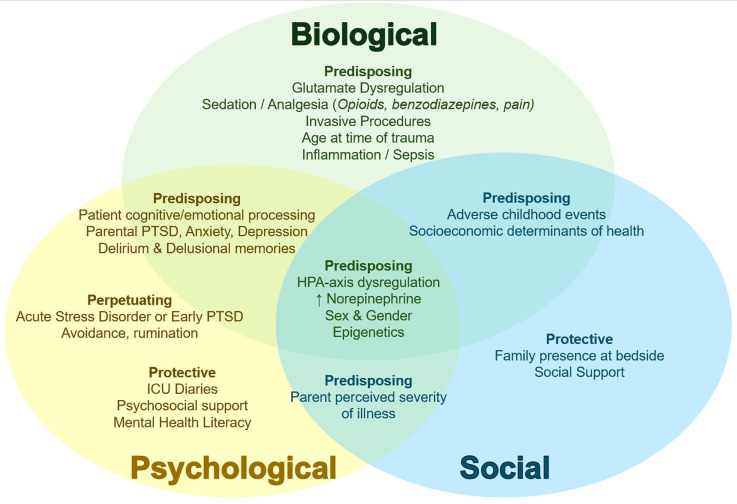 Figure 1
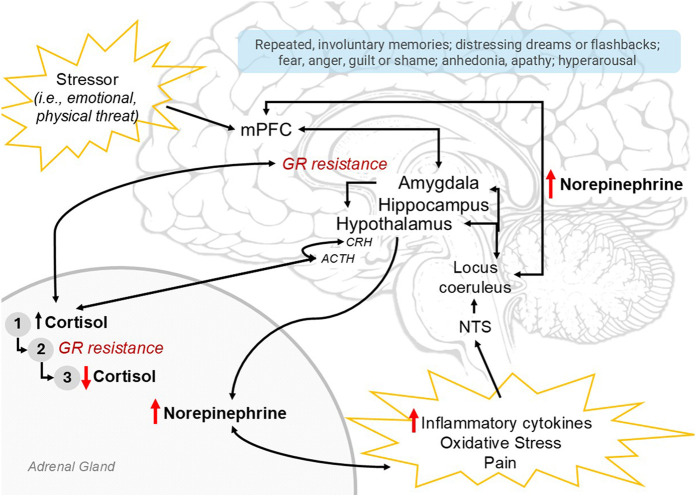 Figure 2
Peer Reviews
No public reviews on file for this paper yet. If you reviewed it on a platform where reviews are public (OpenReview, ICLR, NeurIPS, ICML), you can paste yours below so the community can read it here.
Videos
No videos yet. Explain this paper in a talk, walkthrough, or lecture? Add one.
Taxonomy
TopicsPediatric Pain Management Techniques · Intensive Care Unit Cognitive Disorders · Family and Patient Care in Intensive Care Units