CATS: a bioinformatic tool for automated Cas9 nucleases activity comparison in clinically relevant contexts
Ettore Rocchi, Federico Magnani, Gastone Castellani, Antonio Carusillo, Martina Tarozzi

TL;DR
CATS is a new tool that helps scientists compare different Cas9 enzymes for gene editing by finding common target sites and considering disease-related mutations.
Contribution
CATS introduces an automated method to compare Cas9 nucleases by identifying overlapping PAM sites and allele-specific targets using ClinVar data.
Findings
CATS automates the detection of overlapping PAM sequences across Cas9 variants.
The tool identifies allele-specific targets arising from pathogenic mutations.
CATS reduces experimental design time and supports precise genetic therapies.
Abstract
With the growing number of Cas9 nucleases available to genetic engineers, selecting the most suitable one for a given application can be challenging. A major complication arises from the differing protospacer adjacent motif (PAM) sequence requirements of each Cas9 variant, which makes direct comparisons difficult. To ensure a fair comparison, it is essential to identify common target sites that are not biased by the natural genetic landscape of the chosen target. To address this challenge, we developed CATS (Comparing Cas9 Activities by Target Superimposition), a novel bioinformatic tool. CATS automates the detection of overlapping PAM sequences across different Cas9 nucleases and identifies allele-specific targets, particularly those arising from pathogenic mutations. One of the key parameters in CATS is the proximity of PAM sites, which helps minimize sequence composition bias. The…
Genes, proteins, chemicals, diseases, species, mutations and cell lines named across the full text — each resolved to its canonical identifier and authoritative record.
Click any figure to enlarge with its caption.
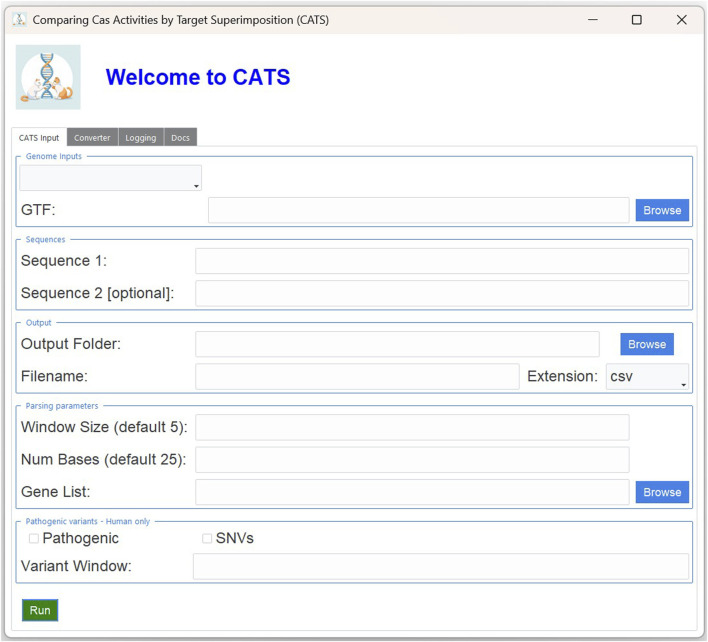 Figure 1
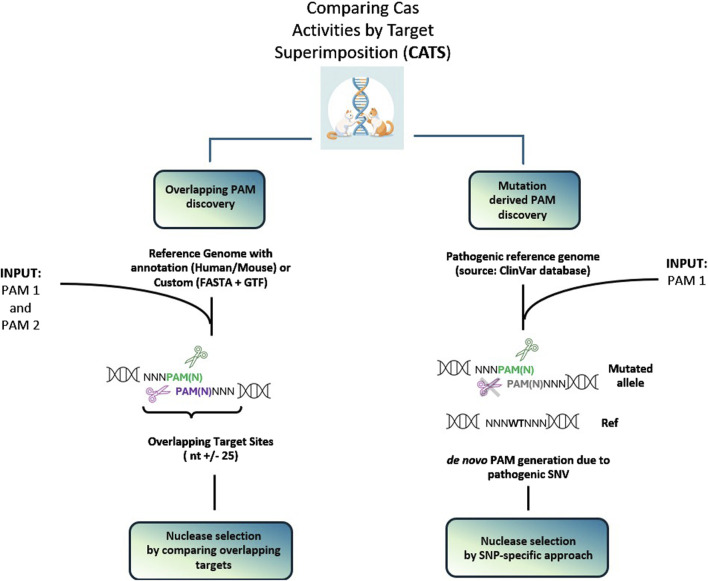 Figure 2
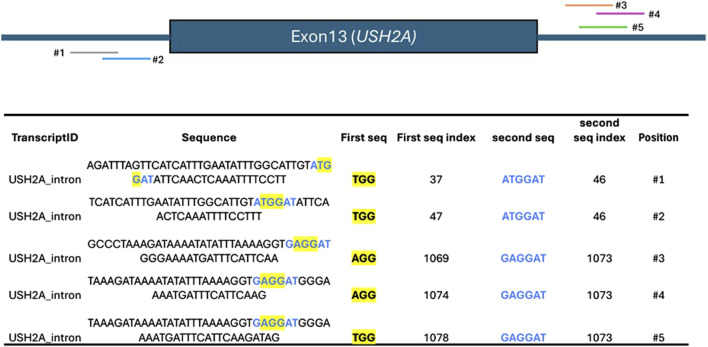 Figure 3
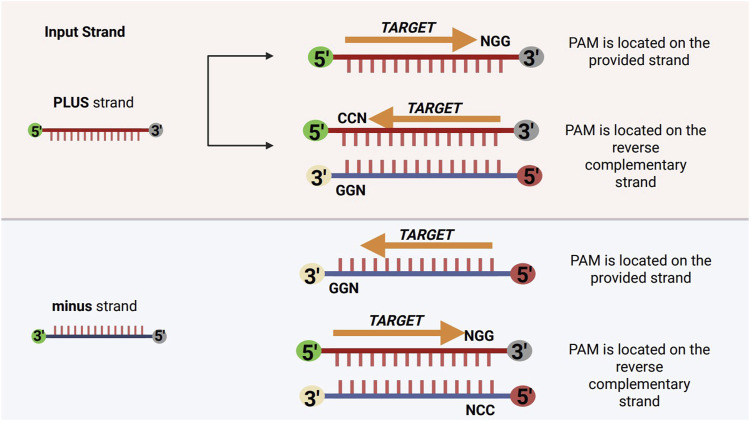 Figure 4
Peer Reviews
No public reviews on file for this paper yet. If you reviewed it on a platform where reviews are public (OpenReview, ICLR, NeurIPS, ICML), you can paste yours below so the community can read it here.
Videos
No videos yet. Explain this paper in a talk, walkthrough, or lecture? Add one.
Taxonomy
TopicsCRISPR and Genetic Engineering · Advanced biosensing and bioanalysis techniques · RNA and protein synthesis mechanisms