Assessing the utility of the COVID-19 epidemic Situations of Concern classification system in guiding operational responses to the pandemic in the WHO African region: retrospective analysis
Opeayo Ogundiran, Jessica L. Abbate, Sooyoung Kim, Mamadou Saliou Kalifa Diallo, Michel Muteba, Daniel Cardoso Portela Camara, Lucas Bianchi, Thierno Balde, Boniface Oyugi, Ann Fortin, Jayne Baykika-Tusiime, George Sie Williams, Franck Mboussou, Charles Okot, Freddy Mutoka Banza

TL;DR
This study evaluates how well a WHO classification system helped guide pandemic responses in Africa, showing it was effective in aligning with outbreak trends and supporting timely decisions.
Contribution
The study introduces evidence that the SOC system is a reliable tool for guiding public health responses in data-limited settings.
Findings
The SOC system showed 83% sensitivity and 88% specificity in aligning with epidemic wave patterns.
SOC classifications supported timely decisions in over 70% of documented support instances.
The system helped ensure fair resource distribution across communities in the WHO African region.
Abstract
During a public health emergency, early implementation of response activities is crucial for saving lives and protecting livelihoods. The COVID-19 pandemic, declared by the World Health Organization (WHO) on March 11, 2020, posed a global public health crisis that required timely decision-making despite limited data and capacity. In this context, WHO’s Regional Office for Africa (AFRO) developed the Situations of Concern (SOC) classification system to assess and monitor epidemiological risk across its 47 Member States. We conducted a retrospective analysis to evaluate the performance and operational utility of the SOC system. Using weekly country-level COVID-19 surveillance data, we found that the system demonstrated strong alignment with epidemic wave patterns, with a sensitivity of 83% and specificity of 88%. SOC classifications supported timely operational decision-making in over 70%…
Genes, proteins, chemicals, diseases, species, mutations and cell lines named across the full text — each resolved to its canonical identifier and authoritative record.
Click any figure to enlarge with its caption.
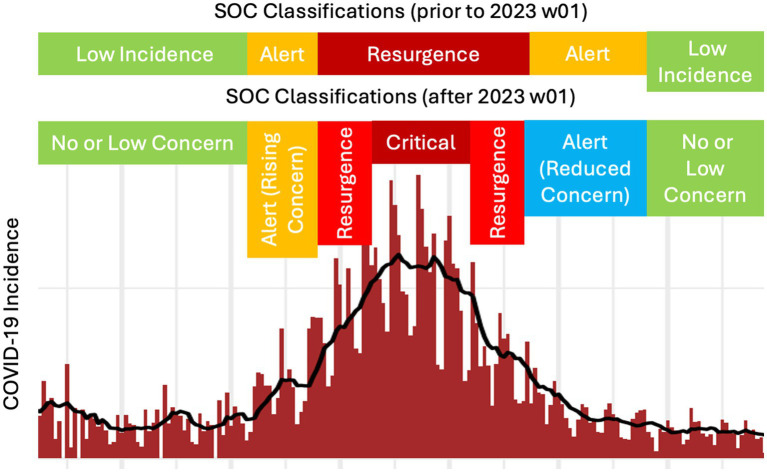 Figure 1
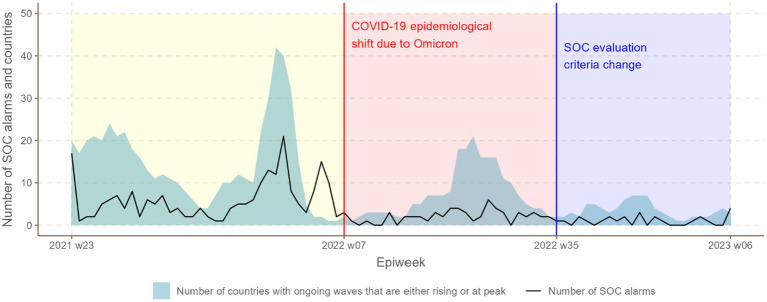 Figure 2
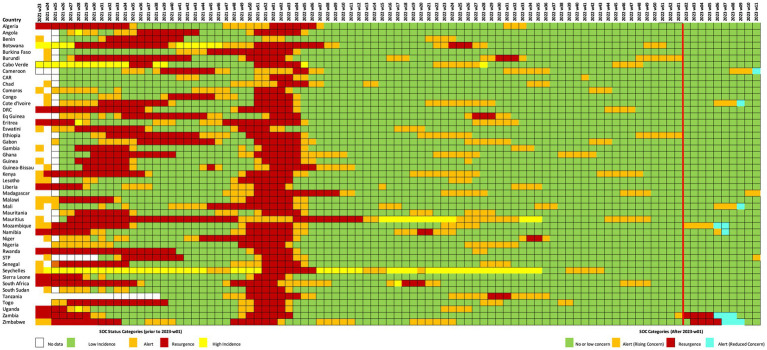 Figure 3
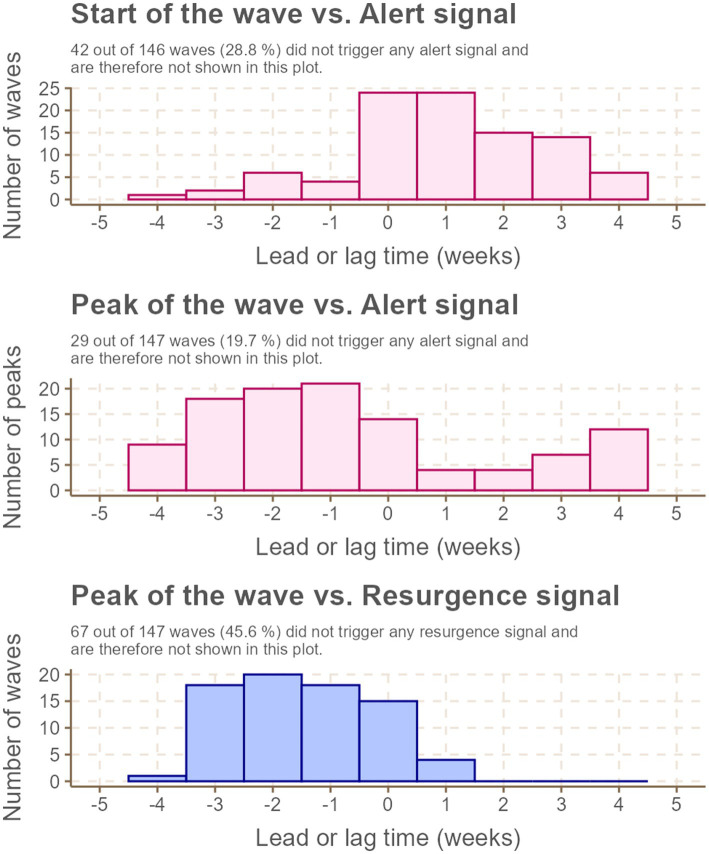 Figure 4
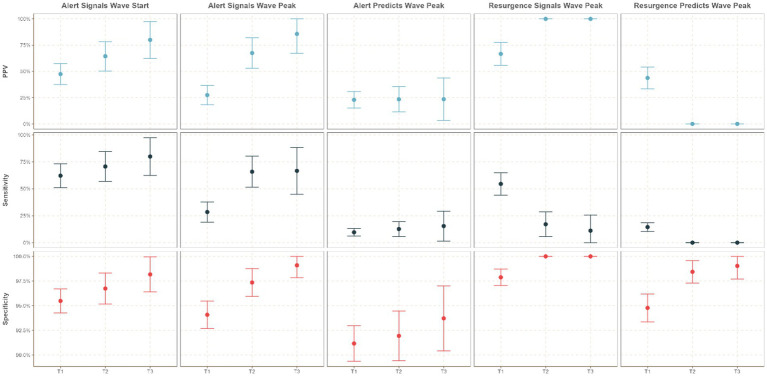 Figure 5
Peer Reviews
No public reviews on file for this paper yet. If you reviewed it on a platform where reviews are public (OpenReview, ICLR, NeurIPS, ICML), you can paste yours below so the community can read it here.
Videos
No videos yet. Explain this paper in a talk, walkthrough, or lecture? Add one.
Taxonomy
TopicsCOVID-19 epidemiological studies · Viral Infections and Outbreaks Research · Misinformation and Its Impacts