Safety and efficacy of a feed additive consisting of L‐arginine produced with Escherichia coli CCTCC M 20231961 for all animal species (Kempex Holland B.V.)
Roberto Edoardo Villa, Giovanna Azimonti, Eleftherios Bonos, Henrik Christensen, Mojca Durjava, Birgit Dusemund, Ronette Gehring, Boet Glandorf, Maryline Kouba, Marta López‐Alonso, Francesca Marcon, Carlo Nebbia, Alena Pechová, Miguel Prieto‐Maradona, Ilen Röhe

TL;DR
This paper evaluates the safety and effectiveness of L-arginine produced using a genetically modified E. coli strain for use in animal feed.
Contribution
The study provides a comprehensive safety and efficacy assessment of a novel L-arginine feed additive for all animal species.
Findings
The production strain E. coli CCTCC M 20231961 does not pose safety concerns.
L-arginine is safe for non-ruminant species but requires protection for ruminants.
The additive is safe for consumers and the environment but concerns remain for skin and eye irritation.
Abstract
Following a request from the European Commission, EFSA was asked to deliver a scientific opinion on the safety and efficacy of L‐arginine produced with a genetically modified strain of Escherichia coli (CCTCC M 20231961) as a nutritional feed additive for all animal species and categories. The EFSA Panel on Additives and Products or Substances used in Animal Feed (FEEDAP) concluded that the production strain E. coli CCTCC M 20231961 does not raise safety concerns. No viable cells or DNA of the production strain are detected in the final product. Therefore, the FEEDAP Panel concludes that the additive does not pose any safety concern regarding the production strain. The use of L‐arginine produced by fermentation with E. coli CCTCC M 20231961 in feed is safe for the target species when supplemented in appropriate amounts to the diet according to the nutritional needs of the target…
Genes, proteins, chemicals, diseases, species, mutations and cell lines named across the full text — each resolved to its canonical identifier and authoritative record.
Click any figure to enlarge with its caption.
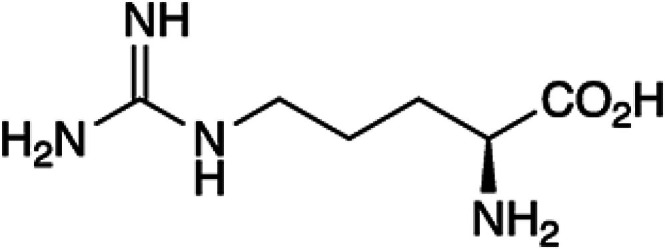 FIGURE 1
| Parameter | Specification | Analysis | ||
|---|---|---|---|---|
| Average | Range | # batches | ||
|
| ||||
| Arginine as is basis (%) | 99.6 | 99.2–99.9 | 5 | |
| Arginine DM basis (%) | ≥ 98.5 | 100 | 99.6–100.4 | 5 |
|
| ≤ 1 | 0.38 | 0.1–0.7 | 5 |
|
| +25.5 to +28.5 | +27.1 to +27.2 | 5 | |
|
| ||||
| Lead (mg/kg) | < 0.01 in all batches | 3 | ||
| Mercury (mg/kg) | < 0.002 in all batches | 3 | ||
| Cadmium (mg/kg) | < 0.002 in all batches | 3 | ||
| Arsenic (mg/kg) | < 0.01–0.012 | 3 | ||
| Dioxins and furans (upper bound) | ||||
| PCDD/Fs (ng WHO2005‐TEQ/kg) | 0.121–0.122 | 3 | ||
| PCDD/Fs + PCBs (ng WHO2005‐TEQ/kg) | 0.239 in all batches | 3 | ||
| nDL‐PCBs (μg/kg) | 3.0 in all batches | 3 | ||
| Mycotoxins | ||||
| Aflatoxins B1 + B2 (μg/kg) | < 0.05 in all batches | 3 | ||
| Citrinin (μg/kg) | < 15.0–42.7 | 3 | ||
| Deoxynivalenol (μg/kg) | 279.6–555.4 | 3 | ||
| Fumonisins B1 + B2 + B3 (μg/kg) | < 25.0–30.6 | 3 | ||
| Ochratoxin A (μg/kg) | 3.8–4.0 | 3 | ||
| Zearalenone (μg/kg) | < 17 in all batches | 3 | ||
|
| ||||
|
| Not detected | 3 | ||
|
| Not detected | 3 | ||
|
| Not detected | 3 | ||
| Yeast and moulds (per 25g) | Not detected | 3 | ||
|
| ||||
| Bacterial endotoxin (IU/mg) | < 0.9 in all batches | 3 | ||
|
| ||||
| Physical form | Solid | |||
| Bulk density (kg/m3) | 460–490 | 3 | ||
| Solubility (reported, g/L) | 182 | |||
| Dusting potential (Stauber Heubach) (mg/m3) | 200–300 | 3 | ||
|
| ||||
| RT 6 months | 0.1–0.6 | 3 | ||
|
| ||||
| Vitamin–mineral premix, RT 6 months | 28.2–31.9 | 3 | ||
|
| ||||
| Chicken for fattening, mash, RT 3 months | 0–25.4 | 3 | ||
| Pelleted feed, RT 3 months | 15.8–30.7 | 3 | ||
|
| ||||
| 8–10°C 48 h | 0 | 3 | ||
|
| ||||
| Total arginine in feed | 7.6 | 1 | ||
| Free arginine in feed | 39.8 | |||
Peer Reviews
No public reviews on file for this paper yet. If you reviewed it on a platform where reviews are public (OpenReview, ICLR, NeurIPS, ICML), you can paste yours below so the community can read it here.
Videos
No videos yet. Explain this paper in a talk, walkthrough, or lecture? Add one.
Taxonomy
TopicsAgricultural safety and regulations · Genetically Modified Organisms Research · Effects and risks of endocrine disrupting chemicals
INTRODUCTION
1
Background and Terms of Reference
1.1
Regulation (EC) No 1831/20031 establishes the rules governing the Community authorisation of additives for use in animal nutrition. In particular, Article 4(1) of that Regulation lays down that any person seeking authorisation for a feed additive or for a new use of a feed additive shall submit an application in accordance with Article 7.
The European Commission received a request from Kempex Holland B.V.2 for the authorisation of the additive consisting of L‐arginine produced with Escherichia coli CCTCC M 20231961, when used as a feed additive for all animal species (category: nutritional additive; functional group: amino acids, their salts and analogues).
According to Article 7(1) of Regulation (EC) No 1831/2003, the Commission forwarded the application to the European Food Safety Authority (EFSA) as an application under Article 4(1) (authorisation of a feed additive or new use of a feed additive). The dossier was received on 31 July 2024 and the general information and supporting documentation are available at https://open.efsa.europa.eu/questions/EFSA‐Q‐2024‐00507. The particulars and documents in support of the application were considered valid by EFSA as of 9 January 2025.
According to Article 8 of Regulation (EC) No 1831/2003, EFSA, after verifying the particulars and documents submitted by the applicant, shall undertake an assessment in order to determine whether the feed additive complies with the conditions laid down in Article 5. EFSA shall deliver an opinion on the safety for the target animals, consumer, user and the environment and on the efficacy of the feed additive consisting of L‐arginine produced with Escherichia coli CCTCC M 20231961, when used under the proposed conditions of use (see Section 3.1.4).
Additional information
1.2
The additive is a preparation containing L‐arginine produced with E.coli CCTCC M 20231961. It has not been previously authorised as a feed additive in the European Union. L‐Arginine produced by fermentation using different production strains is currently authorised for its use in all animal species as a nutritional and sensory additive.3
The EFSA Panel on Additives and Products or Substances used in Animal Feed (FEEDAP) issued a series of scientific opinions on the safety and efficacy of L‐arginine produced by fermentation using different production strains when used in feed for all animal species as a nutritional additive (functional group: amino acids, their salts and analogues).4
DATA AND METHODOLOGIES
2
Data
2.1
The present assessment is based on data submitted by the applicant in the form of a technical dossier5 in support of the authorisation request for the use of L‐arginine produced with Escherichia coli CCTCC M 20231961 as a feed additive.
In accordance with Article 38 of the Regulation (EC) No 178/20026 and taking into account the protection of confidential information and of personal data in accordance with Articles 39 to 39e of the same Regulation, and of the Decision of EFSA's Executive Director laying down practical arrangements concerning transparency and confidentiality,7 a non‐confidential version of the dossier has been published on Open.EFSA.
According to Article 32c(2) of Regulation (EC) No 178/2002 and to the Decision of EFSA's Executive Director laying down the practical arrangements on pre‐submission phase and public consultations, EFSA carried out a public consultation on the non‐confidential version of the technical dossier from 10 April to 01 May 2025 for which no comments were received.
The confidential version of the technical dossier was subject to a target consultation of the interested Member States from 14 January 2025 to 14 April 2025, for which the received comments were considered for the assessment.
The FEEDAP Panel used the data provided by the applicant together with data from other sources, such as previous risk assessments by EFSA, peer‐reviewed scientific papers and other scientific reports to deliver the present output.
EFSA has verified the European Union Reference Laboratory (EURL) report as it relates to the methods used for the control of L‐arginine in animal feed.8
Methodologies
2.2
The approach followed by the FEEDAP Panel to assess the safety and the efficacy of L‐arginine is in line with the principles laid down in Regulation (EC) No 429/20089 and the relevant guidance documents: Guidance on the assessment of the safety of feed additives for the consumer (EFSA FEEDAP Panel, 2017a), Guidance on the identity, characterisation and conditions of use of feed additives (EFSA FEEDAP Panel, 2017b), Guidance on the assessment of the safety of feed additives for the target species (EFSA FEEDAP Panel, 2017c), Guidance on the characterisation of microorganisms used as feed additives or as production organisms (EFSA FEEDAP Panel, 2018a), Guidance on the assessment of the safety of feed additives for the environment (EFSA FEEDAP Panel, 2019), Guidance on the assessment of the safety of feed additives for the users (EFSA FEEDAP Panel, 2023), Guidance on the assessment of the efficacy of feed additives (EFSA FEEDAP Panel, 2024) and EFSA statement on the requirements for whole genome sequence analysis of microorganisms intentionally used in the food chain (EFSA, 2024).
ASSESSMENT
3
The product subject of this application is L‐arginine (≥ 98.5% L‐arginine on a dry matter [DM] basis) produced by fermentation with a genetically modified strain of E. coli CCTCC M 20231961. It is intended to be used as a nutritional additive (functional group: amino acids, their salts and analogues) in feed and water for drinking for all animal species.
Characterisation
3.1
Characterisation of the production microorganism
3.1.1
The production microorganism is a genetically modified derivative of E. coli K‐12, and it is deposited in the China Centre for Type Culture Collection (CCTCC) with accession number CCTCC M 20231961.10
The identification of the production strain was performed ■■■■■ based on the whole genome sequence (WGS), confirming its identity as E. coli K‐12 derivative.11 The results of this analysis showed ■■■■■.12 This was further confirmed ■■■■■. E. coli K‐12 is well characterised, its safety (non‐pathogenicity) has been documented (Gorbach, 1978; Kaper et al., 2004) and its ineffectiveness in colonising the human gut has been reported (Smith, 1975). ■■■■■.
The susceptibility of the production strain to antimicrobials was tested using a broth microdilution method and including the set of antimicrobials recommended by FEEDAP Panel (EFSA FEEDAP Panel, 2018a).13 All the minimum inhibitory concentration (MIC) values fell below the corresponding cut‐off values for Enterobacteriaceae. Therefore, the production strain is considered susceptible to all relevant antibiotics.
The interrogation of the WGS data for the presence of antimicrobial resistance (AMR) genes was done ■■■■■.14 Therefore, the FEEDAP Panel concludes that the strain harbours no acquired AMR genes and raises no safety concerns.
The WGS data of the production strain were also interrogated for the presence of genes coding for known toxins and virulence factors ■■■■■.15 ■■■■■, considered of no concern.
Characterisation of the parental or recipient microorganism and genetic modification description
3.1.1.1
The parental strain is ■■■■■.
■■■■■.
The following genetic modifications, aimed at increasing the production of L‐arginine, were introduced to obtain the production strain:
- ■■■■■
- ■■■■■
- ■■■■■
■■■■■.
Manufacturing process
3.1.2
L‐Arginine is produced by fermentation with E. coli CCTCC M 20231961.16 ■■■■■.
The applicant stated that no antimicrobial substances are used in the manufacturing process.17
Characterisation of the active substance/additive
3.1.3
L‐Arginine (International Union of Pure and Applied Chemistry (IUPAC)) name: (2S)‐2‐amino‐5‐(diaminomethylideneamino)pentanoic acid, a compound identified by Chemical Abstracts Service (CAS) No 74‐79‐3 and European Inventory of Existing Commercial Chemical Substances (EINECS) No 200‐811‐1, has a molecular weight of 174.2 g/mol; the molecular formula is C_6_H_14_N_4_O_2_ and its structural formula is given in Figure 1.
Molecular structure of L‐arginine.
The additive is specified to contain ≥ 98.5% L‐arginine on a dry matter (DM) basis and a maximum 1% water.
The data provided by the applicant on the batch‐to‐batch variation,18 impurities,19 and physical properties20 of the additive are reported in Table 1.
The data provided by the applicant showed compliance with the specifications set. The Panel notes that the concentration of deoxynivalenol is above 500 μg/Kg in two out of the three analysed batches. The Panel, however, considers that the microbial contamination and the impurities detected are of no concern.
The total amount of identified material on a DM basis was 100% (range 99.6–100%), all corresponding to L‐arginine.
The presence of viable cells of the production strain was investigated in three batches of the final product.21 Samples of 1 g of the test material were analysed in triplicate. ■■■■■. Therefore, it can be concluded that no viable cells of the production strain were found in the product.
The presence of DNA from the production strain was investigated in three batches of the final product.22 ■■■■■. The limit of detection (LOD) ■■■■■ was 10 ng/g of material. The analysis showed that no DNA of the production strain was detected in any of the batches.
Conditions of use
3.1.4
The additive under assessment is intended to be used in feed and water for drinking to achieve the adequate amino acid profile and meet the requirements on L‐arginine for all animal species and categories. It can be added via premixture or directly into feedingstuffs (including complete feed and complementary feed) or water for drinking. No inclusion levels are proposed by the applicant, as the requirements in quantitative terms depend on the nutrient composition, in particular the amino acid composition of the unsupplemented diet, the species, the physiological state of the animal, the performance level of the animal and the environmental conditions.
Safety
3.2
Safety of the production microorganism
3.2.1
The parental strain ■■■■■ is considered to be safe. The genetic modifications performed to obtain the production strain E. coli CCTCC M 20231961 have the purpose to increase the production of L‐arginine. No concerns arise from the genetic modifications. The production strain does not carry acquired AMR genes. Viable cells of the production strain and its DNA were not detected in the final additive. Therefore, the final product does not raise any safety concerns regarding the production strain.
Safety for the target species, consumers and the environment
3.2.2
The L‐arginine requirements of the target animal species and the safety of this amino acid in non‐ruminant and ruminant nutrition are well known by feed formulators and available in general publications on animal nutrition.
The additive is produced by fermentation with a genetically modified E. coli K‐12 derivative (CCTCC M 20231961), and no safety concerns were identified for the production strain (see Section 3.2.1), the fermentation process and its residues/metabolites. Moreover, the resulting product is highly purified (≥ 98.5% L‐arginine and about 100% of identified material on a DM basis). L‐arginine produced with E. coli CCTCC M 20231961 is safe for the target species when used to supplement the diet in appropriate amounts to satisfy the animal requirements. The FEEDAP Panel, in its previous statement (EFSA FEEDAP Panel, 2010), identified risks of nutritional imbalances and hygienic concerns in amino acids when administered in water for drinking.
No endotoxin activity was found in the final additive. Even considering that endotoxins would be present at the LOQ of 900 IU/g, these values are far below the levels commonly found in feedingstuffs (1,000,000 IU/g) (Cort et al., 1990).
The absorption and metabolic fate of L‐arginine in the animals is well known. The amino acid L‐arginine, supplemented to feed, will be incorporated into proteins of tissues and/or products of animal origin and any of its potential excess will be metabolised and excreted. Therefore, the composition of tissues and products of animal origin will not be affected using L‐arginine in animal nutrition. Therefore, the Panel considers that the use of the additive in animal nutrition is safe for the consumer.
Neither viable cells of E. coli CCTCC M 20231961 nor its recombinant DNA were detected in the final product. The final product does not pose any environmental safety concern associated with the genetic modification. The amino acid L‐arginine is a physiological and natural component of animals and plants. It is not excreted as such, but as urea/uric acid and carbon dioxide. The use of the product L‐arginine in animal nutrition would not lead to any localised increase in the concentration in the environment. The use of the additive in water for drinking, when given in addition to complete diets with a well‐balanced amino acid profile, would disturb the nitrogen balance and increase nitrogen excretion via urine. It is concluded that the use of the product, L‐arginine produced by fermentation with E. coli CCTCC M 20231961 as a feed additive does not represent a risk to the environment.
Safety for the user
3.2.3
No specific information was submitted.
Effect on respiratory system
3.2.3.1
The additive has a dusting potential up to 300 mg/m^3^. Therefore, exposure by inhalation is likely.
Users can suffer from occupational respiratory disease depending on the level of endotoxins in air and dust (Rylander et al., 1999; Thorn & Kerekes, 2001). The exposure of persons handling the additive to endotoxins in the dust was calculated as previously described (EFSA FEEDAP Panel, 2018b) taking the highest endotoxin value measured as a worst‐case scenario. In this case, the analytical values were below the limit of quantification of the analytical method, which was 900 IU/g. For the calculations, a worst‐case scenario approach was taken considering an endotoxin activity in the additive of 900 IU/g. The health‐based recommended threshold for the quantity of inhaled endotoxins per working day is 900 IU, derived from provisional occupational exposure limits given by the Dutch Expert Committee on Occupational Safety (HCN, 2010). Based upon the calculation of the potential endotoxin content in dust, the inhalation exposure is calculated as 150 endotoxin IU per working day, indicating no risk of exceeding the recommended limit of exposure by inhalation to endotoxins for persons handling the additive.
Conclusions on the safety for the user
3.2.3.2
In the absence of information, it is not possible to conclude on the potential of the additive to be irritant to skin and/or eyes or to be a dermal sensitiser.
Efficacy
3.3
Efficacy studies are not required for amino acids that occur naturally in plant and animal proteins. The nutritional role of the amino acid L‐arginine is well established in the scientific literature. L‐arginine produced by fermentation using E. coli CCTCC M 20231961 is regarded as an efficacious source of the amino acid L‐arginine for non‐ruminant nutrition. Ruminal degradation would reduce the delivery of the amino acid to the abomasum, and protective measures should be considered.
Post‐market monitoring
3.4
The FEEDAP Panel considers that there is no need for specific requirements for a post‐market monitoring plan other than those established in the Feed Hygiene Regulation23 and good manufacturing practice.
CONCLUSIONS
4
The production strain E. coli CCTCC M 20231961 does not raise safety concerns. No viable cells nor DNA of the production strain are detected in the final product. Therefore, the FEEDAP Panel concludes that the additive does not pose any safety concern regarding the production strain.
The use of L‐arginine produced by fermentation with E. coli CCTCC M 20231961 in feed is safe for the target species when supplemented in appropriate amounts to the diet according to the nutritional needs of the target species. The FEEDAP Panel has concerns on the use of L‐arginine in water for drinking.
The use of L‐arginine produced by fermentation with E. coli CCTCC M 20231961 in animal nutrition is considered safe for the consumers and for the environment.
The FEEDAP Panel cannot conclude on the potential of the additive to be irritant to skin and/or eyes and to be a potential dermal sensitiser.
The feed additive consisting of L‐arginine produced by fermentation with E. coli CCTCC M 20231961 is regarded as an efficacious source of the amino acid L‐arginine for all non‐ruminant species. For the supplemental L‐arginine to be as efficacious in ruminants as in non‐ruminant species, it requires protection against degradation in the rumen.
RECOMMENDATIONS
5
The FEEDAP Panel notes that the analytical values found for deoxynivalenol in the final product are high and deserve attention/monitoring during the production process.
ABBREVIATIONSAMRantimicrobial resistanceANIaverage nucleotide identityCASChemical Abstracts ServiceCCTCCChina Center for Type Culture CollectionDMdry matterEINECSEuropean Inventory of Existing Chemical SubstancesEURLEuropean Union Reference LaboratoryFEEDAPEFSA Scientific Panel on Additives and Products or Substances used in Animal FeedIUPACInternational Union of Pure and Applied ChemistryLODlimit of detectionMICminimum inhibitory concentrationPCRpolymerase chain reactionWGSWhole Genome Sequence
REQUESTOR
European Commission
QUESTION NUMBER
EFSA‐Q‐2024‐00507
COPYRIGHT FOR NON‐EFSA CONTENT
EFSA may include images or other content for which it does not hold copyright. In such cases, EFSA indicates the copyright holder and users should seek permission to reproduce the content from the original source.
PANEL MEMBERS
Roberto Edoardo Villa, Giovanna Azimonti, Eleftherios Bonos, Henrik Christensen, Mojca Durjava, Birgit Dusemund, Ronette Gehring, Boet Glandorf, Maryline Kouba, Marta López‐Alonso, Francesca Marcon, Carlo Nebbia, Alena Pechová, Miguel Prieto‐Maradona, Ilen Röhe and Katerina Theodoridou.
LEGAL NOTICE
Relevant information or parts of this scientific output have been blackened in accordance with the confidentiality requests formulated by the applicant pending a decision thereon by EFSA. The full output has been shared with the European Commission, EU Member States (if applicable) and the applicant. The blackening may be subject to review once the decision on the confidentiality requests is adopted by EFSA and in case it rejects some of the confidentiality requests.
The reference list from the paper itself. Each links out to its DOI / PubMed record.
- 1Cort, N. , Fredriksson, G. , Kindahl, H. , Edqvist, L. E. , & Rylander, R. (1990). A clinical and endocrine study on the effect of orally administered bacterial endotoxin in adult pigs and goats. Journal of Veterinary Medicine Series A, 37, 130–137. 10.1111/j.1439-0442.1990.tb 00884.x 2113750 · doi ↗ · pubmed ↗
- 2EFSA (European Food Safety Authority) . (2024). EFSA statement on the requirements for whole genome sequence analysis of microorganisms intentionally used in the food chain. EFSA Journal, 22(8), 8912. 10.2903/j.efsa.2024.8912 PMC 1131780639135845 · doi ↗ · pubmed ↗
- 3EFSA BIOHAZ Panel (EFSA Panel on Biological Hazards) , Koutsoumanis, K. , Allende, A. , Álvarez‐Ordóñez, A. , Bolton, D. , Bover‐Cid, S. , Chemaly, M. , De Cesare, A. , Hilbert, F. , Lindqvist, R. , Nauta, M. , Peixe, L. , Ru, G. , Simmons, M. , Skandamis, P. , Suffredini, E. , Cocconcelli, P. S. , Fernández Escámez, P. S. , Prieto Maradona, M. , … Herman, L. (2023). Scientific opinion on the update of the list of qualified presumption of safety (QPS) recommended microorganis · doi ↗
- 4EFSA FEEDAP Panel (EFSA Panel on Additives and Products or Substances used in Animal Feed) , Rychen, G. , Aquilina, G. , Azimonti, G. , Bampidis, V. , Bastos, M. L. , Bories, G. , Chesson, A. , Cocconcelli, P. S. , Flachowsky, G. , Gropp, J. , Kolar, B. , Kouba, M. , López‐Alonso, M. , López Puente, S. , Mantovani, A. , Mayo, B. , Ramos, F. , Saarela, M. , … Innocenti, M. L. (2017 a). Guidance on the assessment of the safety of feed additives for the consumer. EFSA Journal, 15 · doi ↗
- 5EFSA FEEDAP Panel (EFSA Panel on Additives and Products or Substances used in Animal Feed) , Rychen, G. , Aquilina, G. , Azimonti, G. , Bampidis, V. , Bastos, M. d. L. , Bories, G. , Chesson, A. , Cocconcelli, P. S. , Flachowsky, G. , Gropp, J. , Kolar, B. , Kouba, M. , López‐Alonso, M. , López Puente, S. , Mantovani, A. , Mayo, B. , Ramos, F. , Saarela, M. , … Innocenti, M. L. (2017 b). Guidance on the identity, characterisation and conditions of use of feed additives. EFSA J · doi ↗ · pubmed ↗
- 6EFSA FEEDAP Panel (EFSA Panel on Additives and Products or Substances used in Animal Feed) , Rychen, G. , Aquilina, G. , Azimonti, G. , Bampidis, V. , Bastos, M. L. , Bories, G. , Chesson, A. , Cocconcelli, P. S. , Flachowsky, G. , Gropp, J. , Kolar, B. , Kouba, M. , López‐Alonso, M. , López Puente, S. , Mantovani, A. , Mayo, B. , Ramos, F. , Saarela, M. , … Martino, L. (2017 c). Guidance on the assessment of the safety of feed additives for the target species. EFSA Journal, 1 · doi ↗ · pubmed ↗
- 7EFSA FEEDAP Panel (EFSA Panel on Additives and Products or Substances used in Animal Feed) , Rychen, G. , Aquilina, G. , Azimonti, G. , Bampidis, V. , Bastos, M. L. , Bories, G. , Chesson, A. , Cocconcelli, P. S. , Flachowsky, G. , Gropp, J. , Kolar, B. , Kouba, M. , López‐Alonso, M. , López Puente, S. , Mantovani, A. , Mayo, B. , Ramos, F. , Saarela, M. , … Galobart, J. (2018 a). Guidance on the characterisation of microorganisms used as feed additives or as production organi · doi ↗ · pubmed ↗
- 8EFSA FEEDAP Panel (EFSA Panel on Additives and Products or Substances used in Animal Feed) , Rychen, G. , Aquilina, G. , Azimonti, G. , Bampidis, V. , Bastos, M. L. , Bories, G. , Chesson, A. , Cocconcelli, P. S. , Flachowsky, G. , Gropp, J. , Kolar, B. , Kouba, M. , López‐Alonso, M. , López Puente, S. , Mantovani, A. , Mayo, B. , Ramos, F. , Saarela, M. , … Wallace, R. J. (2018 b). Scientific Opinion on the safety and efficacy of l‐arginine produced by fermentation with Esche · doi ↗