Conservation of human NMDA receptor subunits and disease variants in zebrafish
Erica R. Nebet, Christieann Aprea, Josiah D. Zoodsma, William Raab, Howard I. Sirotkin, Lonnie P. Wollmuth

TL;DR
This paper shows that zebrafish NMDA receptor subunits are highly similar to human ones, making zebrafish a good model for studying related brain disorders.
Contribution
The study provides detailed conservation analysis of human NMDAR subunits and disease variants in zebrafish paralogs.
Findings
Human NMDAR subunits are well conserved in zebrafish, especially in transmembrane and ligand-binding domains.
Pathogenic variants are highly conserved, while benign variants are less conserved in zebrafish NMDAR subunits.
Functional motifs in N- and C-terminal domains are better conserved than the domains as a whole.
Abstract
NMDA receptors (NMDARs) are widely expressed, glutamate-gated ion channels that play key roles in brain development and function. Variants have been identified in the GRIN genes encoding NMDAR subunits that are linked to neurodevelopmental disorders, among other manifestations. Zebrafish are a powerful model to study brain development and function given their rapid development and ease of genetic manipulation. As a result of an ancient genome duplication, zebrafish possess two paralogues for most human NMDAR subunits. To evaluate the degree of conservation between human NMDAR subunits and their respective zebrafish paralogues, we carried out detailed in silico analyses, with an emphasis on key functional elements. To further assess the suitability of zebrafish for modeling NMDAR-associated neurodevelopmental disorders, we analyzed the conservation of positions with identified missense…
Genes, proteins, chemicals, diseases, species, mutations and cell lines named across the full text — each resolved to its canonical identifier and authoritative record.
Click any figure to enlarge with its caption.
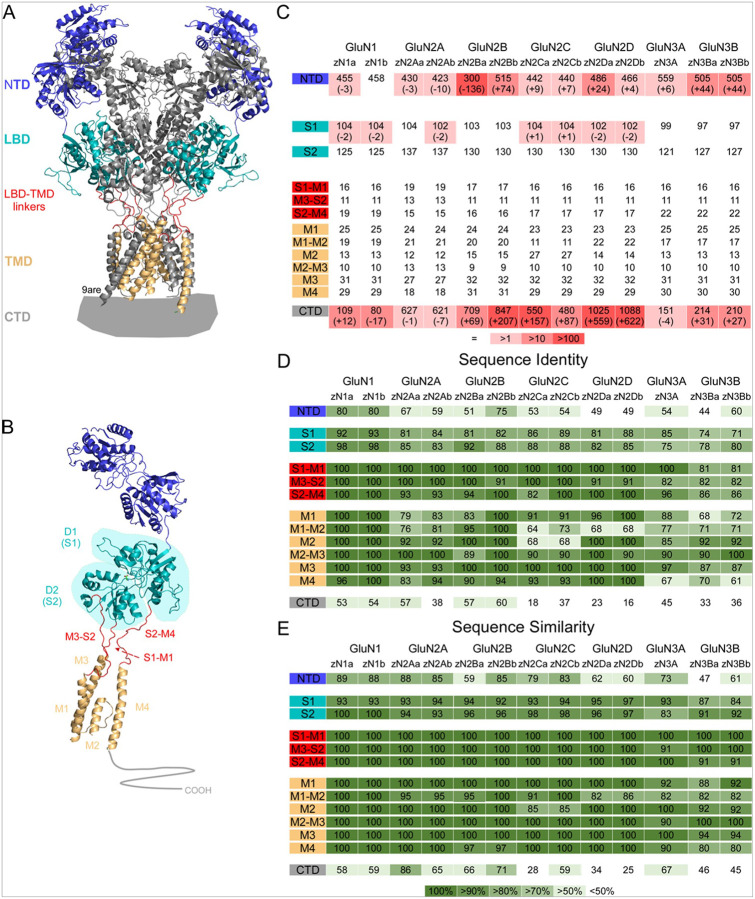 Figure 1
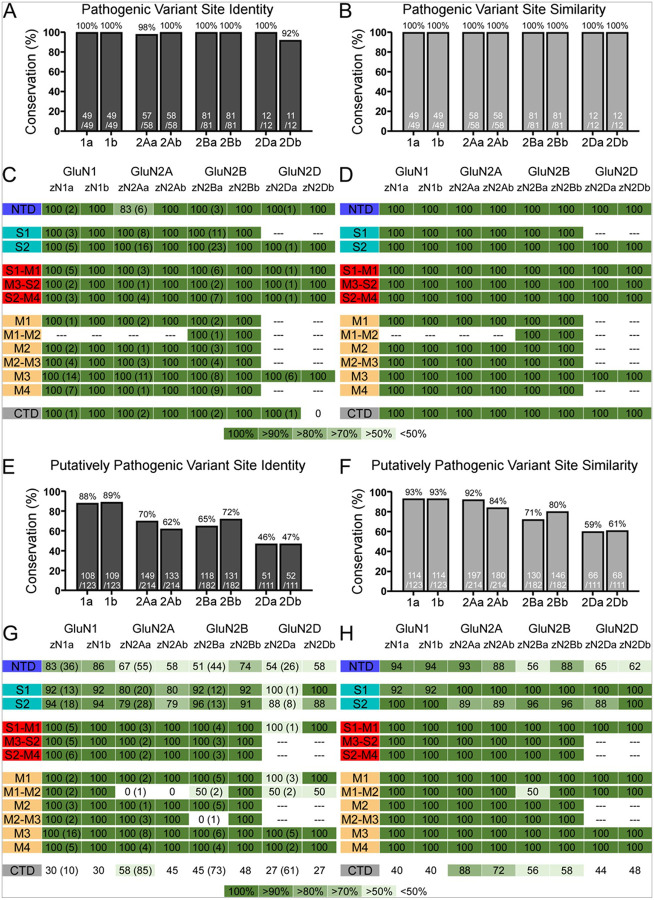 Figure 2
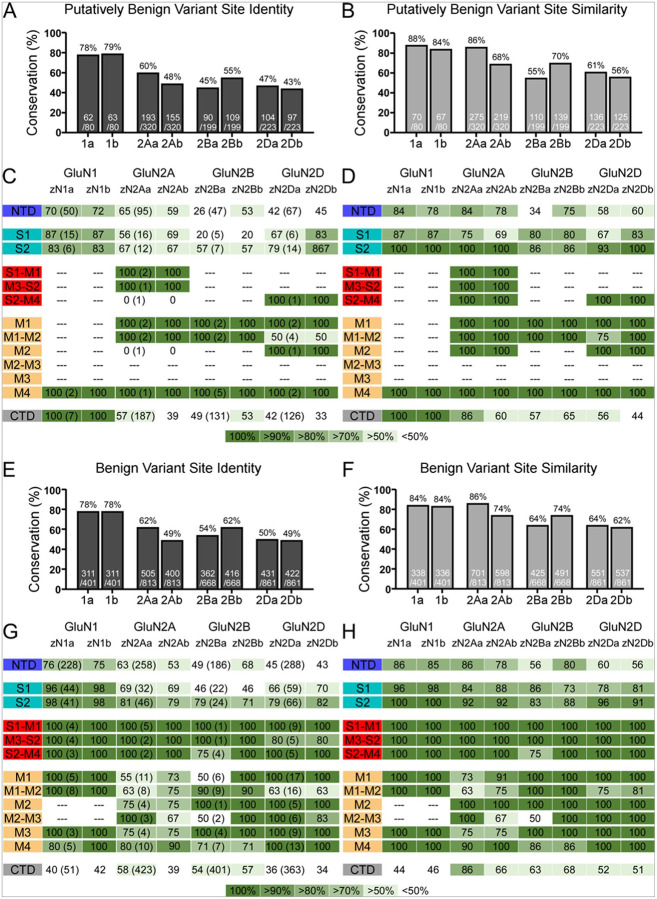 Figure 3
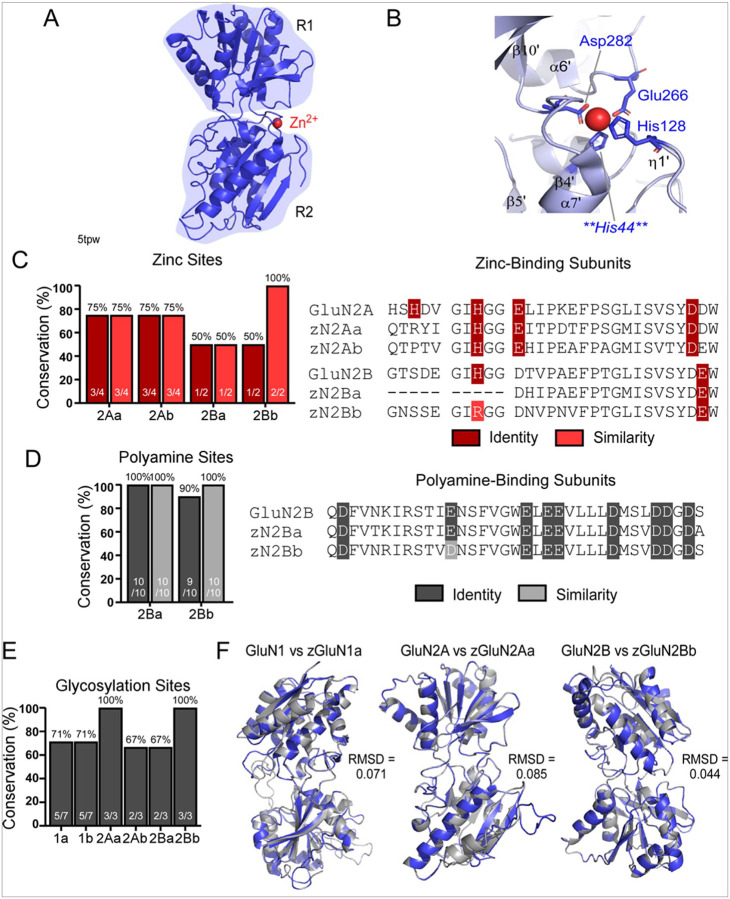 Figure 4
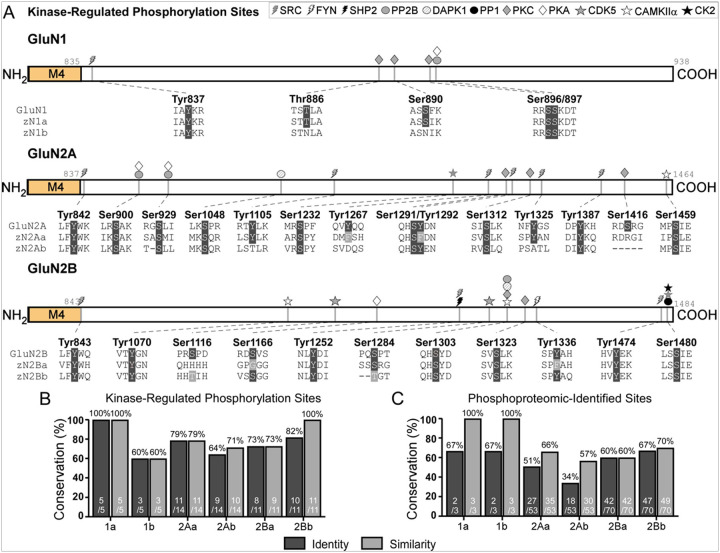 Figure 5
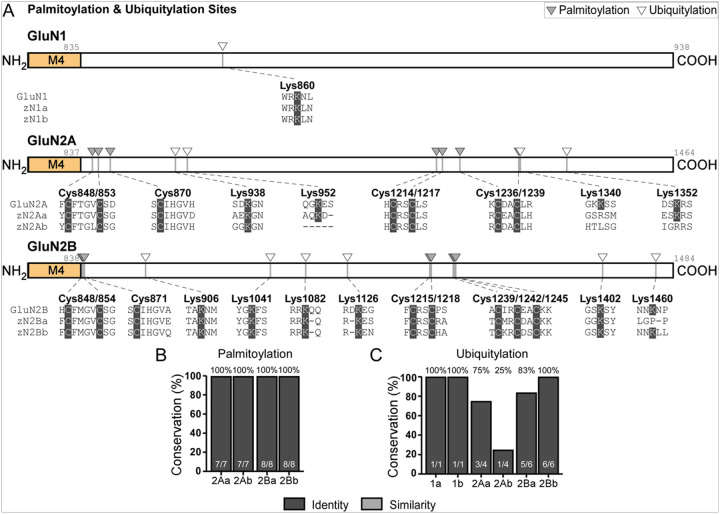 Figure 6
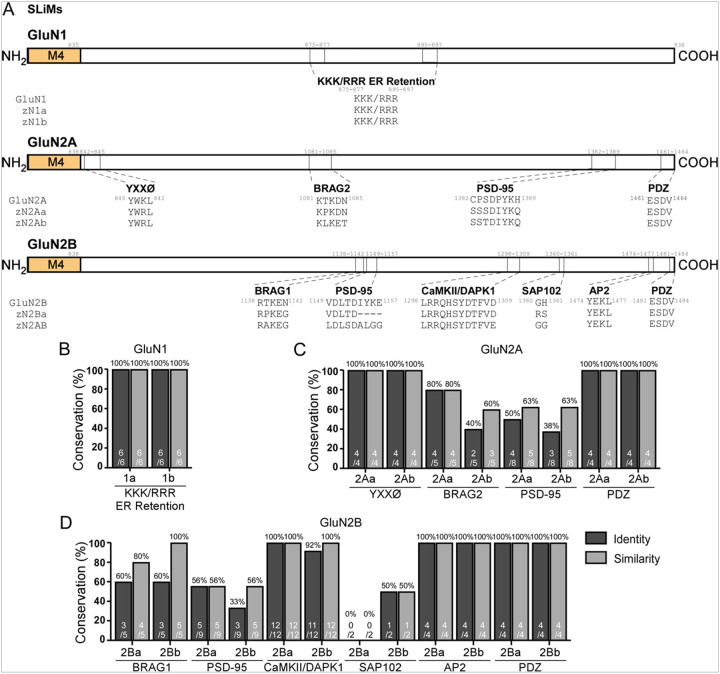 Figure 7
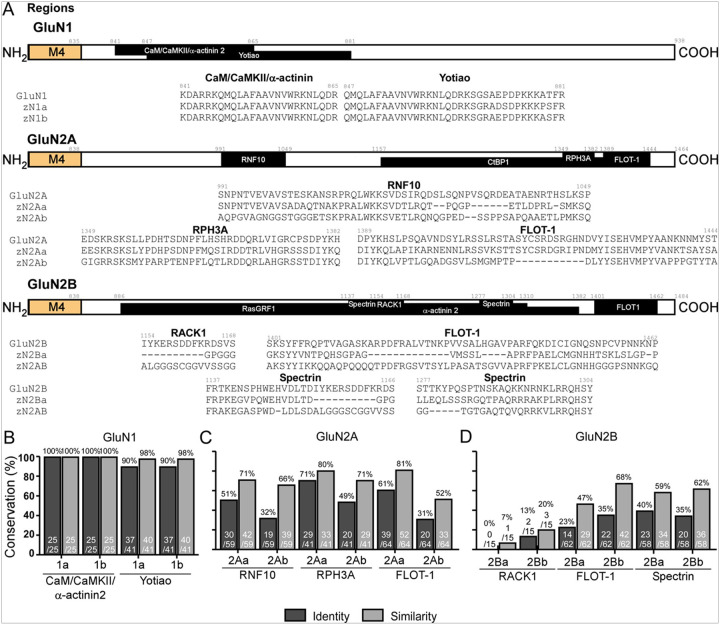 Figure 8
Peer Reviews
No public reviews on file for this paper yet. If you reviewed it on a platform where reviews are public (OpenReview, ICLR, NeurIPS, ICML), you can paste yours below so the community can read it here.
Videos
No videos yet. Explain this paper in a talk, walkthrough, or lecture? Add one.
Taxonomy
TopicsNeuroscience and Neuropharmacology Research · Zebrafish Biomedical Research Applications · Neurogenesis and neuroplasticity mechanisms