Protein-based Diagnosis and Analysis of Co-pathologies Across Neurodegenerative Diseases: Large-Scale AI-Boosted CSF and Plasma Classification
Ying Xu, Daniel Western, Gyujin Heo, Kwangsik Nho, Yen-Ning Huang, Shiwei Liu, Hamilton Se-Hwee Oh, Yike Chen, Jigyasha Timsina, Menghan Liu, Yinxu Tang, Katherine Gong, John Budde, Varsha Krish, Farhad Imam, Raquel Puerta Fuentes, Amanda Cano, Marta Marquie, Merce Boada

TL;DR
This paper introduces an AI framework using protein data from bodily fluids to accurately diagnose and analyze overlapping neurodegenerative diseases.
Contribution
The novel contribution is an AI-based, multi-disease diagnostic framework validated across thousands of samples with high accuracy.
Findings
AI models achieved high diagnostic accuracy (AUCs of 0.97 for CSF and 0.88 for plasma) comparable to traditional biomarkers.
The framework enables classification of disease subtypes and identification of co-pathologies in individuals with conflicting clinical data.
The model can prioritize individuals at risk of neurodegenerative diseases even when they are cognitively normal.
Abstract
Neurodegenerative diseases (including Alzheimer’s disease, Parkinson’s disease, Frontotemporal dementia, and Dementia with Lewy bodies) pose diagnostic challenges due to overlapping pathology and clinical heterogeneity. We leveraged proteomic data from more than 21,000 cerebrospinal fluid and plasma samples to develop and validate explainable, boosting-based multi-disease AI classifiers. The models achieved weighted AUCs in the testing datasets of 0.97 for CSF and 0.88 for plasma, equivalent to traditional biomarkers. The model was validated with neuropathological and clinical data, confirming robust generalizability without any retraining. Using zero-shot learning, we classified disease subtypes including autosomal dominant AD and prodromal PD and clarified disease states for those with conflicting clinical information. The model also showed the ability to prioritize cognitively normal…
Genes, proteins, chemicals, diseases, species, mutations and cell lines named across the full text — each resolved to its canonical identifier and authoritative record.
Click any figure to enlarge with its caption.
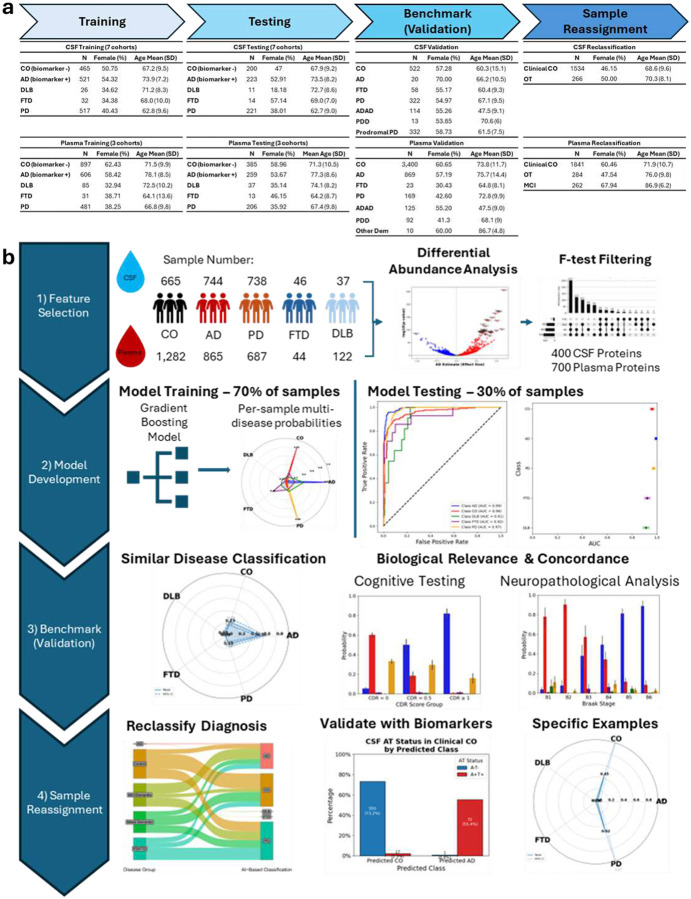 Figure 1
 Figure 2
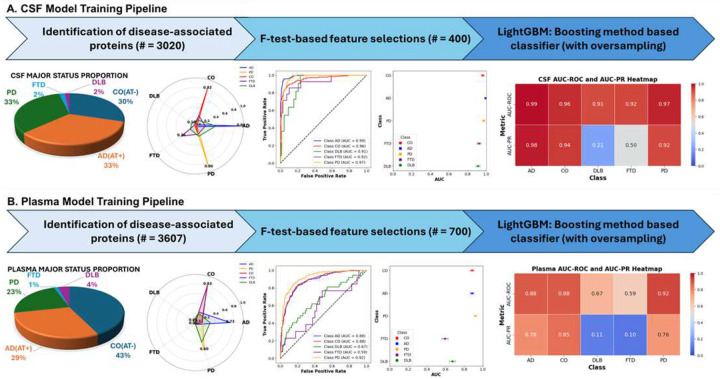 Figure 3
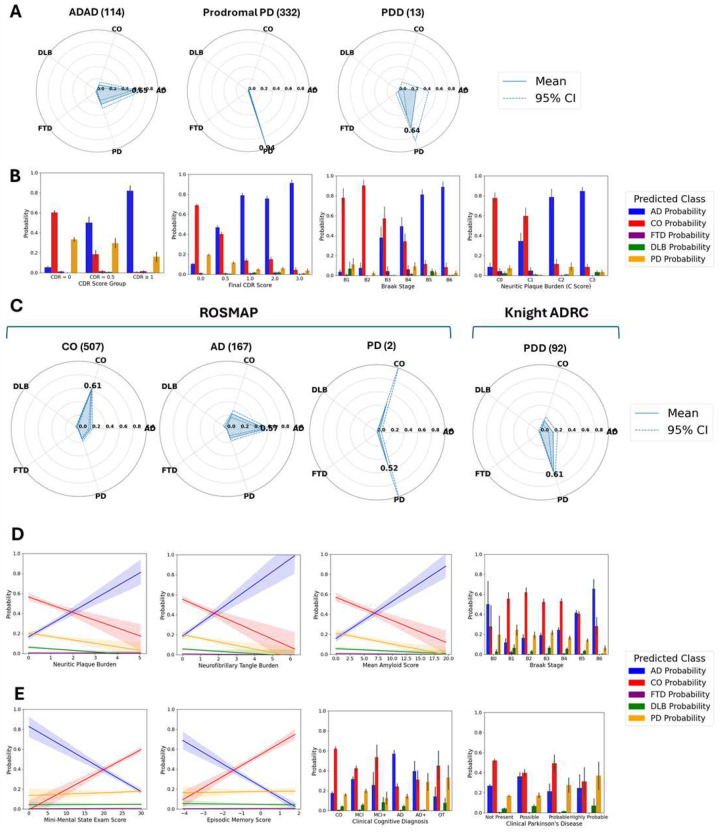 Figure 4
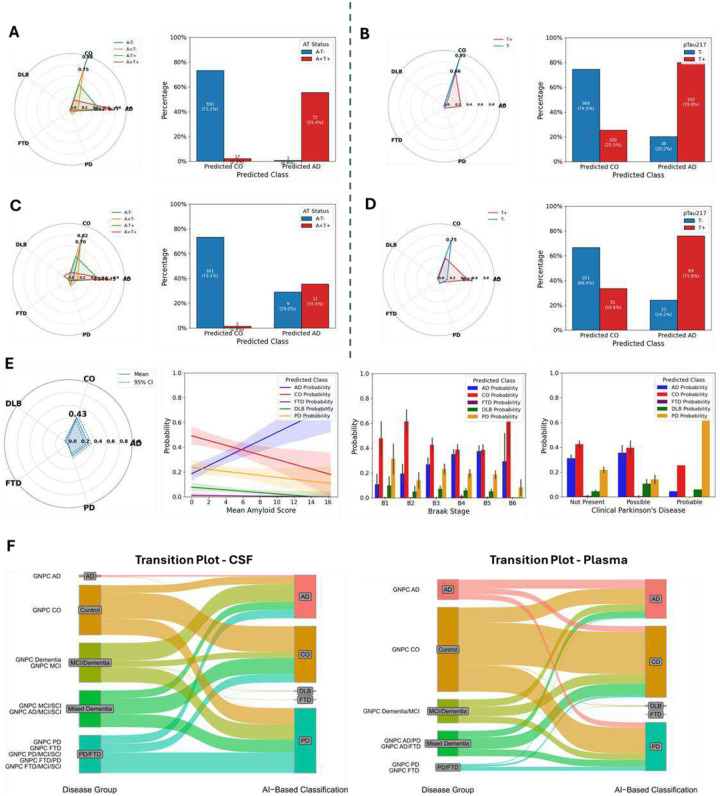 Figure 5
Peer Reviews
No public reviews on file for this paper yet. If you reviewed it on a platform where reviews are public (OpenReview, ICLR, NeurIPS, ICML), you can paste yours below so the community can read it here.
Videos
No videos yet. Explain this paper in a talk, walkthrough, or lecture? Add one.
Taxonomy
TopicsAlzheimer's disease research and treatments · Cerebrovascular and genetic disorders · Prion Diseases and Protein Misfolding