Genetic mapping of lifespan and mitochondrialstress response in C. elegans
Johan Auwerx, Xiaoxu Li, Weisha Li, Arwen Gao, YunYun Zhu, Elena Katsyuba, Katherine Overmyer, Terytty Yang Li, Ziwen Wang, Luc Legon, Lucie Plantade, Laurent Mouchiroud, Matteo Cornaglia, Hao Li, Riekelt Houtkooper, Joshua Coon

TL;DR
This study explores how genetic differences affect lifespan and mitochondrial stress response in worms, identifying a key gene with potential relevance to human health.
Contribution
The study identifies fipp-1/FIP1L1 as a novel modulator of the UPRmt pathway influencing lifespan and metabolic health.
Findings
Doxycycline treatment extended lifespan variably across 85 C. elegans strains.
A molecular signature of aging was partially reversed by doxycycline.
FIP1L1 was linked to metabolic homeostasis in human data, showing translational relevance.
Abstract
The mitochondrial unfolded protein response (UPRmt) is one of the mito-nuclear regulatory circuits that restores mitochondrial function upon stress conditions, promoting metabolic health and longevity. However, the complex gene interactions that govern this pathway and its role in aging and healthspan remain to be fully elucidated. Here, we activated the UPRmt using doxycycline (Dox) in a genetically diverse C. elegans population comprising 85 strains and observed large variation in Dox-induced lifespan extension across these strains. Through multi-omic data integration, we identified an aging-related molecular signature that was partially reversed by Dox. To identify the mechanisms underlying Dox-induced lifespan extension, we applied quantitative trait locus (QTL) mapping analyses and found one UPRmt modulator, fipp-1/FIP1L1, which was functionally validated in C. elegans and humans.…
Genes, proteins, chemicals, diseases, species, mutations and cell lines named across the full text — each resolved to its canonical identifier and authoritative record.
Click any figure to enlarge with its caption.
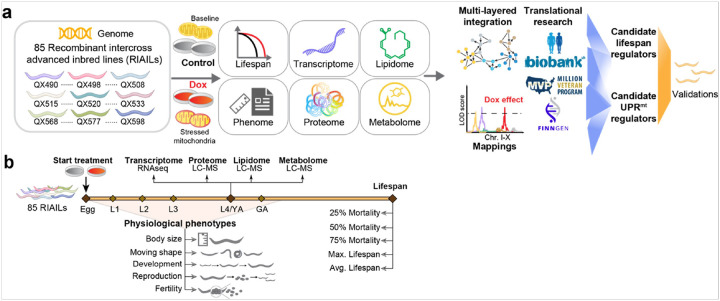 Figure 1
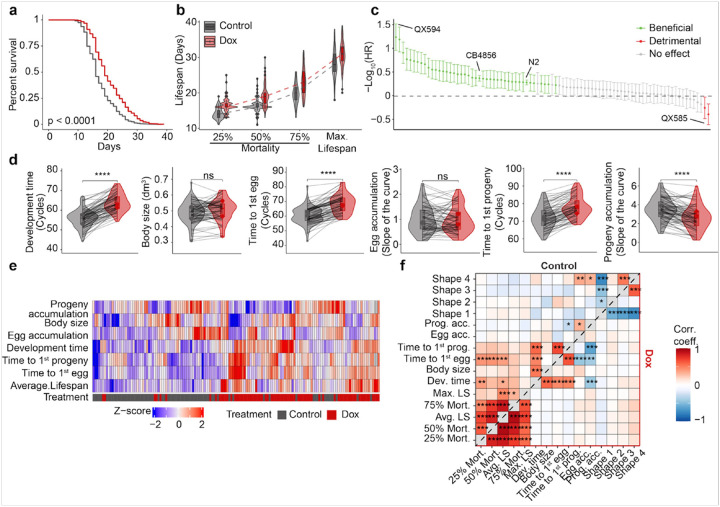 Figure 2
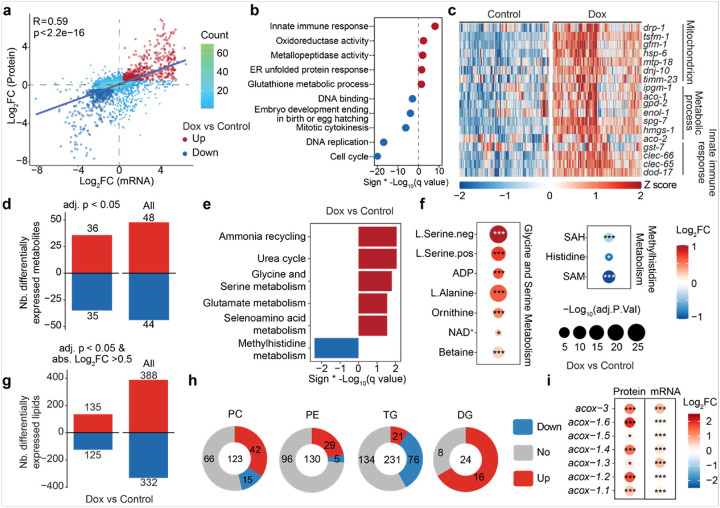 Figure 3
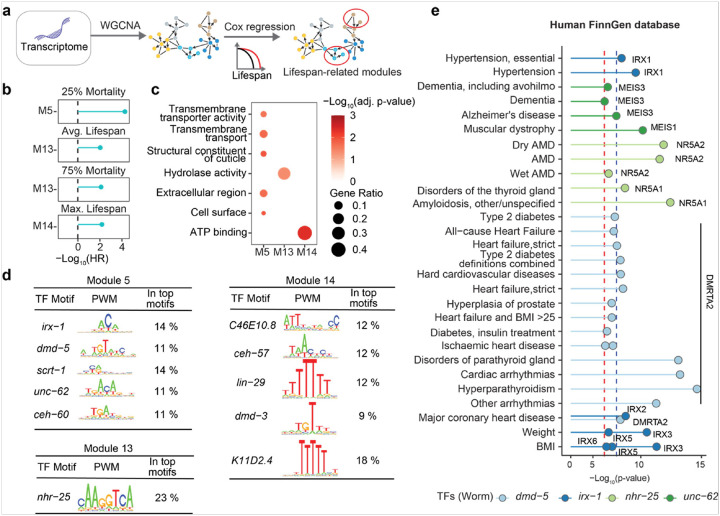 Figure 4
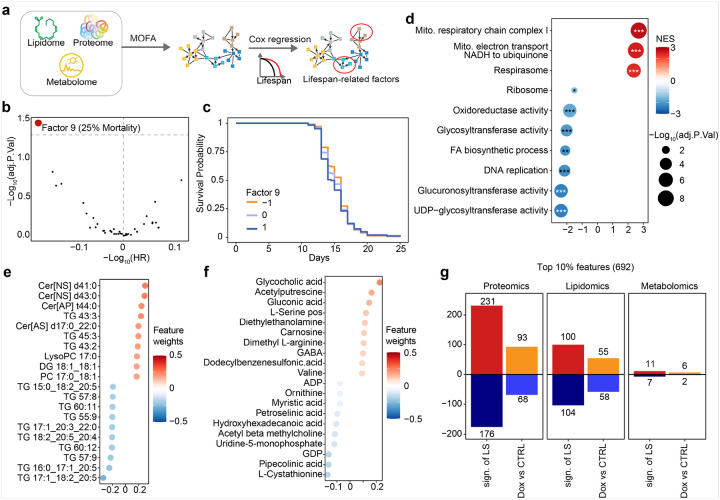 Figure 5
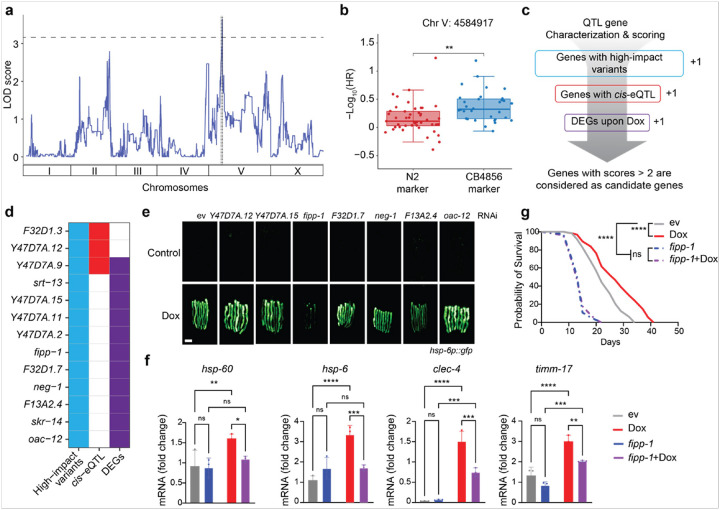 Figure 6
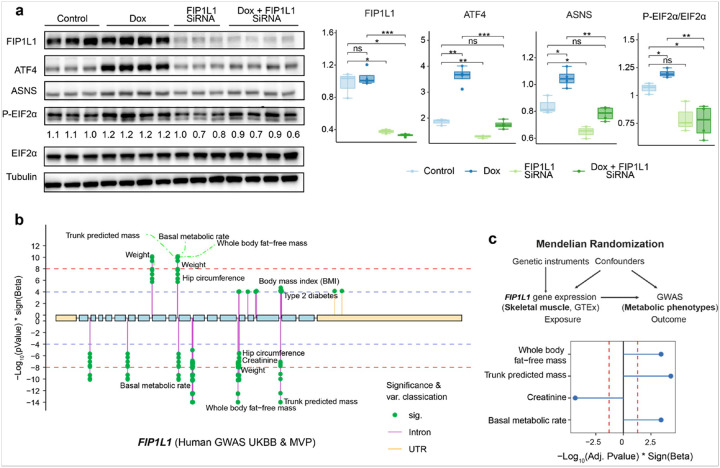 Figure 7
Peer Reviews
No public reviews on file for this paper yet. If you reviewed it on a platform where reviews are public (OpenReview, ICLR, NeurIPS, ICML), you can paste yours below so the community can read it here.
Videos
No videos yet. Explain this paper in a talk, walkthrough, or lecture? Add one.
Taxonomy
TopicsGenetics, Aging, and Longevity in Model Organisms