Hierarchical, Interactive, and Dynamic Predictive Capacity of Current Biological, Psychological, Social, and Environmental Measurements in Depression, Anxiety, ADHD, and Social Quality across the Lifespan
Clark Roberts, Raphael Yamamoto, Zhafira Fawnia, Percy Mistry, Issac N Treves, Alexandra Decker, Samantha N. Sallie, Chris Chatham, Awais Aftab, Kim Lee, Madelynn Park, Vinod Menon, John Gabrieli

TL;DR
This study explores how different biological, psychological, social, and environmental factors predict mental health outcomes like depression, anxiety, and ADHD across the lifespan.
Contribution
The study introduces a novel integrative ensemble stacking method to assess the hierarchical and interactive predictive power of biopsychosocial measures.
Findings
Subjective-report metrics explained significantly more variation in ADHD, depression, and anxiety than biophysical and experimental-task measurements.
There were robust bidirectional interactions between trait-like characteristics and dynamic features of psychopathology, somatic, and social factors.
Psychiatric and social-quality outcomes in adults showed similar hierarchical patterns but also revealed developmental differences.
Abstract
An extensive and perplexing plurality of psychometric assesments, experimental-tasks, and biophysical measurement modalities have evolved alongside increasingly biopsychosocial models of behavior and psychopathology. Yet, despite alarming recent increasing rates of mental health problems, cumulative progress regarding the validity and comparative utility of wide-ranging measures to predict, isolate, or explain hallmark features and interacting systems in depression, anxiety, and ADHD remains concerningly enigmatic. Utilizing adolescent (Age 9–14) and parent data when available (combined N=~23,760) across 5 years from the ABCD dataset - we parcellated over a thousand unique biopsychosocial measures from all time points into 30 theoretically relevant, commonly-used, or potentially-informative domains. We then assessed their hierarchical and interactive predictive power using a novel…
Genes, proteins, chemicals, diseases, species, mutations and cell lines named across the full text — each resolved to its canonical identifier and authoritative record.
Click any figure to enlarge with its caption.
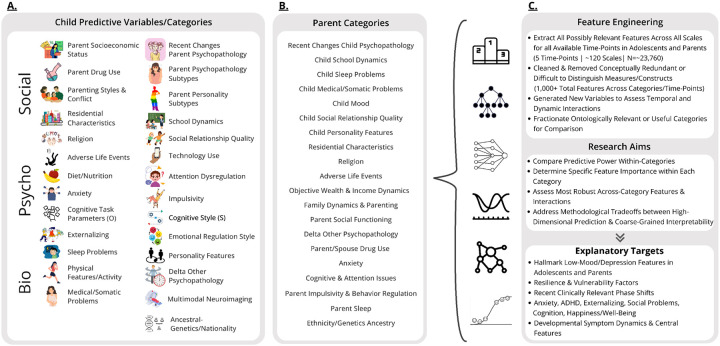 Figure 1
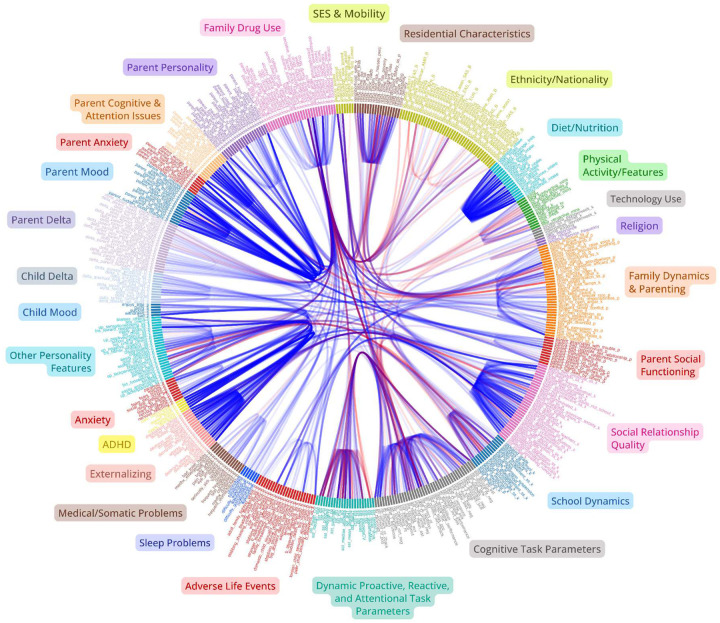 Figure 2
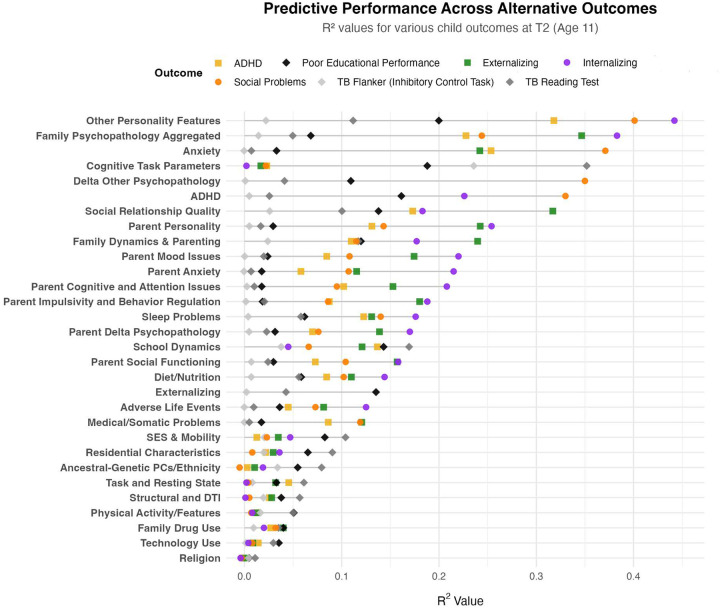 Figure 3
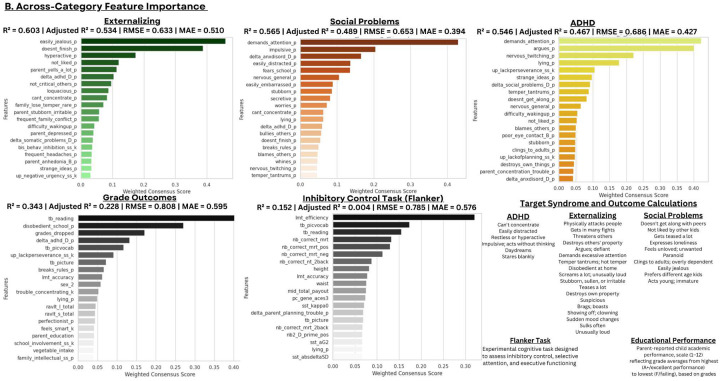 Figure 4
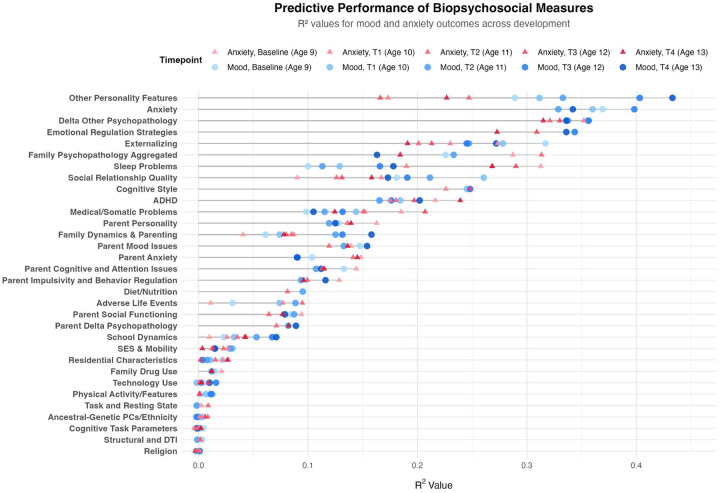 Figure 5
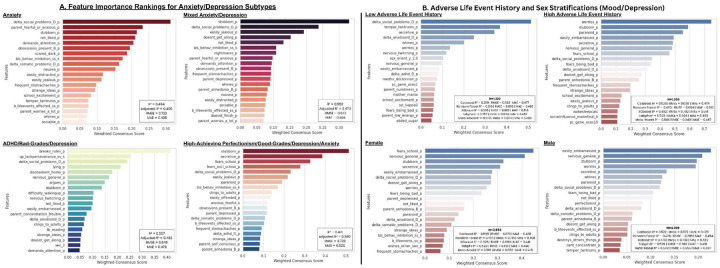 Figure 6
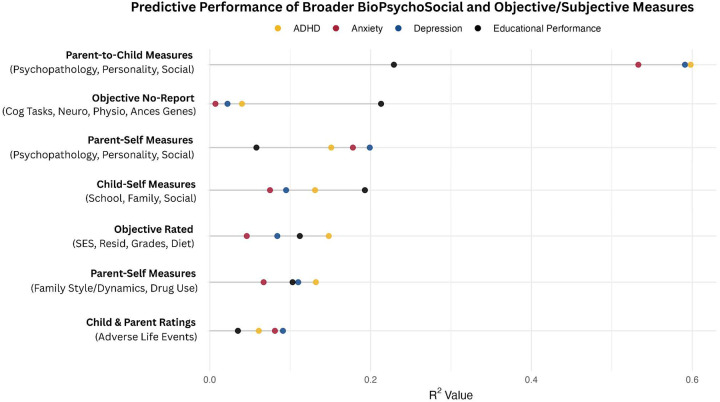 Figure 7
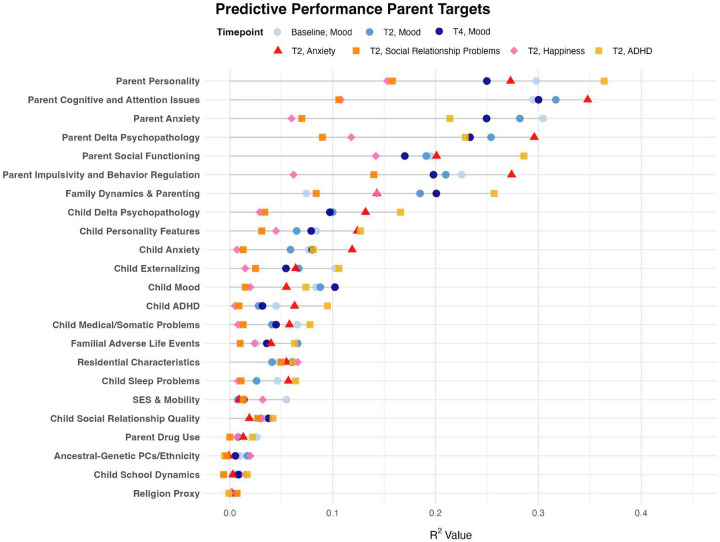 Figure 8
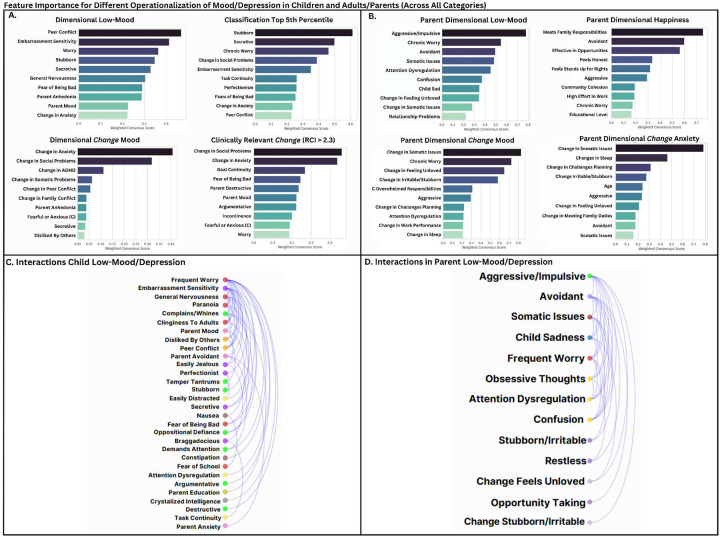 Figure 9
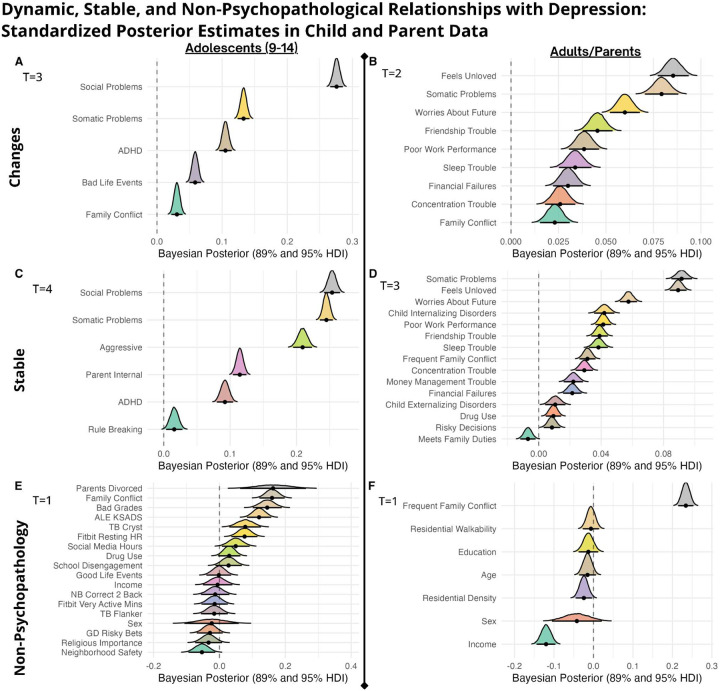 Figure 10
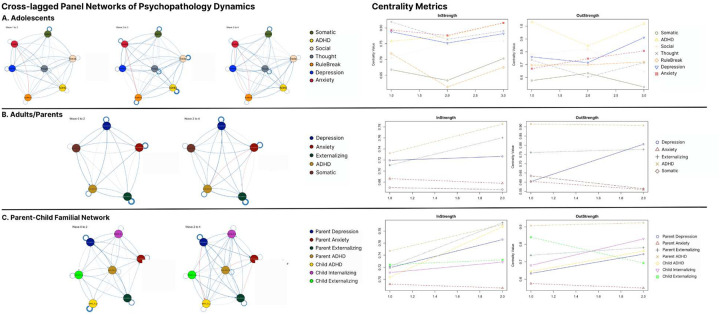 Figure 11
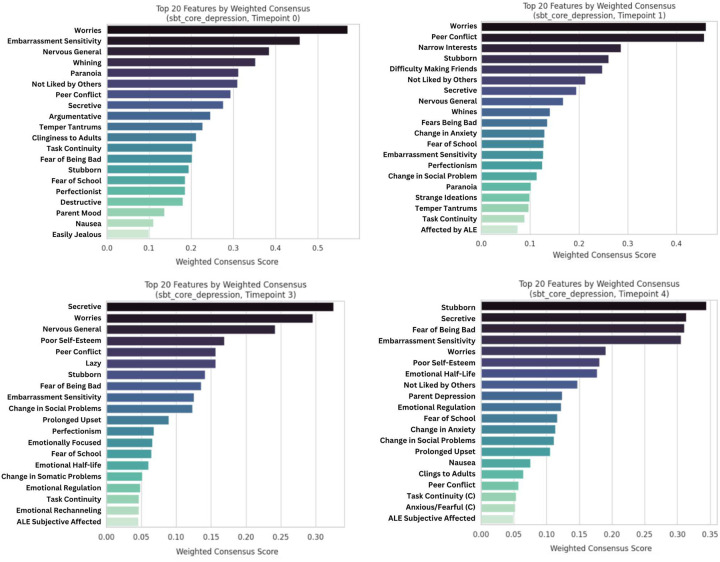 Figure 12
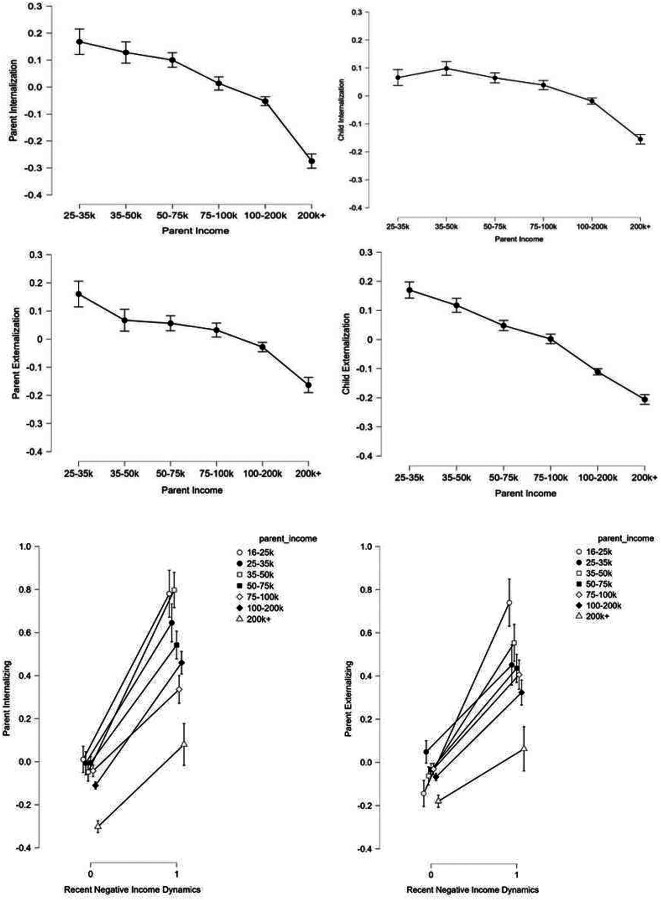 Figure 13
Peer Reviews
No public reviews on file for this paper yet. If you reviewed it on a platform where reviews are public (OpenReview, ICLR, NeurIPS, ICML), you can paste yours below so the community can read it here.
Videos
No videos yet. Explain this paper in a talk, walkthrough, or lecture? Add one.
Taxonomy
TopicsMental Health Research Topics