Seasonal changes in daily temperature fluctuation control flowering through a time-dependent regulation of FLOWERING LOCUS T in Arabidopsis
Akane Kubota, Yoshinori Kondo, Hiroshi Takagi, Tomoaki Muranaka, Nobutoshi Yamaguchi, Shigeo S. Sugano, Atsushi J. Nagano, Motomu Endo, Takato Imaizumi

TL;DR
The paper shows how seasonal temperature changes, especially cooler nights, control when plants flower by regulating a key gene called FT in Arabidopsis.
Contribution
The study reveals how daily temperature fluctuations regulate the bimodal expression of FT through distinct morning and evening mechanisms involving CO and BBX29.
Findings
Cool night-to-morning temperatures regulate FT expression through separate morning and evening peaks.
Lower night temperatures reduce CO protein stability and increase its interaction with BBX29.
Seasonal temperature patterns provide reliable timing cues for flowering in spring.
Abstract
Temperature changes along seasonal transitions control flowering. Under natural long-day conditions, flowering is controlled by a bimodal expression pattern of the florigen gene, FLOWERING LOCUS T (FT), in Arabidopsis. Although cool ambient temperatures delay flowering through FT repression, it is unknown how daily temperature fluctuations regulate bimodal FT profiles. Seasonal increases in nighttime temperatures are less variable than those during the daytime in spring, potentially providing more reliable timing information. By simulating daily temperature fluctuations of spring, we showed that cool night-to-morning temperatures activate multiple mechanisms to control morning and evening FT peaks separately. Lowering night temperatures regulates the CONSTANS (CO) protein function by reducing its stability from midday to dusk and increasing its interaction with a colder-night induced…
Genes, proteins, chemicals, diseases, species, mutations and cell lines named across the full text — each resolved to its canonical identifier and authoritative record.
Click any figure to enlarge with its caption.
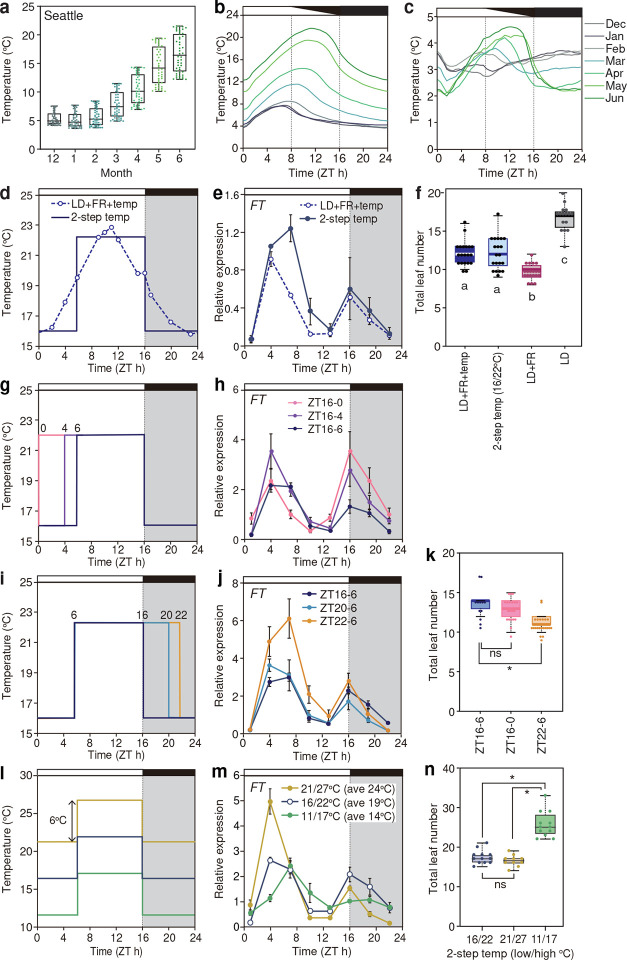 Figure 1
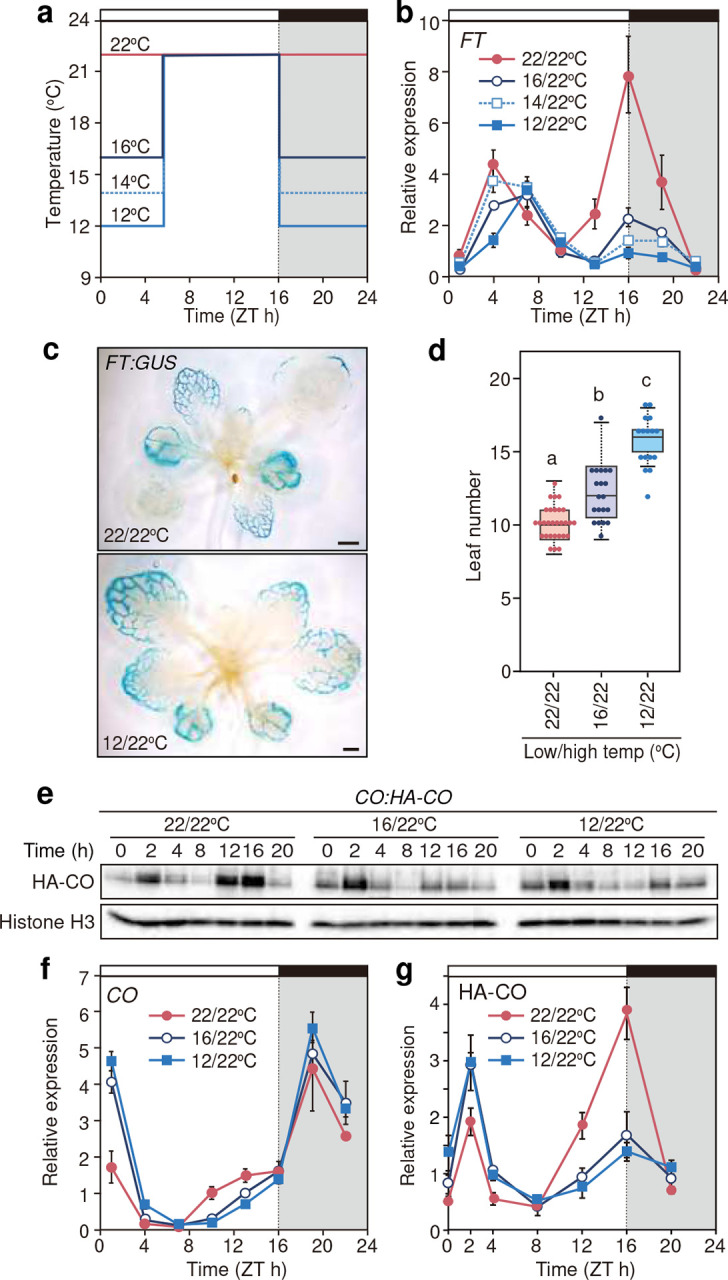 Figure 2
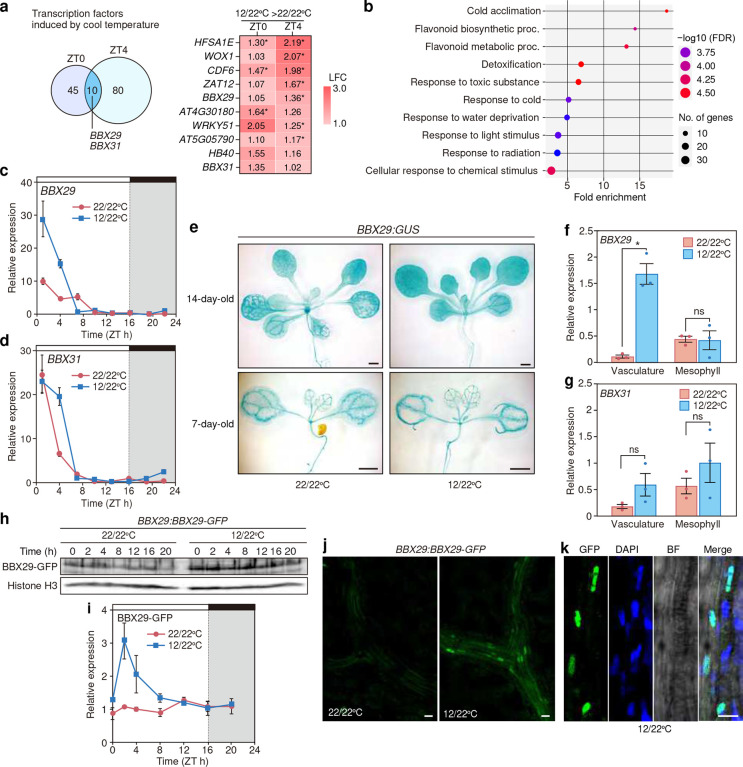 Figure 3
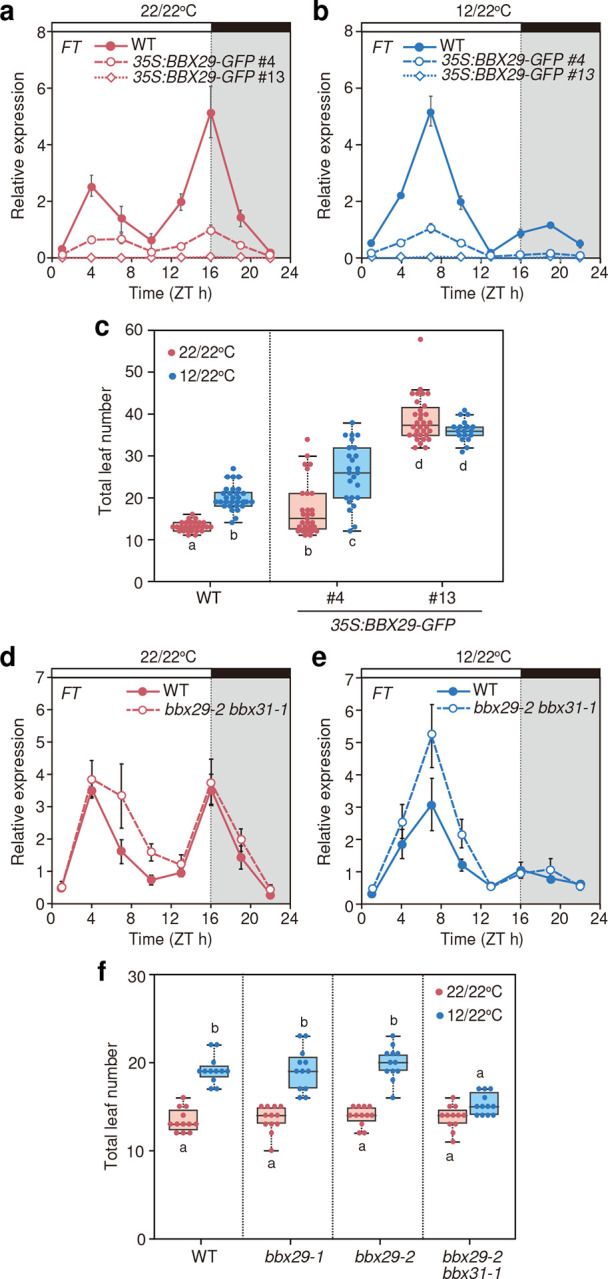 Figure 4
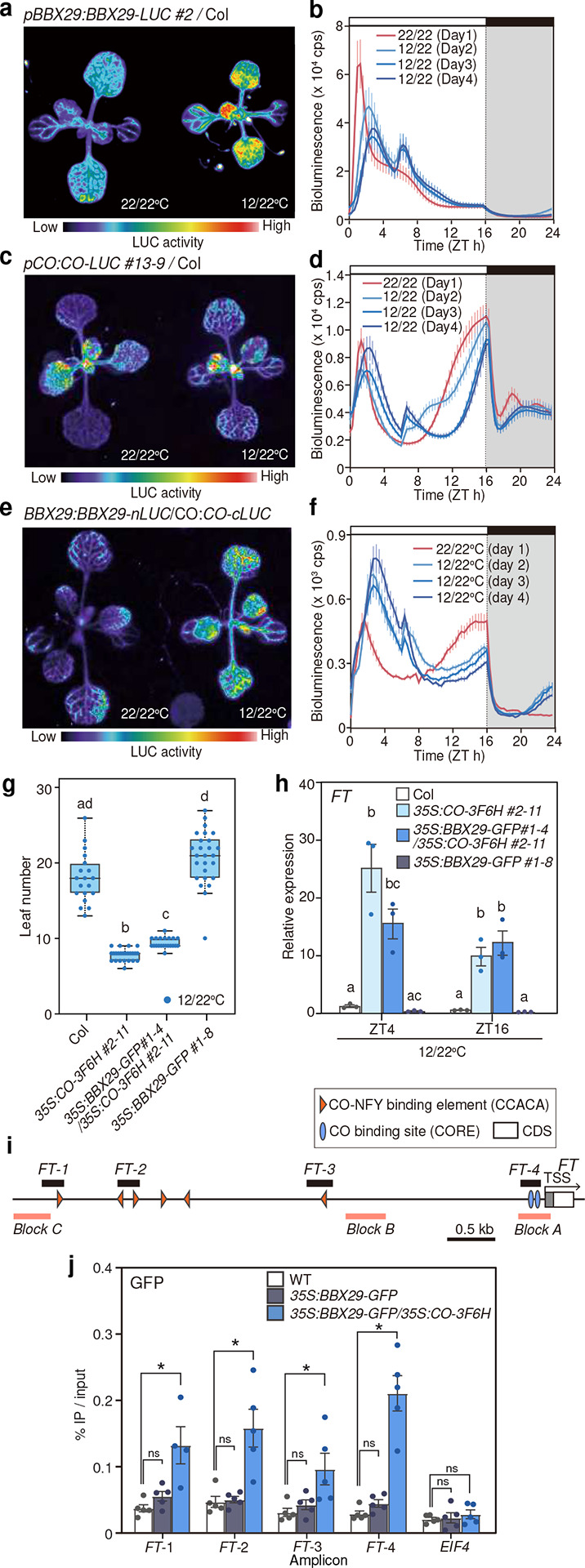 Figure 5
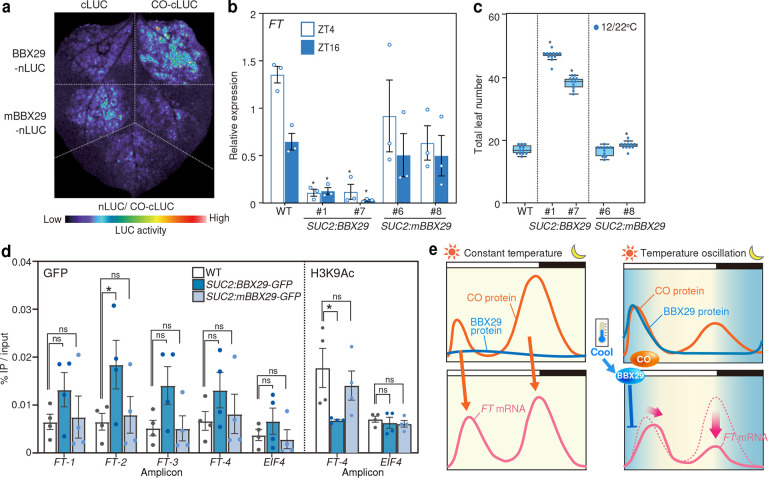 Figure 6
Peer Reviews
No public reviews on file for this paper yet. If you reviewed it on a platform where reviews are public (OpenReview, ICLR, NeurIPS, ICML), you can paste yours below so the community can read it here.
Videos
No videos yet. Explain this paper in a talk, walkthrough, or lecture? Add one.
Taxonomy
TopicsPlant Molecular Biology Research · Light effects on plants · Plant Reproductive Biology