Cross-species comparison of rodent and human decision-making in the Iowa Gambling Task in select neurological and psychiatric disorders: translational approach to examine age- and sex-specific effects of stress and corticolimbic perturbations
Varsha Singh, Manjari Tripathi, Sarat P. Chandra, Rohit Verma, Sushil Kumar Jha, Harvinder Singh Chhabra, Mrinmoy Chakravarty, Shambhovi Mitra, Indupriya B, Ankit Jha, Sakshi Sharma, Jyotsna Pandey, Divyanshi Pandey, Insha Shamshad, Ekta Ahlawat, Titli Saha, Chloé César

TL;DR
This paper compares decision-making in rodents and humans using the Iowa Gambling Task to better understand how stress and brain issues affect choices in neurological and psychiatric disorders.
Contribution
The study introduces a cross-species framework using the Iowa Gambling Task to examine age- and sex-specific effects of stress and brain perturbations on decision-making.
Findings
Stress and CNS perturbations uniquely impaired human decision-making.
Limbic perturbations affected decision-making differently by age in humans and by sex in rodents.
Humans (especially women) showed more infrequent punishment choices compared to rodents.
Abstract
Rodent models are widely used to understand brain pathologies and address cognitive deficits experienced by humans diagnosed with clinical disorders. However, stark differences in the nervous system and in the environmental demands of rodents and humans make it difficult to translate insights from rodents to humans. Age and sex further increase vulnerability to disorders via experiences marked by neglect, deprivation, threat, and constraining environments instead of care, nutrition, safety, and enriching environment. These differences impact cognitive processing of rewards, risks, and decision-making. Although rodent models allow for investigations of precise brain regions critical for decision-making, such as the prefrontal cortex (PFC), and enable controlled exposure to stress and disorder trajectories, the prefrontal cortex of rodents and humans differ in size, cytoarchitecture, and…
Genes, proteins, chemicals, diseases, species, mutations and cell lines named across the full text — each resolved to its canonical identifier and authoritative record.
Click any figure to enlarge with its caption.
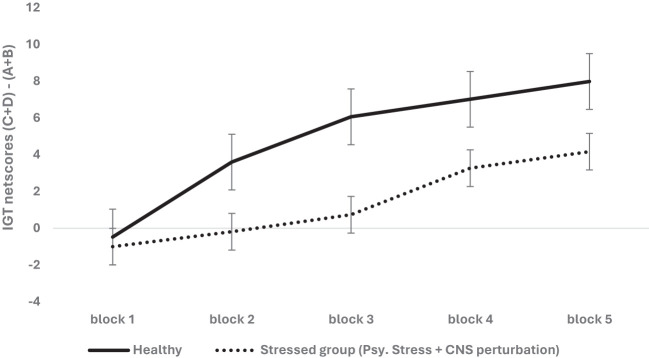 Figure 1
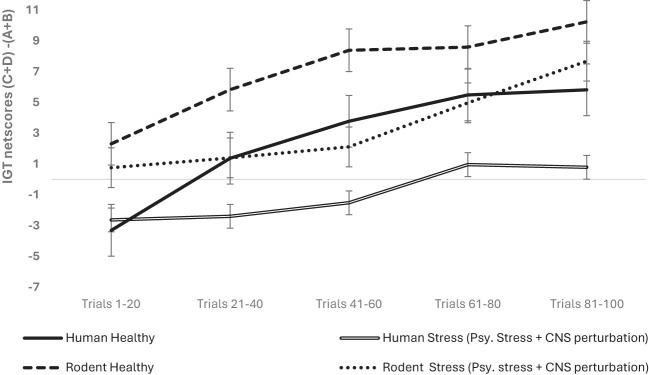 Figure 2
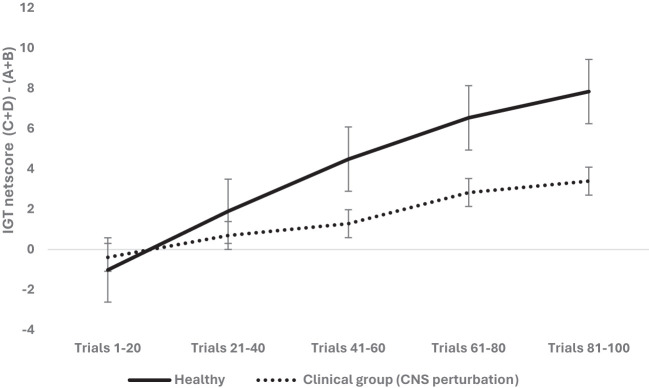 Figure 3
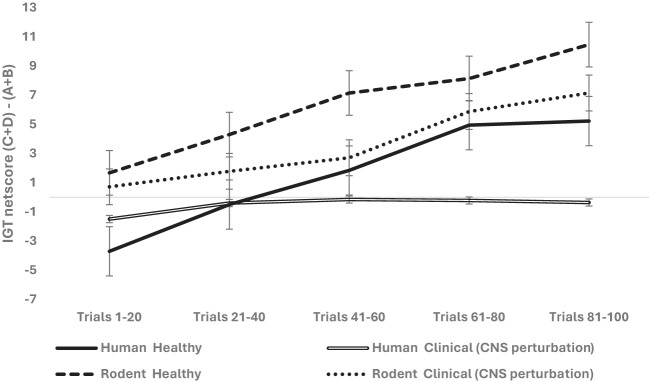 Figure 4
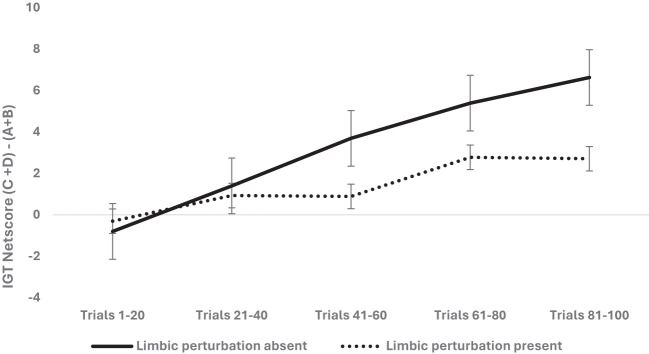 Figure 5
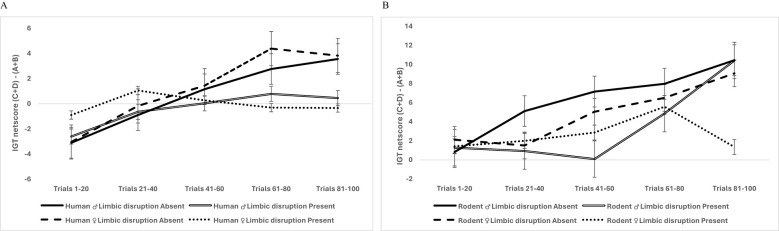 Figure 6
 Figure 7
 Figure 8
Peer Reviews
No public reviews on file for this paper yet. If you reviewed it on a platform where reviews are public (OpenReview, ICLR, NeurIPS, ICML), you can paste yours below so the community can read it here.
Videos
No videos yet. Explain this paper in a talk, walkthrough, or lecture? Add one.
Taxonomy
TopicsStress Responses and Cortisol · Neuroendocrine regulation and behavior · Sex and Gender in Healthcare