Infective pneumonia following the use of tumor necrosis factor-α inhibitors in inflammatory bowel disease patients: A real-world disproportionality analysis of the FDA Adverse Event Reporting System (FAERS) database
Qinhui Tang, Xiaowei Tang, Wenmeng Yin, Yantong Li, Xiaolin Zhong

TL;DR
This study finds that some TNF-α inhibitors used for inflammatory bowel disease are linked to higher rates of infective pneumonia, especially tuberculosis-related cases.
Contribution
The study uses real-world FAERS data to identify specific pneumonia risks associated with different TNF-α inhibitors.
Findings
Infliximab and adalimumab showed the highest incidence of infective pneumonia-related adverse events.
Infliximab had 10 positive signals for various pneumonia types, including tuberculosis and fungal infections.
Certolizumab pegol and golimumab showed fewer signals, with tuberculosis-related pneumonia being the most common.
Abstract
Patients with inflammatory bowel disease may develop infective pneumonia after using tumor necrosis factor-α inhibitors(TNFis). Due to the limitations of clinical trials, the occurrence of infective pneumonia in patients with inflammatory bowel disease using tumor necrosis factor-α(TNF-α) inhibitors remains uncertain. This article primarily explores the relationship between TNF-α inhibitors and adverse events(AEs) related to infective pneumonia in the US Food and Drug Administration (FDA) Adverse Event Reporting System (FAERS) database. We collected data from the FAERS database, extracting reports for each TNF-α inhibitor from their market launch until the first quarter of 2024 (infliximab, adalimumab, certolizumab pegol, and golimumab) and assessing infective pneumonia associated with TNF-α inhibitors using disproportionality analysis. After removing duplicate reports, a total of…
Genes, proteins, chemicals, diseases, species, mutations and cell lines named across the full text — each resolved to its canonical identifier and authoritative record.
Click any figure to enlarge with its caption.
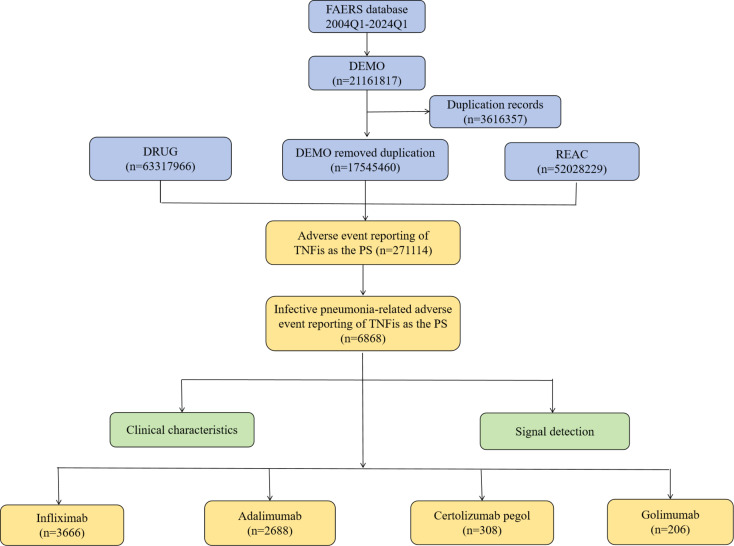 Figure 1
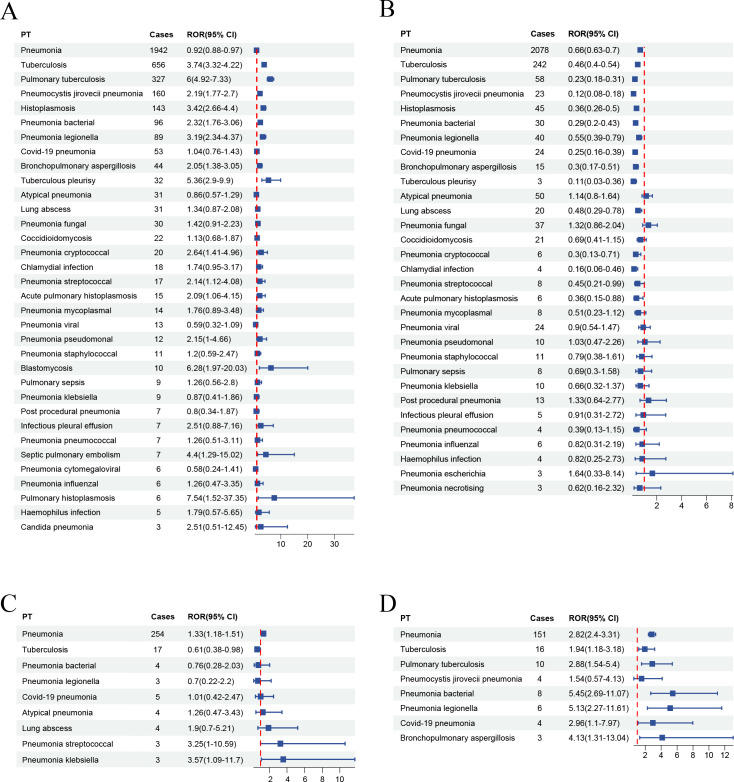 Figure 2
 Figure 3
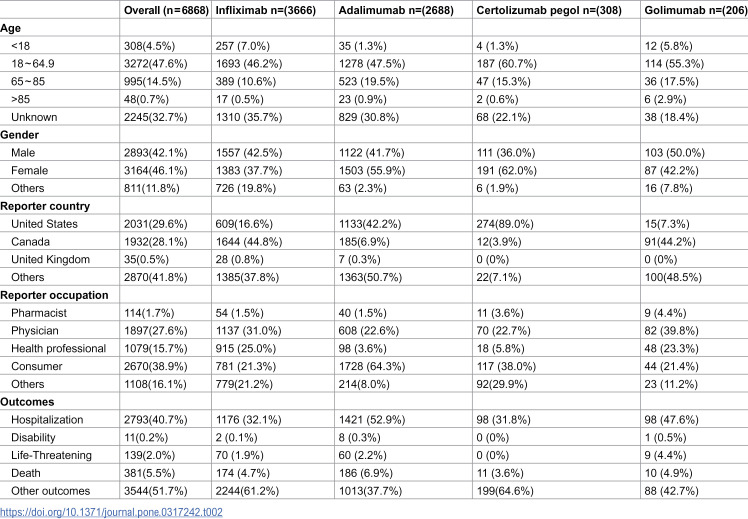 Figure 4
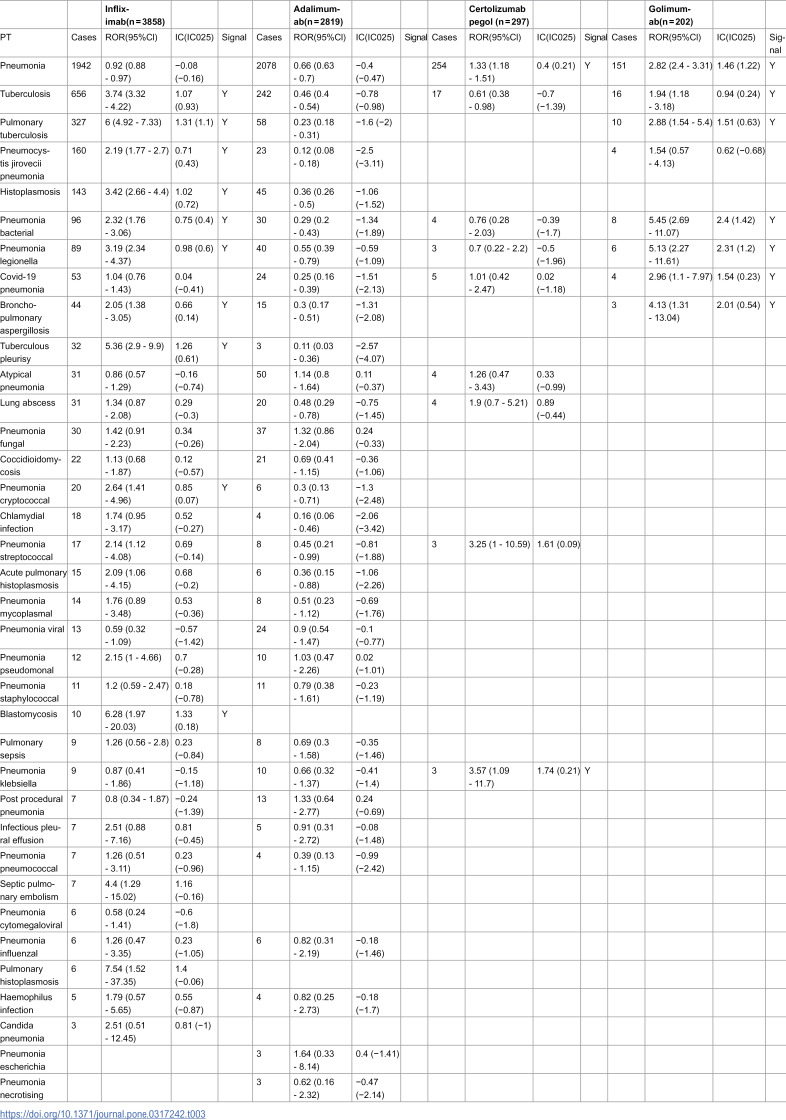 Figure 5
Peer Reviews
No public reviews on file for this paper yet. If you reviewed it on a platform where reviews are public (OpenReview, ICLR, NeurIPS, ICML), you can paste yours below so the community can read it here.
Videos
No videos yet. Explain this paper in a talk, walkthrough, or lecture? Add one.
Taxonomy
TopicsInflammatory Bowel Disease · Microscopic Colitis · Biosimilars and Bioanalytical Methods