Acceptability and implementation potential of a health literacy intervention to increase colorectal cancer screening in deprived areas: A qualitative study of patients and general practitioners participating in a cluster randomized controlled trial
Alix Boirot, Maria Claudia Addamiano, Clémence Casanova, Niamh M. Redmond, Géraldine Cazorla, Michel Rotily, Anne-Marie Schott-Petelaz, Christian Balamou, Zineb Doukhi, Myriam Kaou, Françoise Couranjou, Julien Mancini, Cyrille Delpierre, Marie-Anne Durand, Aurore Lamouroux

TL;DR
This study explores how a health literacy intervention using a video and brochure can improve colorectal cancer screening uptake in disadvantaged areas.
Contribution
The study provides new insights into patient and GP preferences for health communication tools in low-participation settings.
Findings
95% of GPs preferred the video over the brochure for promoting colorectal cancer screening.
Patients showed mixed preferences, with 50% favoring the video due to its visual demonstration of the screening process.
Healthcare staff support remains crucial for effective screening promotion despite digital tools.
Abstract
Colorectal cancer (CCR) is one of the leading causes of death worldwide. Early detection remains a highly effective strategy for curing this disease. In France, despite a free organised screening programme for people aged between 50 and 74, participation rates remain suboptimal. Socioeconomic position and health literacy levels exacerbate the situation, with the lowest screening rates observed in the most socially disadvantaged areas. This study assessed patients’ and General Practitioners’ (GP) views on the acceptability of an intervention to increase screening uptake using a simple brochure and video on the importance and process of CCR screening. We conducted a cross-sectional qualitative study using semi-structured interviews with patients (n = 24) and GPs (n = 22) who used or participated in the DECODE project intervention. The interviews were conducted by telephone or…
Genes, proteins, chemicals, diseases, species, mutations and cell lines named across the full text — each resolved to its canonical identifier and authoritative record.
Click any figure to enlarge with its caption.
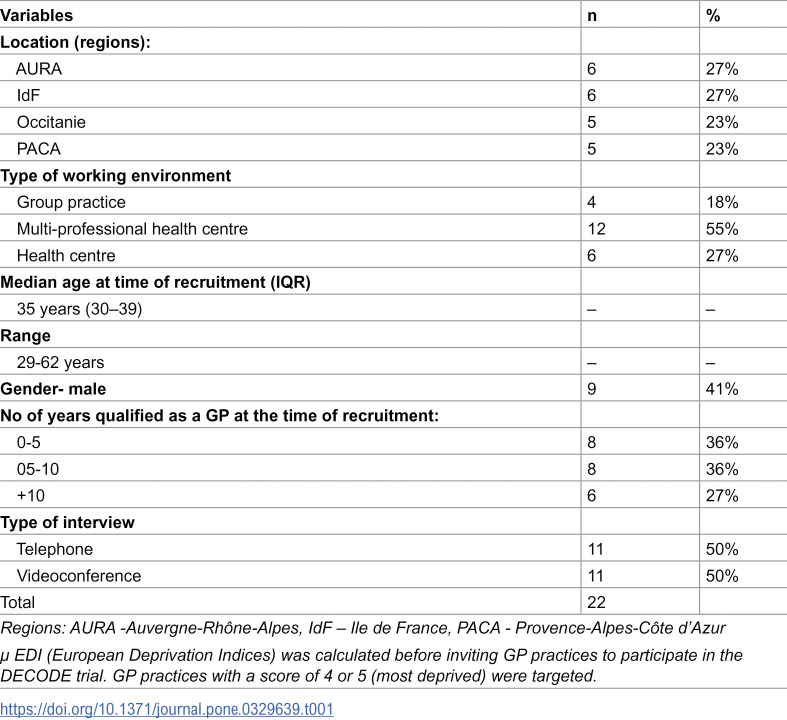 Figure 1
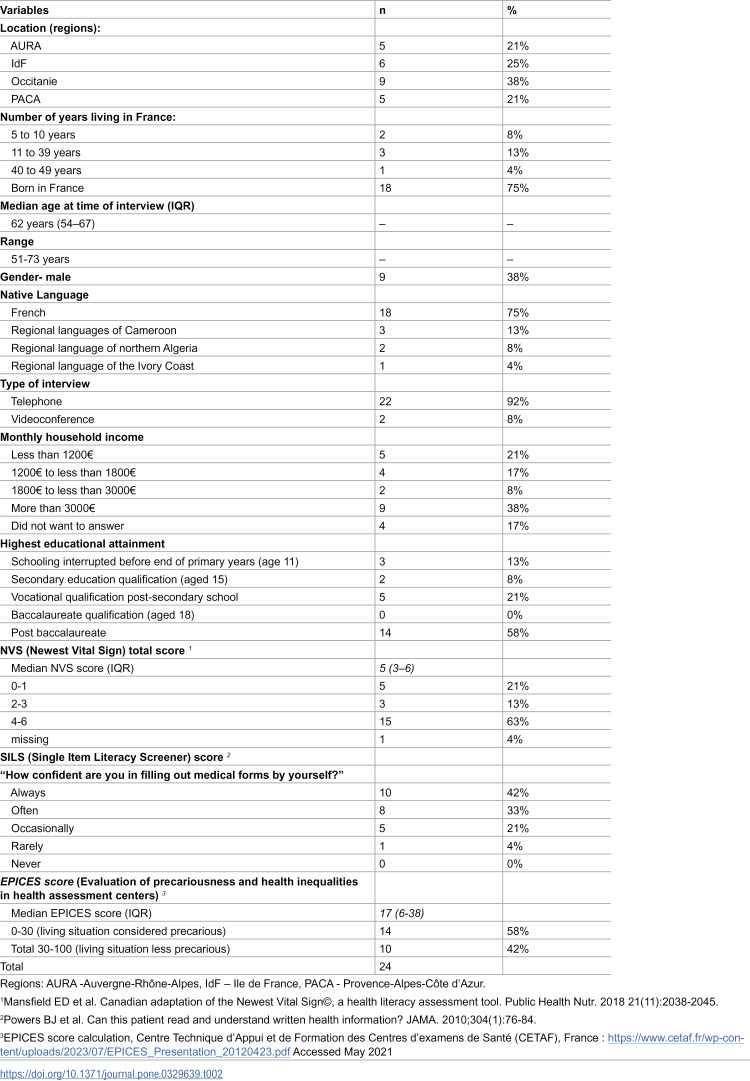 Figure 2
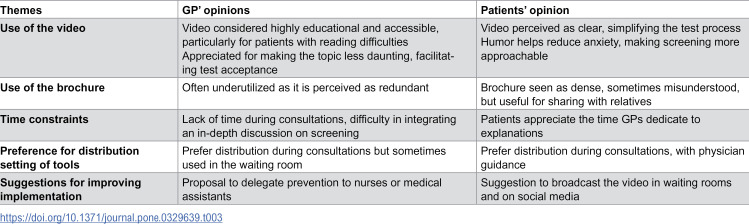 Figure 3
Peer Reviews
No public reviews on file for this paper yet. If you reviewed it on a platform where reviews are public (OpenReview, ICLR, NeurIPS, ICML), you can paste yours below so the community can read it here.
Videos
No videos yet. Explain this paper in a talk, walkthrough, or lecture? Add one.
Taxonomy
TopicsColorectal Cancer Screening and Detection · Global Cancer Incidence and Screening · Health Literacy and Information Accessibility