Leveraging deep learning for the detection of socially desirable tendencies in personnel selection: A proof-of-concept
Tony C. Lee, Matthias Ziegler

TL;DR
This paper introduces a deep learning method to detect when job applicants give favorable answers in questionnaires, using video data and machine learning.
Contribution
A novel deep learning model, Entrans, is proposed to detect socially desirable responding using nonverbal visual cues from job interviews.
Findings
Entrans achieved promising performance in predicting SDR tendency with MSE = .07 and RMSE = .27.
Classification results showed an AUC of .71, indicating potential for detecting SDR.
Grad-CAM analysis revealed that Entrans focused on the middle and lower parts of the face for classification.
Abstract
We propose a deep learning-based method for detecting Socially Desirable Responding (SDR)—the tendency for individuals to distort questionnaire responses to present themselves in a favorable light. Our objective is to showcase that such novel methods can be leveraged to design instruments that have the potential to measure this construct in an effective way. Participants’ tendency to engage in SDR was initially modelled by specifying a latent variable model from Big Five personality scores, using data from 91 participants in a job application simulation (Big Five questionnaire and video introduction). Nonverbal visual cues (5,460 data points following data augmentation) were extracted from the participants’ video presentations in form of sequences of images for training a transfer learning model designated as Entrans. The objective of Entrans is to discern patterns within these cues in…
Genes, proteins, chemicals, diseases, species, mutations and cell lines named across the full text — each resolved to its canonical identifier and authoritative record.
Click any figure to enlarge with its caption.
 Figure 1
 Figure 2
 Figure 3
 Figure 4
 Figure 5
 Figure 6
 Figure 7
 Figure 8
 Figure 9
 Figure 10
 Figure 11
 Figure 12
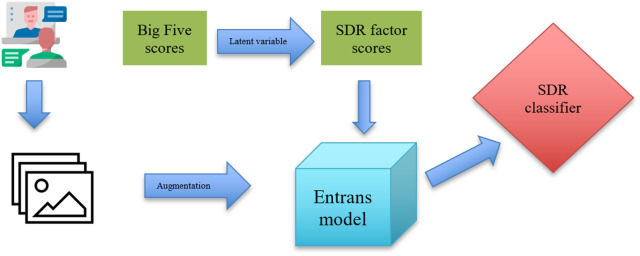 Figure 13
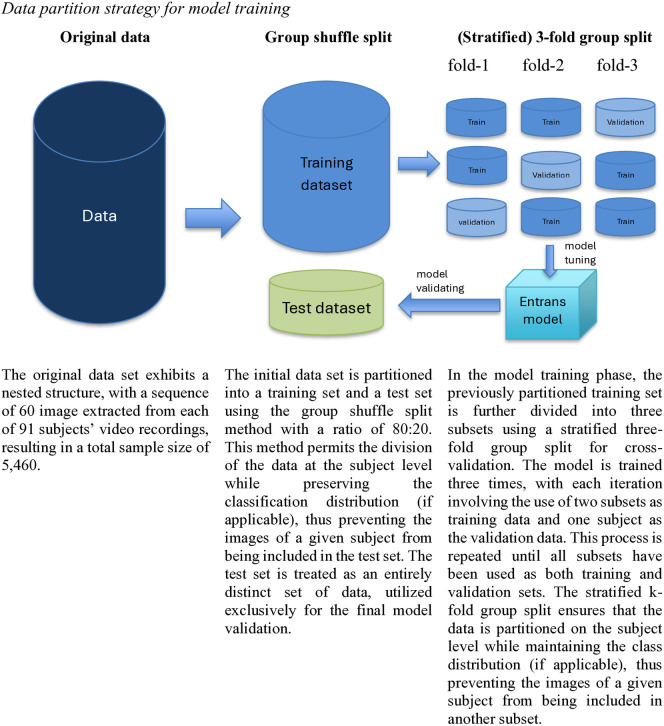 Figure 14
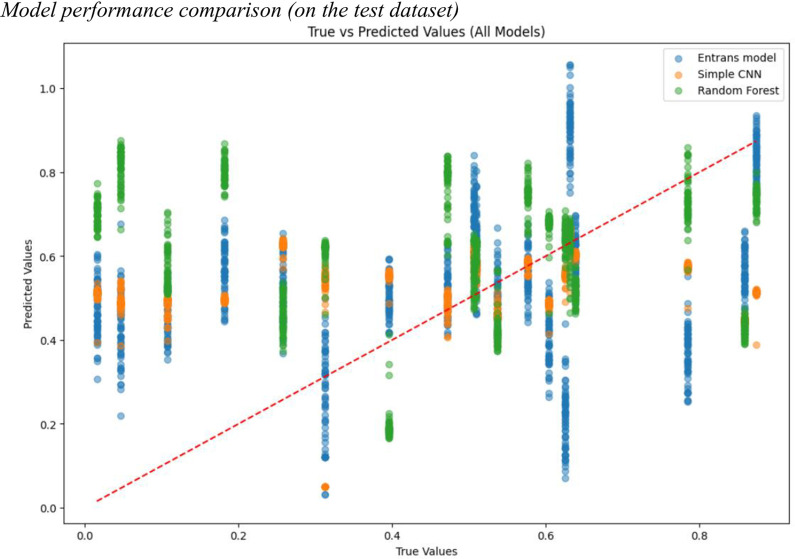 Figure 15
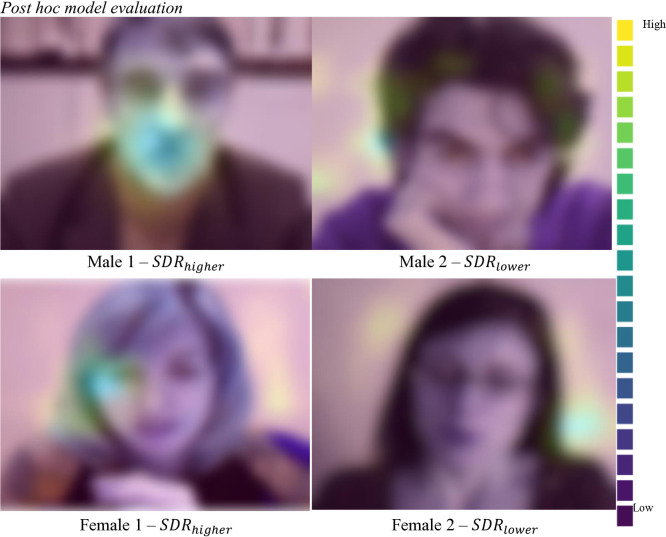 Figure 16
 Figure 17
 Figure 18
 Figure 19
Peer Reviews
No public reviews on file for this paper yet. If you reviewed it on a platform where reviews are public (OpenReview, ICLR, NeurIPS, ICML), you can paste yours below so the community can read it here.
Videos
No videos yet. Explain this paper in a talk, walkthrough, or lecture? Add one.
Taxonomy
TopicsAI and HR Technologies · Social and Intergroup Psychology