Global research trends and frontiers in patent foramen ovale closure: a comprehensive bibliometric analysis (2004–2024)
Jie Liu, Yehong Liu, Ying Sheng, Jiangping Ye, Rikang Yuan, Xiao Wang, Gangjun Zong

TL;DR
This study maps global research trends in patent foramen ovale closure, showing growth since 2017 and highlighting key areas like diagnosis, techniques, and outcomes.
Contribution
A comprehensive bibliometric analysis of PFO closure research from 2004–2024, identifying emerging trends and key contributors.
Findings
Annual publications on PFO closure increased significantly after 2017, driven by pivotal trial results.
The U.S., Italy, and Germany led in research output, with institutions like the University of Bern and authors like Meier Bernhard playing central roles.
Four major research clusters emerged: paradoxical embolism mechanisms, diagnostic imaging, closure techniques, and clinical outcomes.
Abstract
Patent foramen ovale (PFO), present in 20–30% of the population, was once considered benign but is now recognized as a contributor to cryptogenic stroke and other clinical syndromes. Recent randomized trials and updated guidelines have established PFO closure as an effective intervention, leading to a surge in research. This study uses bibliometric analysis to evaluate global research trends, collaborations, and emerging hotspots in PFO closure. We analyzed 927 English-language articles (2004–2024) from the Web of Science Core Collection using bibliometric tools (VOSviewer, CiteSpace, Bibliometrix R, online bibliometric analysis platforms). We systematically examined publication trends, contributions by countries and institutions, author networks, journal influence, and keyword clusters. Annual publications increased significantly after 2017, coinciding with pivotal trial results. The…
Genes, proteins, chemicals, diseases, species, mutations and cell lines named across the full text — each resolved to its canonical identifier and authoritative record.
Click any figure to enlarge with its caption.
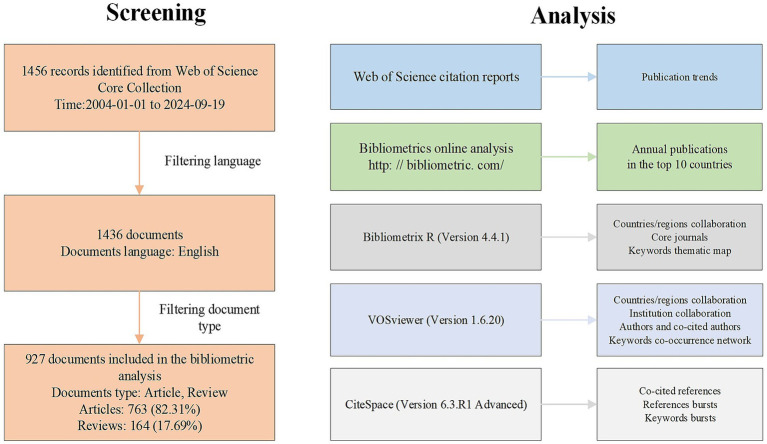 Figure 1
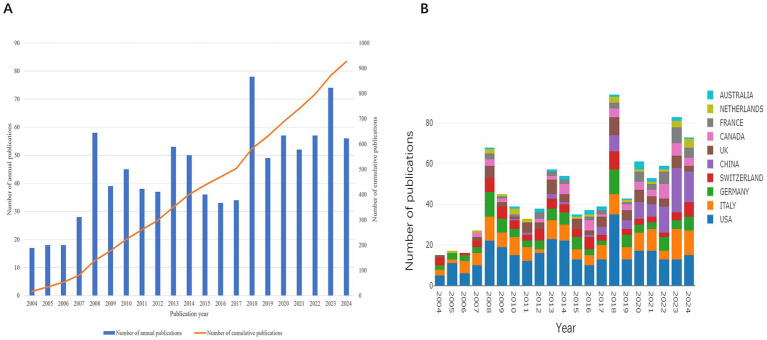 Figure 2
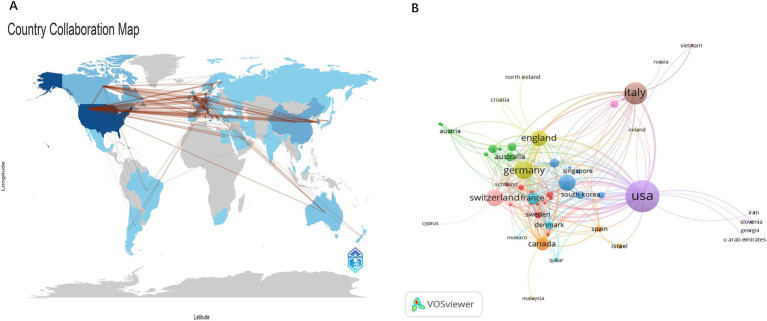 Figure 3
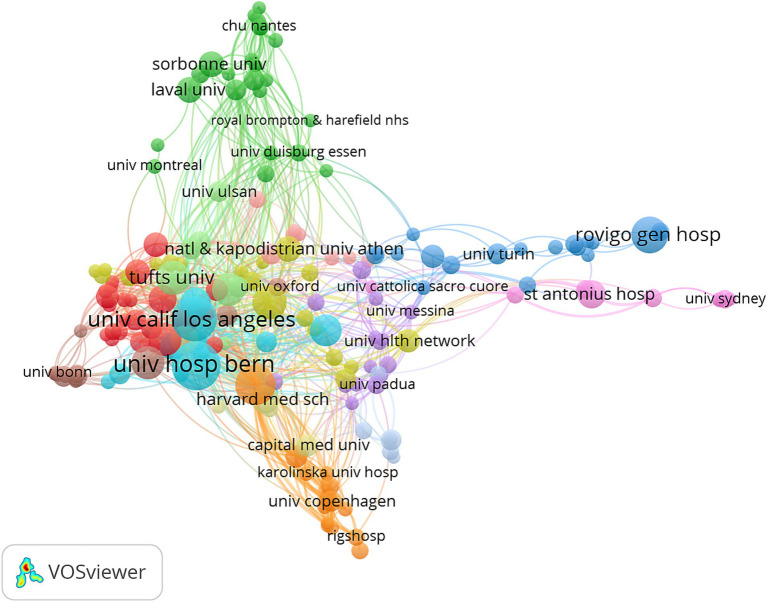 Figure 4
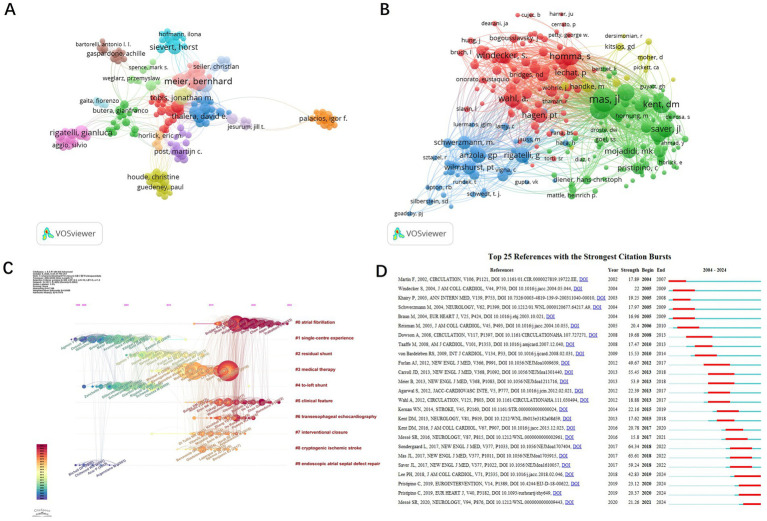 Figure 5
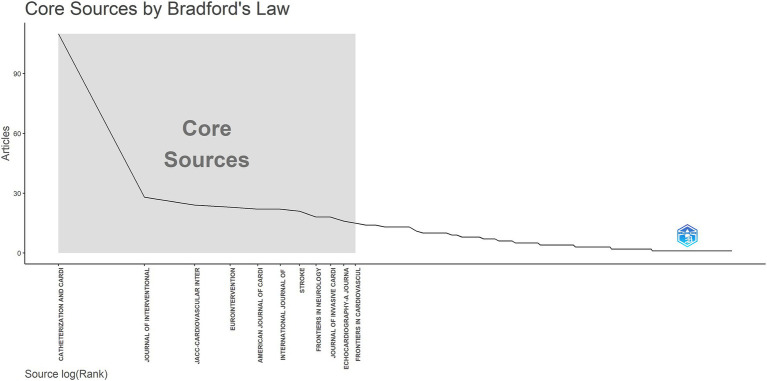 Figure 6
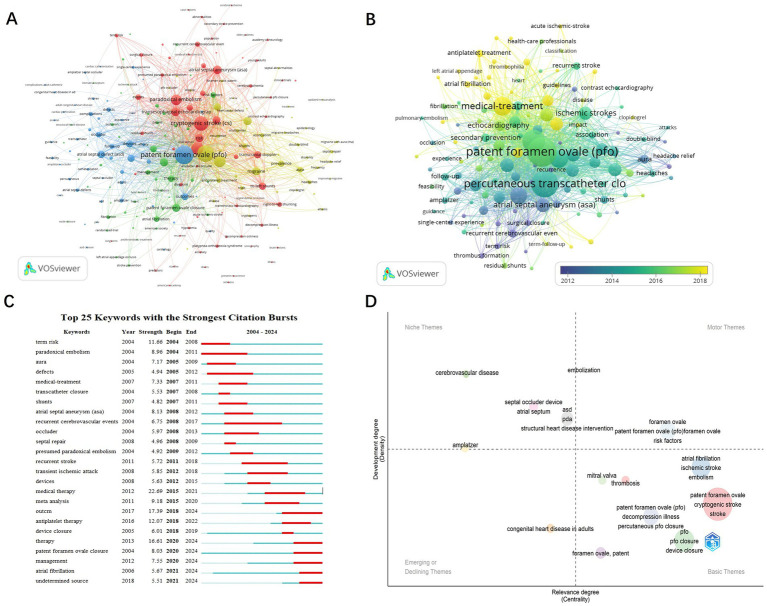 Figure 7
Peer Reviews
No public reviews on file for this paper yet. If you reviewed it on a platform where reviews are public (OpenReview, ICLR, NeurIPS, ICML), you can paste yours below so the community can read it here.
Videos
No videos yet. Explain this paper in a talk, walkthrough, or lecture? Add one.
Taxonomy
TopicsCardiovascular and Diving-Related Complications · Intracranial Aneurysms: Treatment and Complications · Traumatic Brain Injury and Neurovascular Disturbances