miR-30a enhanced RIG-I-mediated type I interferon antiviral response by targeting USP14
Jikai Zhang, Yiwen Wang, Ningye Sun, Botao Zou, Zijie Wang, Hang Yin, Jiaqian Xie, Banruo Xia, Nan Sun

TL;DR
The study shows that miR-30a boosts the body's antiviral response by targeting USP14, which helps fight viruses like VSV and SeV.
Contribution
The novel finding is that miR-30a enhances type I IFN signaling by inhibiting USP14, revealing a new miRNA–innate immunity regulatory axis.
Findings
miR-30a promotes IFN and ISG production to inhibit viral replication in macrophages.
miR-30a targets USP14 mRNA to enhance RIG-I ubiquitination and antiviral responses.
The miR-30a-USP14-RIG-I axis represents a new regulatory mechanism in innate immunity.
Abstract
Type I interferon (IFN) signaling plays a prominent role in the host innate immune defense against viral infection. The regulatory roles of miRNAs on the innate immune response remain to be further explored. Although miR-30a has been implicated in the regulation of various viral life cycles, the underlying mechanism on type I IFN signaling remains controversial. Herein, miR-30a was identified as a regulator of type 1 IFN production in macrophages. We observed that miR-30a expression was significantly decreased by vesicular stomatitis virus (VSV) or Sendai virus (SeV) infection in THP-1 cells. In return, overexpression of miR-30a promoted viral infection-triggered IFN and ISGs production to inhibit VSV or SeV replication. Mechanistically, miR-30a inhibited USP14 expression by binding with the 3′UTR of mRNA. USP14 was identified as an inhibitor of IFN signaling by removing the K63-linked…
Genes, proteins, chemicals, diseases, species, mutations and cell lines named across the full text — each resolved to its canonical identifier and authoritative record.
Click any figure to enlarge with its caption.
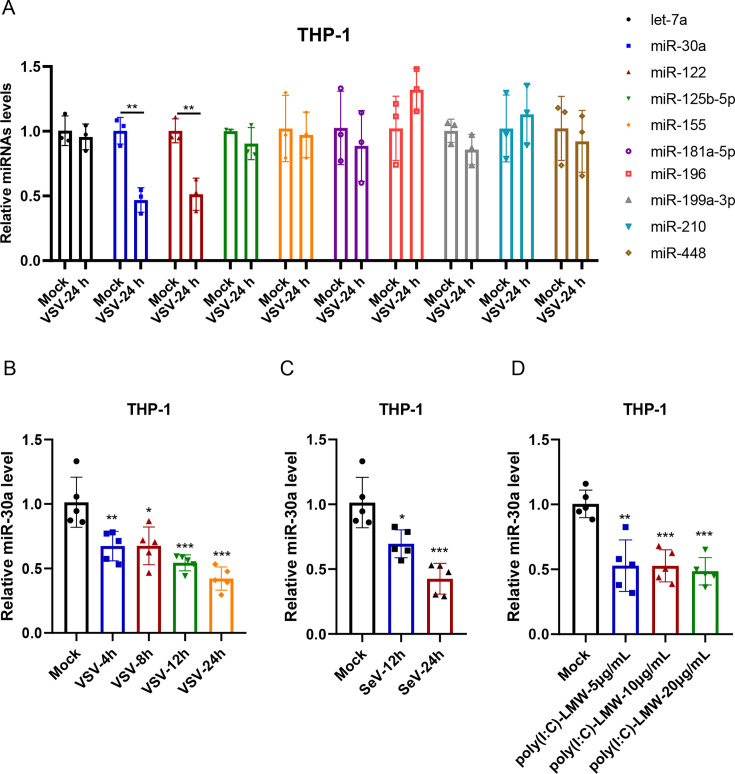 Figure 1
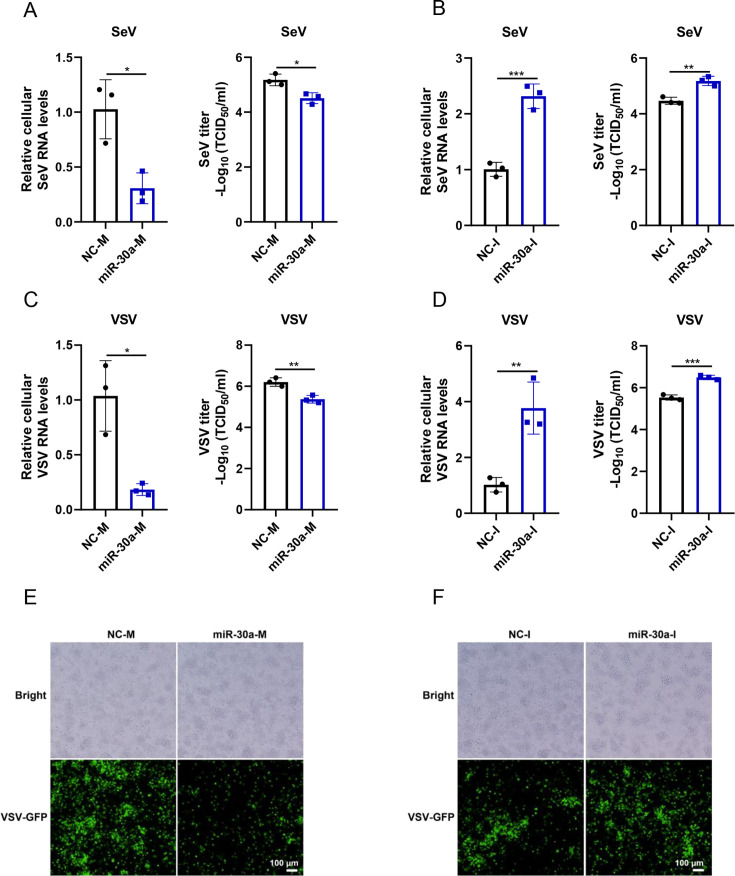 Figure 2
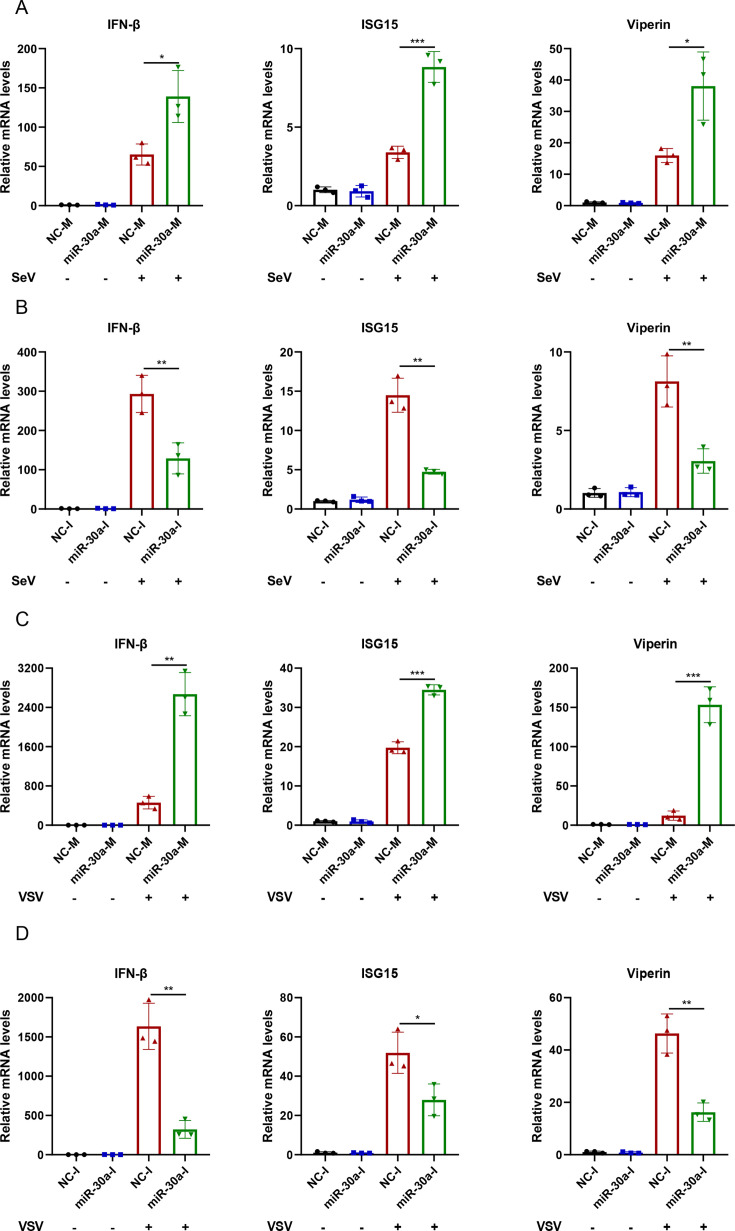 Figure 3
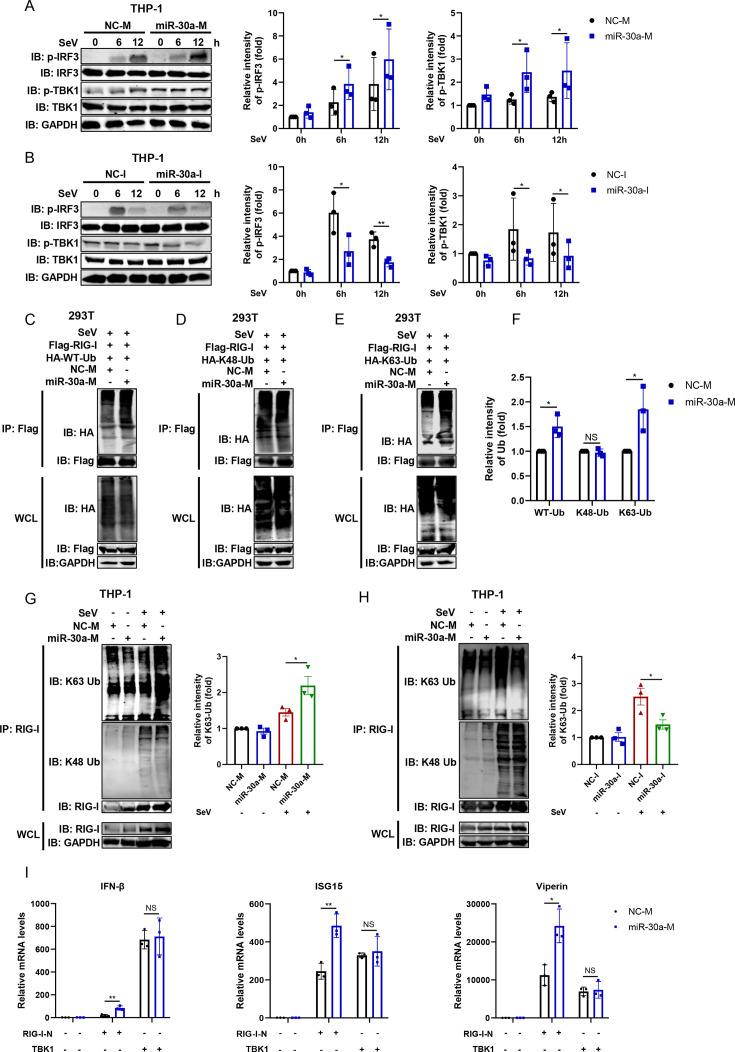 Figure 4
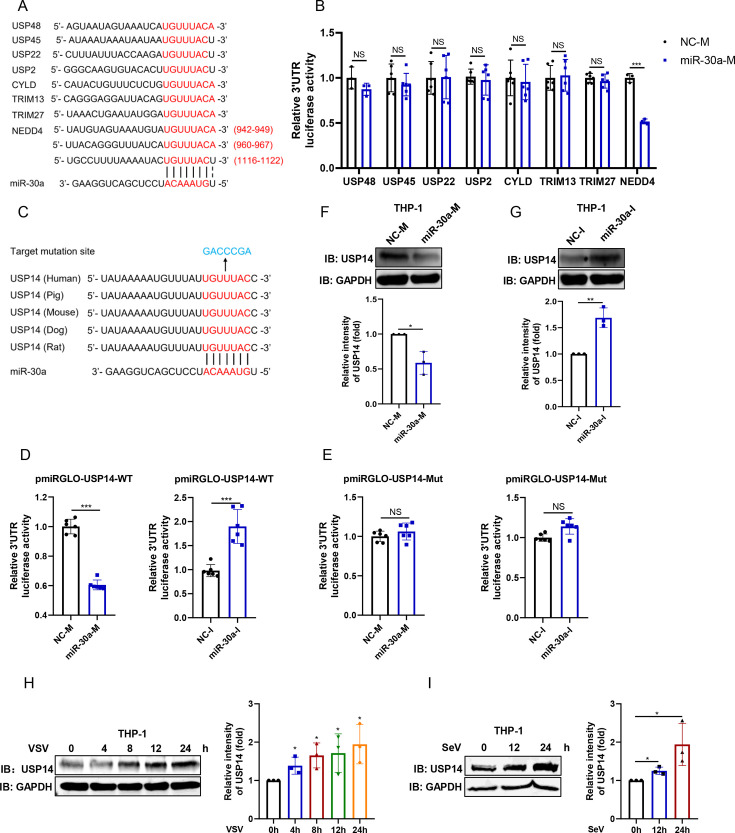 Figure 5
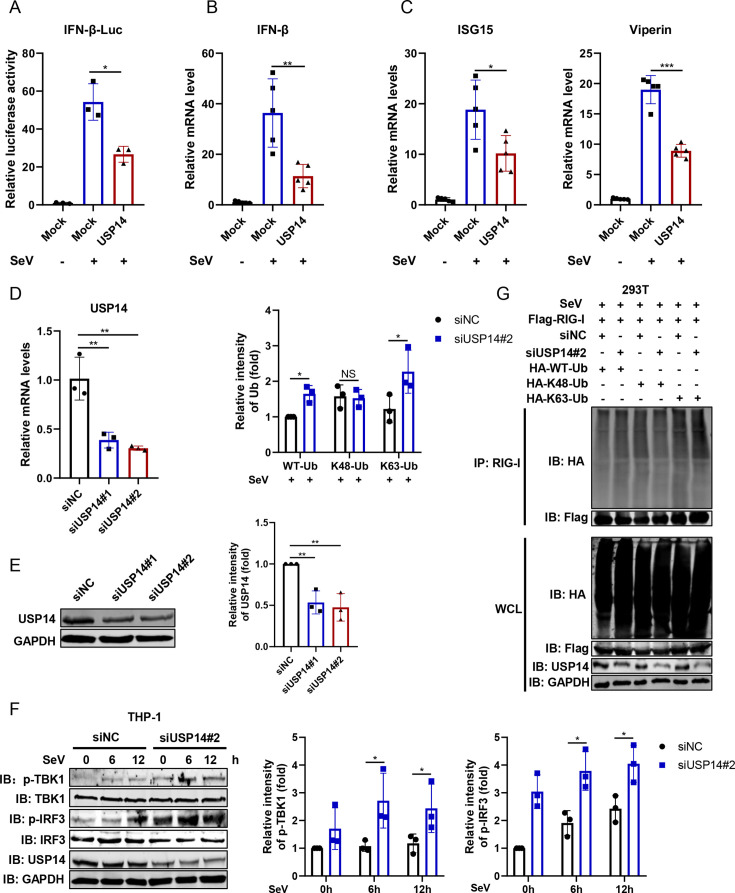 Figure 6
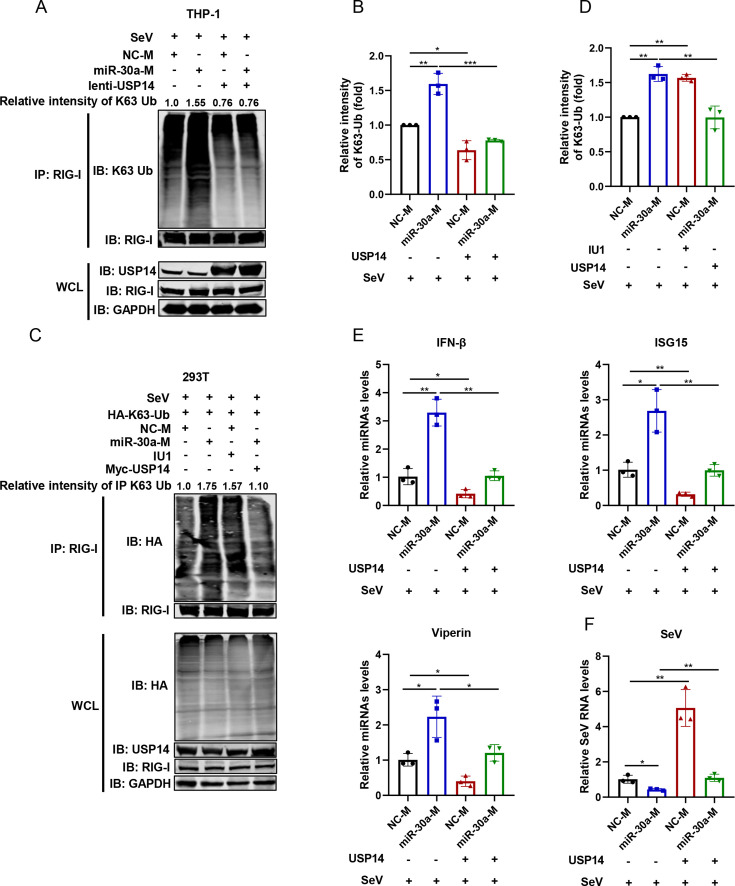 Figure 7
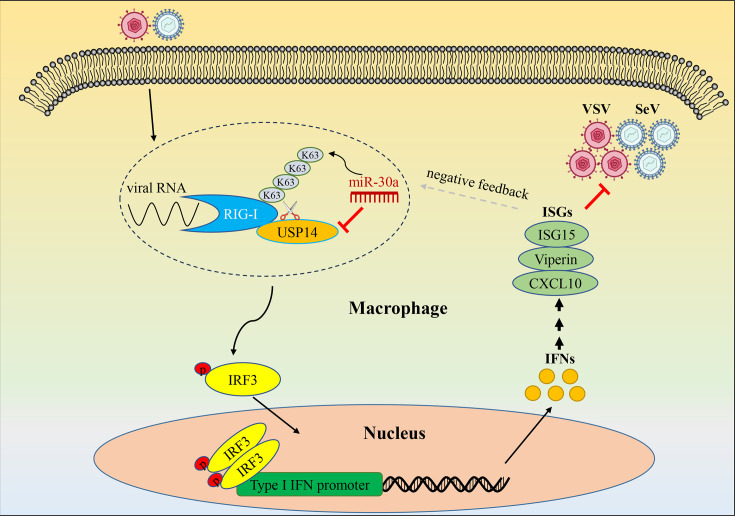 Figure 8
Peer Reviews
No public reviews on file for this paper yet. If you reviewed it on a platform where reviews are public (OpenReview, ICLR, NeurIPS, ICML), you can paste yours below so the community can read it here.
Videos
No videos yet. Explain this paper in a talk, walkthrough, or lecture? Add one.
Taxonomy
Topicsinterferon and immune responses · Viral Infections and Vectors · Cancer-related molecular mechanisms research