Rapid emergence of resistance to broad-spectrum direct antimicrobial activity of avibactam
Michelle Nägeli, Shade Rodriguez, Aimee Iradukunda, Abigail L. Manson, Ashlee M. Earl, Thea Brennan-Krohn

TL;DR
Avibactam, a drug that inhibits bacterial enzymes, can lose effectiveness quickly as bacteria develop resistance through various mutations.
Contribution
The study reveals that resistance to avibactam arises rapidly through a complex and heterogeneous mutational target.
Findings
Resistance to avibactam emerged at a mutation frequency of 2 × 10⁻⁶ to 8 × 10⁻⁵.
Mutations in stringent response genes were found in resistant isolates, but alternative mutations occurred in bacteria with impaired stringent response.
Resistant strains showed increased lag time but no significant difference in growth rates compared to susceptible strains.
Abstract
Avibactam (AVI) is a diazabicyclooctane (DBO) β-lactamase inhibitor used clinically in combination with ceftazidime. At concentrations higher than those typically achieved in vivo, it also has broad-spectrum direct antibacterial activity against Enterobacterales strains, including metallo-β-lactamase-producing isolates, mediated by inhibition of penicillin-binding protein 2 (PBP2). This activity has some mechanistic similarities to that of more potent novel DBOs (zidebactam and nacubactam) in late clinical development. We found that resistance to AVI emerged readily, with a mutation frequency of 2 × 10⁻⁶ to 8 × 10⁻⁵. Whole-genome sequencing of resistant isolates revealed a heterogeneous mutational target that permitted bacterial survival and replication despite PBP2 inhibition, in line with prior studies of PBP2-targeting drugs. While such mutations are believed to act by upregulating…
Genes, proteins, chemicals, diseases, species, mutations and cell lines named across the full text — each resolved to its canonical identifier and authoritative record.
Click any figure to enlarge with its caption.
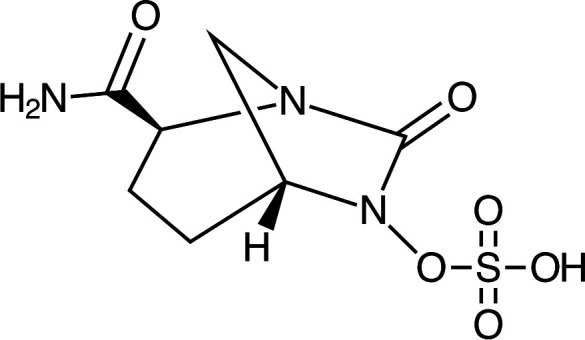 Figure 1
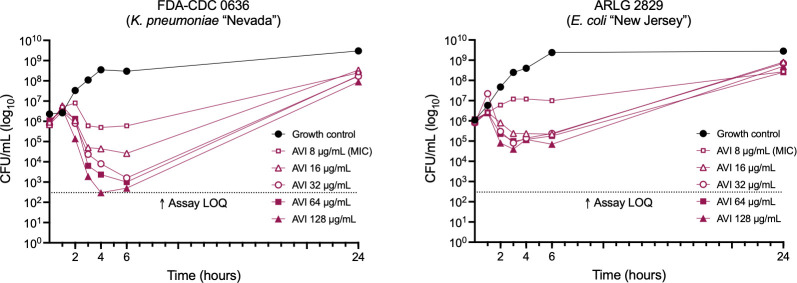 Figure 2
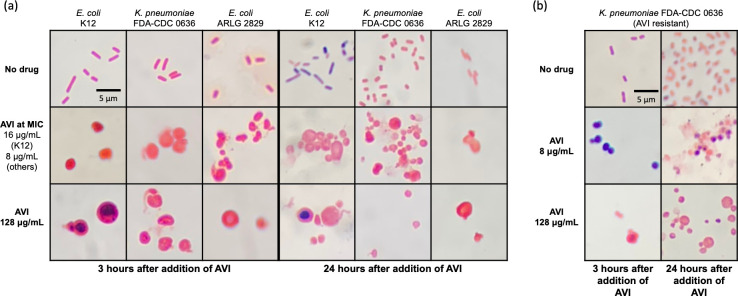 Figure 3
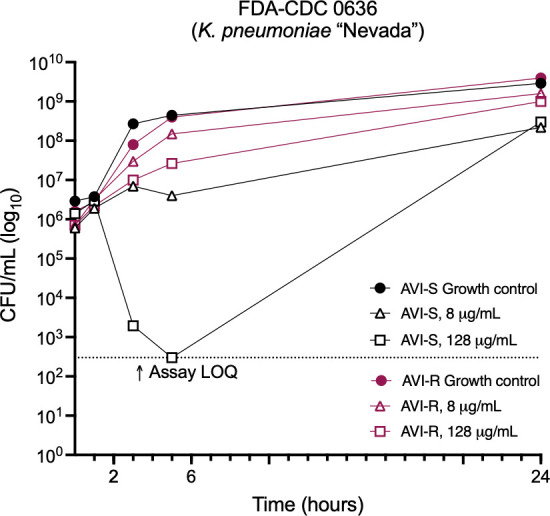 Figure 4
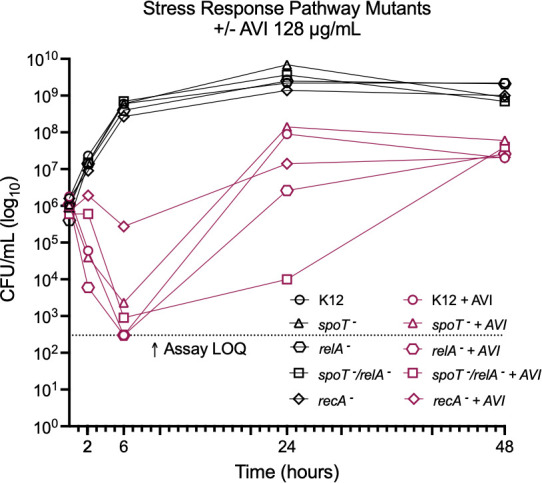 Figure 5
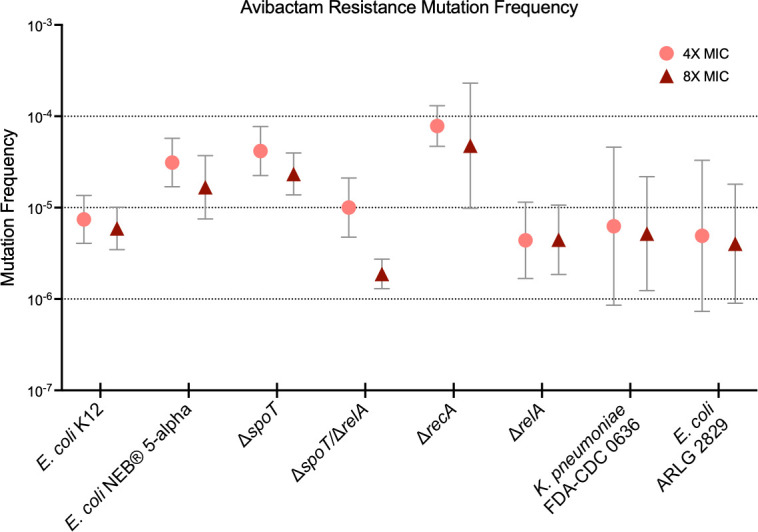 Figure 6
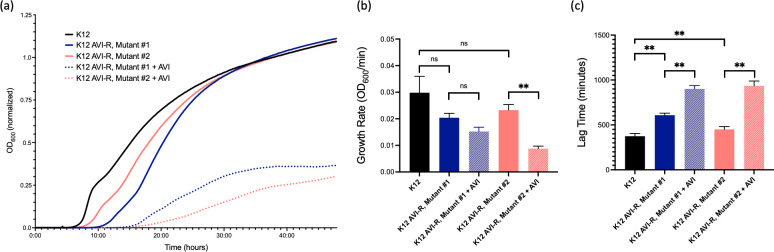 Figure 7
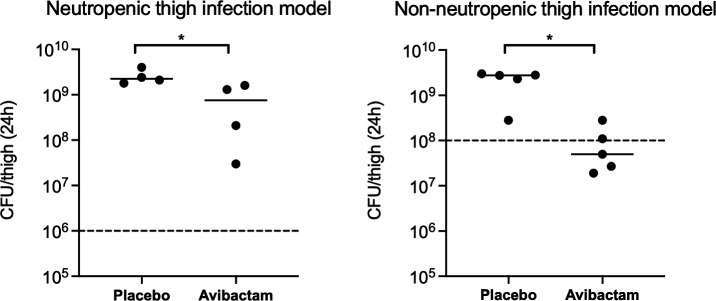 Figure 8
Peer Reviews
No public reviews on file for this paper yet. If you reviewed it on a platform where reviews are public (OpenReview, ICLR, NeurIPS, ICML), you can paste yours below so the community can read it here.
Videos
No videos yet. Explain this paper in a talk, walkthrough, or lecture? Add one.
Taxonomy
TopicsAntibiotic Resistance in Bacteria · Probiotics and Fermented Foods · Escherichia coli research studies