Distinct molecular characteristics and virulence profiles of carbapenem-resistant Acinetobacter baumannii, Escherichia coli, and Enterobacter cloacae isolated from patients with inborn errors of immunity
Xiaodan Zhu, Pan Fu, Songzhen Yang, Wenjie Wang, Wenjing Ying, Bijun Sun, Jinqiao Sun, Chuanqing Wang, Qinhua Zhou, Xiaochuan Wang

TL;DR
This study finds that drug-resistant bacteria from patients with immune disorders have unique genetic traits and reduced virulence, suggesting the immune environment influences bacterial evolution.
Contribution
The first study to compare molecular and virulence profiles of carbapenem-resistant bacteria in patients with inborn errors of immunity versus non-IEI patients.
Findings
CR-AB from IEI patients showed more diverse carbapenemase genes compared to non-IEI patients.
CR-ECO and CR-ECL from IEI patients had reduced carriage of virulence-related genes like adherence and nutritional/metabolic factors.
The fimA gene in CR-ECO was the only statistically significant difference observed between IEI and non-IEI groups.
Abstract
Bacterial infections, especially multidrug-resistant Gram-negative bacterial infections, pose a great threat to patients with inborn errors of immunity (IEIs). This study investigates the molecular and virulence profiles of carbapenem-resistant Acinetobacter baumannii (CR-AB), carbapenem-resistant Escherichia coli (CR-ECO), and carbapenem-resistant Enterobacter cloacae (CR-ECL) strains from patients with IEI. Strains from IEI and non-IEI groups underwent antimicrobial susceptibility testing and whole-genome sequencing (NovaSeq 6000 PE150), with statistical analysis of differences. A total of 24 CR-AB, 17 CR-ECO, and 16 CR-ECL strains were included. Most CR-AB strains in the IEI group belonged to ST2 (81.8%), all harbored blaOXA-23, followed by ST109 (blaOXA-58, 9.1%) and ST70 (blaNDM-1, 9.1%), whereas all CR-ABs in the non-IEI group were ST2 with blaOXA-23. CR-ECL strains from the IEI…
Genes, proteins, chemicals, diseases, species, mutations and cell lines named across the full text — each resolved to its canonical identifier and authoritative record.
Click any figure to enlarge with its caption.
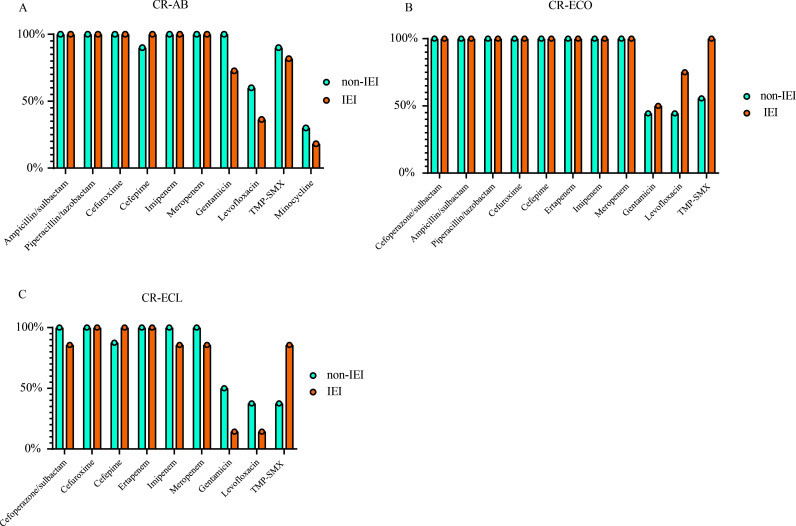 Figure 1
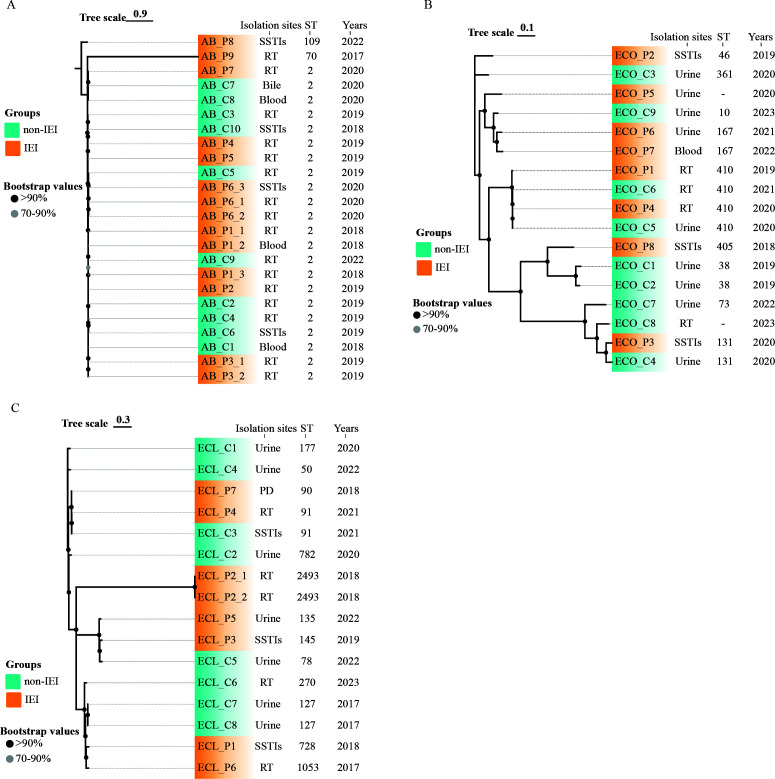 Figure 2
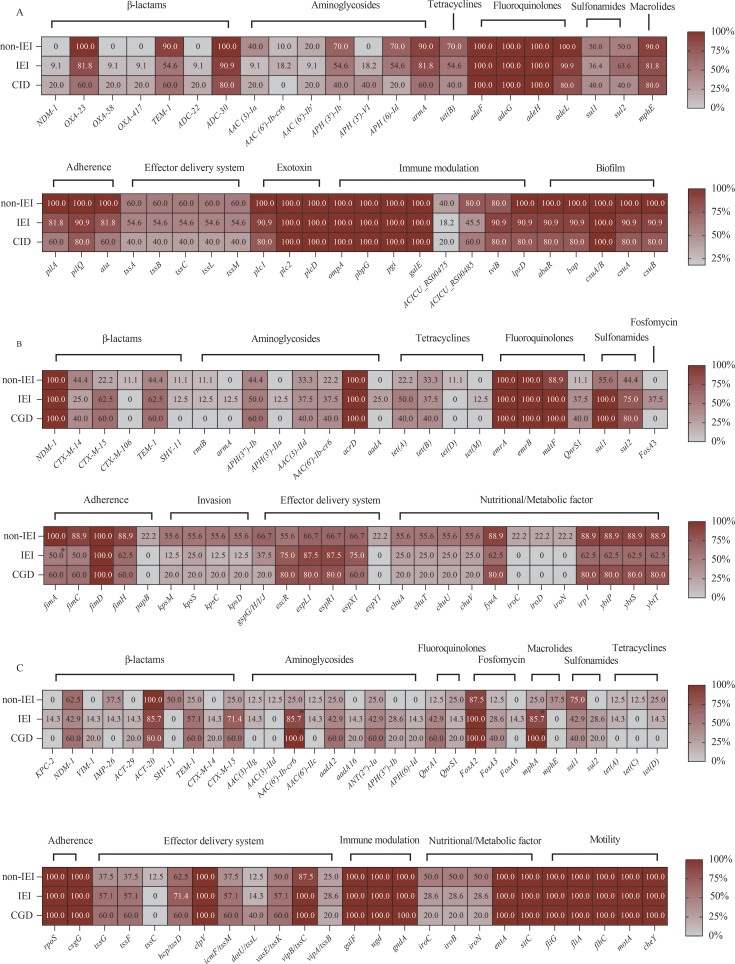 Figure 3
Peer Reviews
No public reviews on file for this paper yet. If you reviewed it on a platform where reviews are public (OpenReview, ICLR, NeurIPS, ICML), you can paste yours below so the community can read it here.
Videos
No videos yet. Explain this paper in a talk, walkthrough, or lecture? Add one.
Taxonomy
TopicsAntibiotic Resistance in Bacteria · Escherichia coli research studies · Mycobacterium research and diagnosis