Genomic variability of lipooligosaccharide biosynthesis locus and sequence type among Campylobacter jejuni isolated from patients with Guillain-Barré syndrome
Md. Abu Jaher Nayeem, Shoma Hayat, Asaduzzaman Asad, Md. Golam Mostafa, Shah Nayeem Faruque, Ruma Begum, Mosabbir Ahmed, Yearul Kabir, Israt Jahan, Zhahirul Islam

TL;DR
This study explores how variations in the lipooligosaccharide (LOS) region of Campylobacter jejuni strains from Guillain-Barré syndrome (GBS) patients differ from those in enteritis patients.
Contribution
The study identifies specific LOS classes and sequence types associated with GBS, highlighting their role in disease pathogenesis.
Findings
LOS classes A, B, and C were more common in GBS-associated C. jejuni strains.
Sequence types ST-43 and ST-2042 were overrepresented in GBS strains.
GBS strains showed higher phase variation and nucleotide differences in the LOS region.
Abstract
Lipooligosaccharide (LOS) is a crucial component of the Campylobacter jejuni (C. jejuni) cell membrane that mimics human gangliosides and can induce autoimmune neuropathies like Guillain-Barré syndrome (GBS). Approximately one in 1,000 C. jejuni infections leads to GBS, with LOS variations influencing immune response and disease induction. We aimed to investigate the sequence type and genomic variation of the LOS region of C. jejuni strains isolated from patients with GBS and enteritis. We isolated 38 GBS- and 24 enteritis-associated C. jejuni strains from Bangladesh, sequenced them on the Illumina platform, and compared their LOS regions using various bioinformatic approaches. Comparative genomic analysis between GBS-associated and enteritis-associated strains revealed that LOS classes A, B, and C were prevalent (P = 0.0001) in GBS-associated C. jejuni strains. Sequence types ST-43 and…
Genes, proteins, chemicals, diseases, species, mutations and cell lines named across the full text — each resolved to its canonical identifier and authoritative record.
Click any figure to enlarge with its caption.
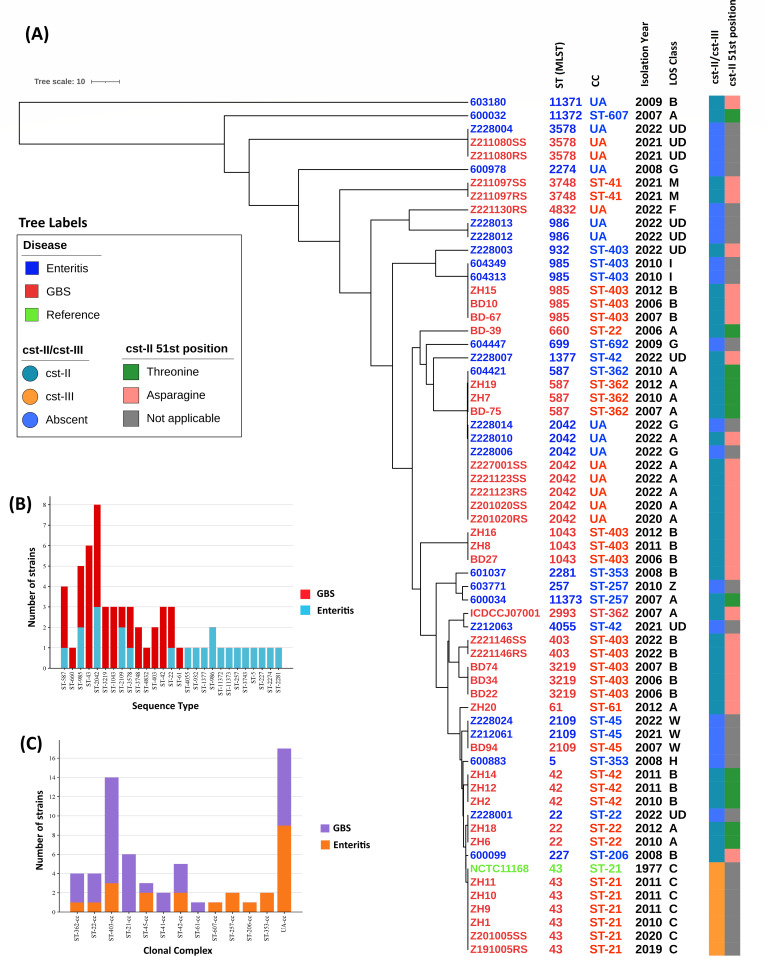 Figure 1
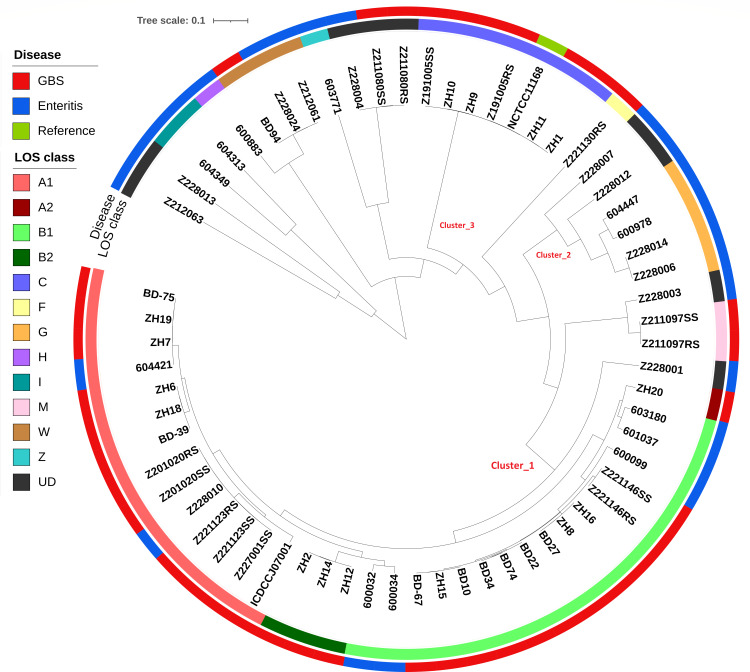 Figure 2
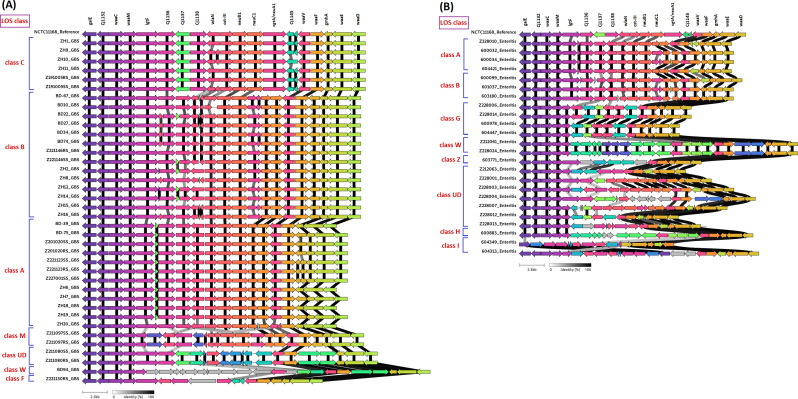 Figure 3
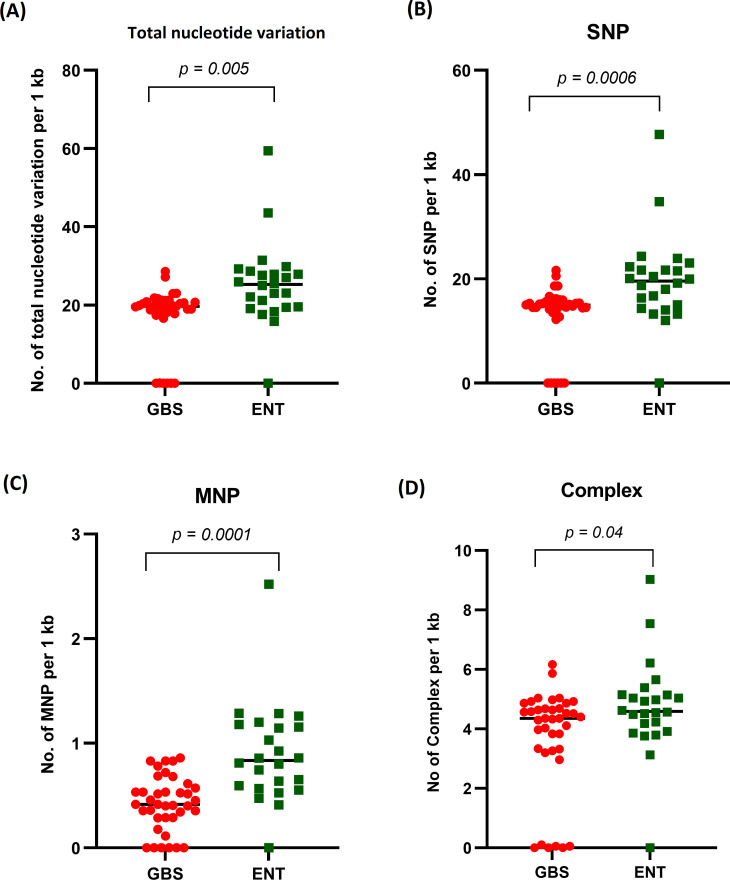 Figure 4
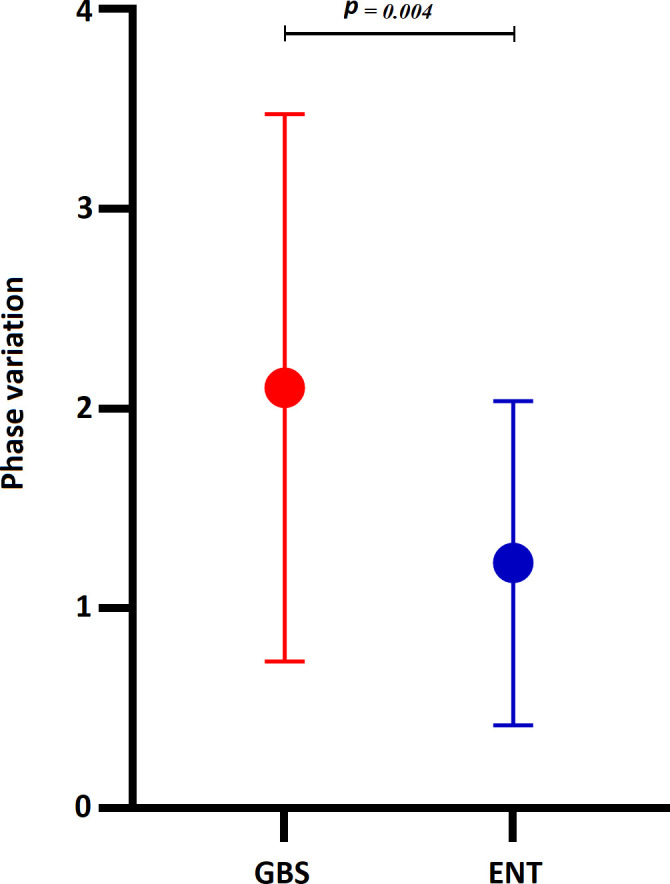 Figure 5
Peer Reviews
No public reviews on file for this paper yet. If you reviewed it on a platform where reviews are public (OpenReview, ICLR, NeurIPS, ICML), you can paste yours below so the community can read it here.
Videos
No videos yet. Explain this paper in a talk, walkthrough, or lecture? Add one.
Taxonomy
TopicsSalmonella and Campylobacter epidemiology · Peripheral Neuropathies and Disorders · Clostridium difficile and Clostridium perfringens research