Heterogeneity among Mycobacterium avium complex species isolated from pulmonary infection in Taiwan
Hsiu-Mei Lin, Chin-Chung Shu, Chun-Hao Chen, Nan-Yu Chen, Jeng-How Yang, Chih-Hung Chen, Shih-Hong Li, Chih-Liang Wang, Chih-Teng Yu, Shu-Min Lin, Kuo-Chin Kao, Chung-Chi Huang, Cheng-Ta Yang, Jang-Jih Lu, Cheng-Hsun Chiu, Hsin-Chih Lai, Ting-Shu Wu

TL;DR
This study shows that different species within the Mycobacterium avium complex in Taiwan vary in drug susceptibility, suggesting the need for tailored treatments.
Contribution
The study provides species-specific antimicrobial susceptibility data for MAC in Taiwan using multi-gene sequencing.
Findings
M. intracellulare clade A was the most common species in MAC pulmonary infections in Taiwan.
Clarithromycin and amikacin showed high susceptibility rates across major MAC species.
M. avium exhibited multidrug resistance, highlighting the need for species-specific treatment strategies.
Abstract
Mycobacterium avium complex (MAC) is an emerging pathogen causing nontuberculous pulmonary infections globally. However, clinical treatment guidelines regard MAC as a single entity, recommending a universal anti-mycobacterial combination therapy. Our study aimed to distinguish species among MAC and investigate the antimicrobial susceptibility for the selection of optimal antimicrobial agents in Taiwan. Two hundred ninety-four consecutive sputum samples confirmed as MAC by matrix-assisted laser desorption/ionization time-of-flight mass spectrometry were collected from 1 November 2015 to 31 August 2020 at Linkou Chang Gung Memorial Hospital in Taiwan. These isolates were identified through 16S rRNA gene, 23S rRNA gene, heat-shock protein 65 gene (hsp65), internal transcribed spacer, and beta subunit of RNA polymerase (rpoB) gene sequencing and phylogenetic analyses. Antimicrobial…
Genes, proteins, chemicals, diseases, species, mutations and cell lines named across the full text — each resolved to its canonical identifier and authoritative record.
Click any figure to enlarge with its caption.
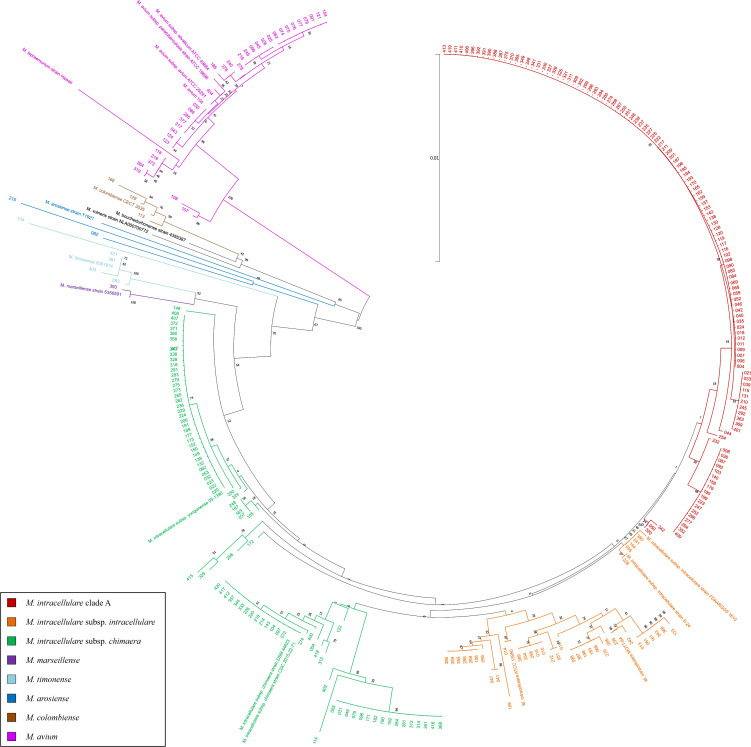 Figure 1
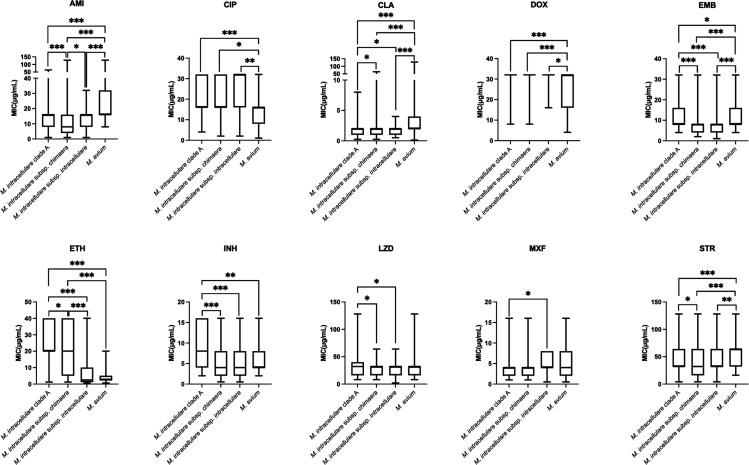 Figure 2
Peer Reviews
No public reviews on file for this paper yet. If you reviewed it on a platform where reviews are public (OpenReview, ICLR, NeurIPS, ICML), you can paste yours below so the community can read it here.
Videos
No videos yet. Explain this paper in a talk, walkthrough, or lecture? Add one.
Taxonomy
TopicsMycobacterium research and diagnosis · Infectious Diseases and Mycology · Tuberculosis Research and Epidemiology