A novel insight into ComE-mediated activation of gene expression in Streptococcus mutans
Hemendra Pal Singh Dhaked, Saswati Biswas, Indranil Biswas

TL;DR
This study shows that the response regulator ComE in Streptococcus mutans can activate gene expression without its usual partner kinase, suggesting a new regulatory mechanism in bacteria.
Contribution
The study reveals that ComE can autonomously activate gene expression in Streptococcus mutans without requiring its cognate histidine kinase.
Findings
ComE activates the nlmA promoter for bacteriocin production without its cognate histidine kinase ComD.
Both phospho-mimicking and phospho-inactivating variants of ComE can bind to and activate the nlmA promoter.
Phosphorylation at D60 of ComE is confirmed to be responsible for its regulatory function.
Abstract
Bacteria use two-component signal transduction systems (TCSs) to sense and respond to environmental changes. TCSs comprise a histidine kinase that senses environmental signals and a response regulator that regulates cognate promoters. Most response regulators are incapable of regulating their promoters in the absence of the cognate histidine kinases. Here, we demonstrated that constitutive expression of the well-studied response regulator ComE of Streptococcus mutans (a dental pathogen) activates the nlmA promoter (PnlmA) for bacteriocin production without the involvement of its cognate histidine kinase ComD. To confirm the phosphorylation-independent role of ComE, we generated a phospho-mimicking (D60E) and a phospho-inactivating (D60A) variant and examined their ability to activate PnlmA in a ΔcomD knockout strain. We found that the phospho-mimicking D60E variant was able to induce…
Genes, proteins, chemicals, diseases, species, mutations and cell lines named across the full text — each resolved to its canonical identifier and authoritative record.
Click any figure to enlarge with its caption.
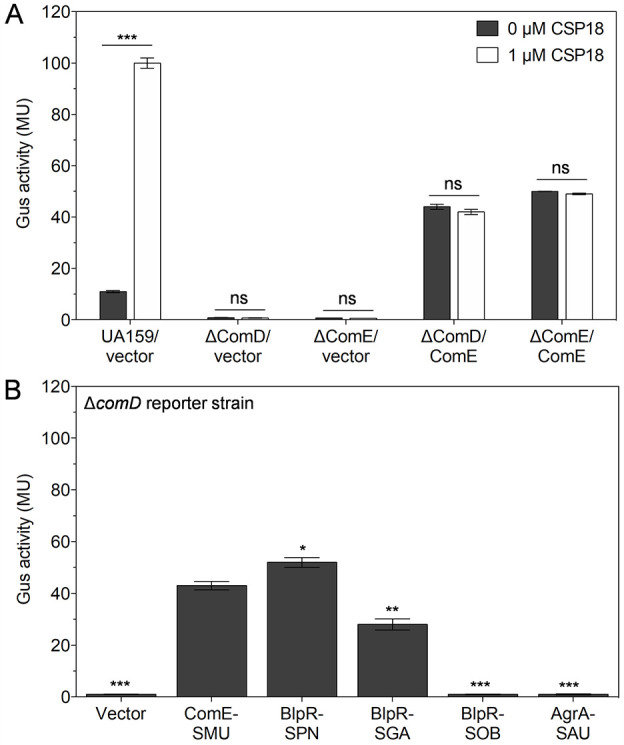 Figure 1
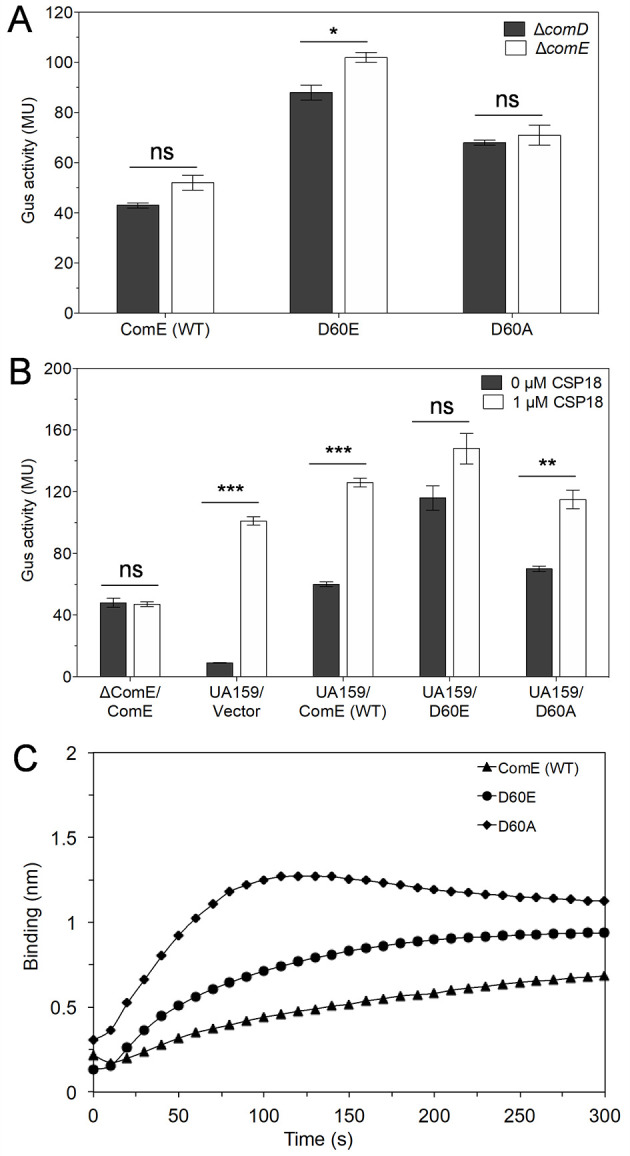 Figure 2
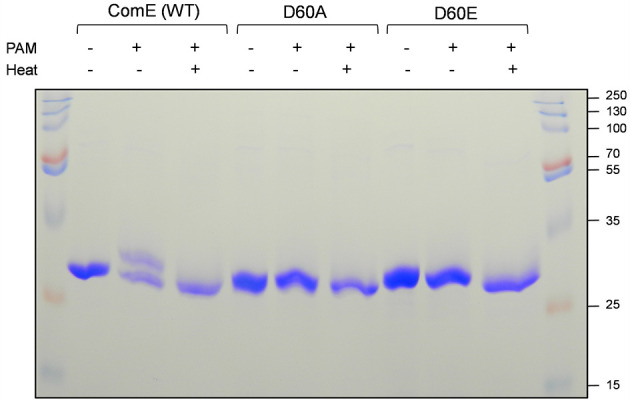 Figure 3
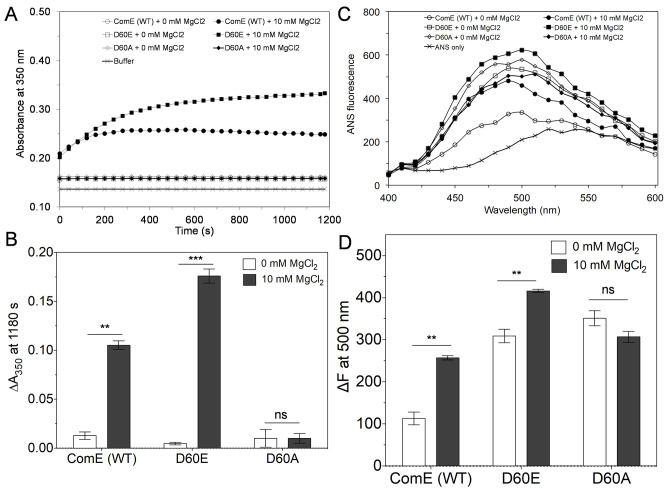 Figure 4
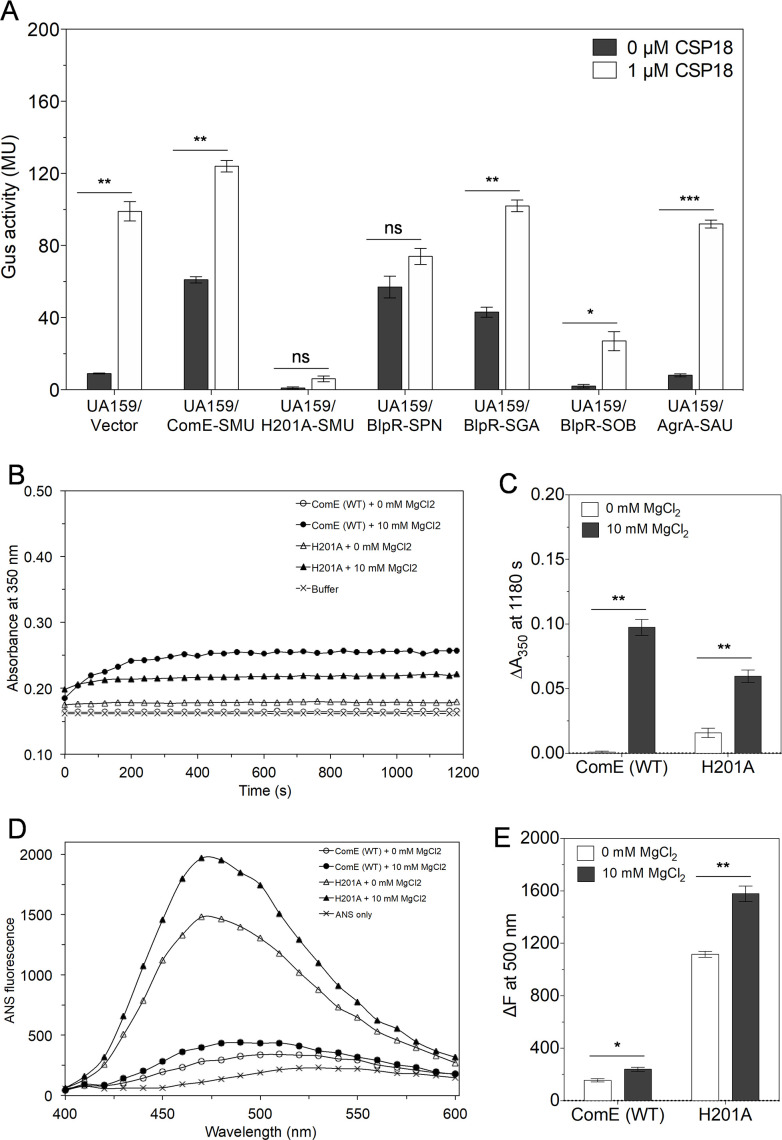 Figure 5
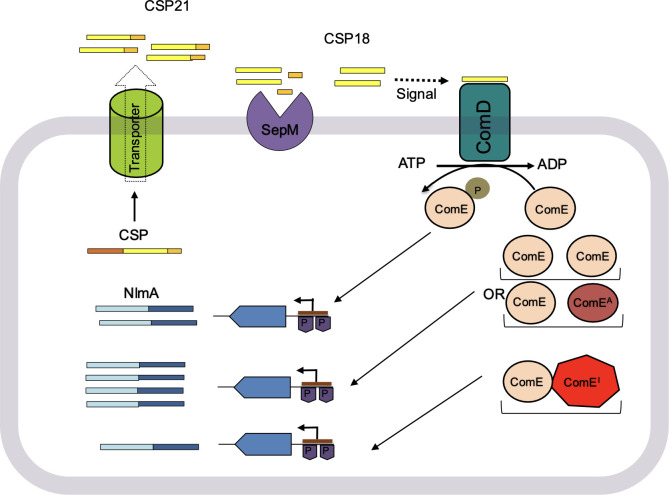 Figure 6
Peer Reviews
No public reviews on file for this paper yet. If you reviewed it on a platform where reviews are public (OpenReview, ICLR, NeurIPS, ICML), you can paste yours below so the community can read it here.
Videos
No videos yet. Explain this paper in a talk, walkthrough, or lecture? Add one.
Taxonomy
TopicsStreptococcal Infections and Treatments · Antimicrobial Resistance in Staphylococcus · Oral microbiology and periodontitis research